Commercial projects
Fixed roof vs louvers: hospitality procurement
Compare a fixed-roof pavilion and a louvered pergola for restaurant or hotel purchasing through operating duties, service routes and clearly defined installation scope.
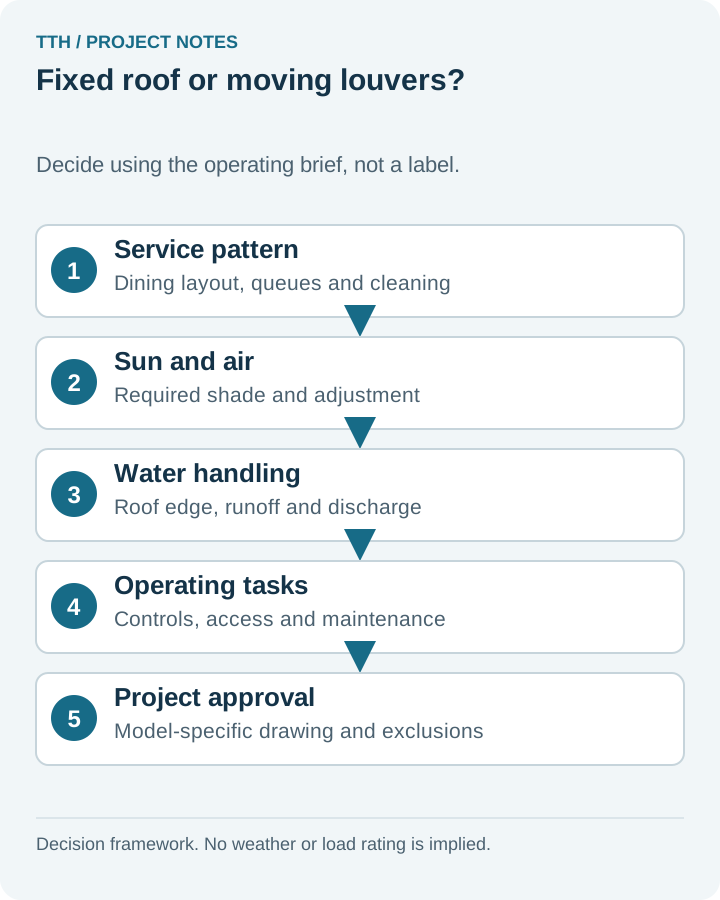
For a restaurant or hotel, the roof choice starts with the working day. Record who opens the terrace and when guests need shade. Explain how staff clean the space and move equipment through it.
Compare those tasks before assigning extra seating or revenue to either roof option. The roof choice alone cannot support that forecast or establish all-weather operation.
Give the supplier the service layout
Record the intended use: breakfast service, afternoon dining, evening lounge or occasional events. Show when the area opens, who prepares it and where staff move during service. Include doors, table movements, clearing routes and any temporary equipment. This operational brief is more useful than choosing a roof from a photograph alone.
The hardtop versus louvered comparison covers the basic roof choice. Here the question is how the selected product will be used and maintained by the venue. Name the people who will operate it and deal with service questions.
Compare the specific products
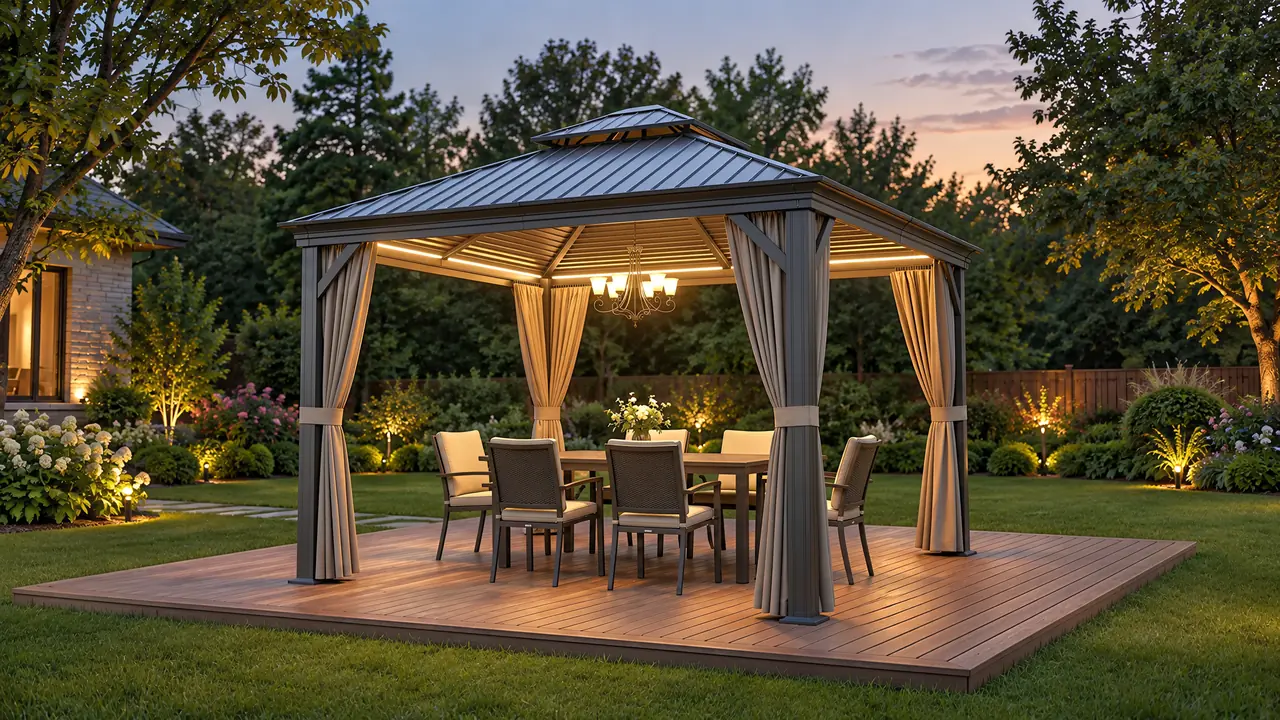
The TTH Hardtop Garden Pavilion is a complete freestanding product with a vented fixed hip roof. It has its own equipment schedule. Confirm the actual roofing materials; an aluminium frame does not establish that every roof panel is aluminium.
This is a separate product, not a louvered frame with an interchangeable fixed roof.
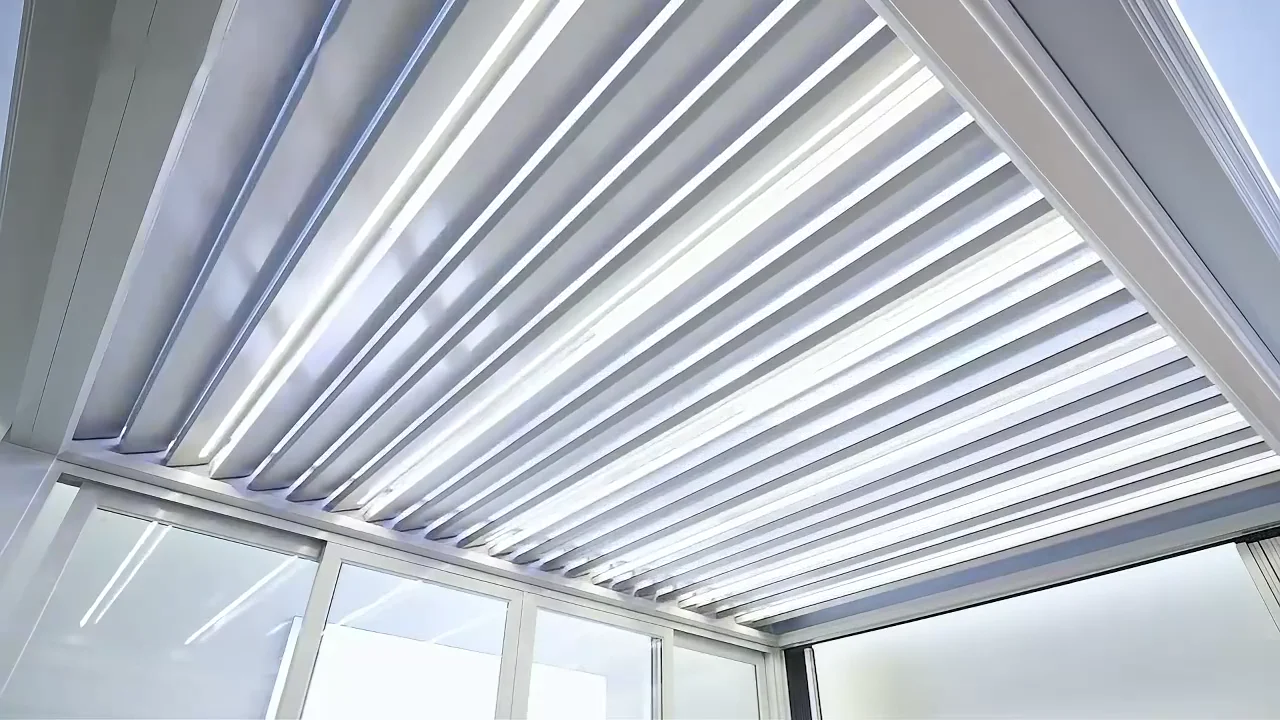
The TTH 200 / 220 louvered family provides an adjustable roof option for project review. Ask about the chosen model’s operation and installation requirements, including the proposed accessories.
Use configuration-specific evidence for weather performance and maintenance. Accessories need their own compatibility check.
| Procurement question | Fixed-roof pavilion discussion | Louvered pergola discussion |
|---|---|---|
| Overhead use | Fixed coverage and its effect on the dining layout | When and why staff want to change the roof opening |
| Staff tasks | Inspection and cleaning of the actual roof system | Operation, cleaning and checks of moving components |
| Water | Discharge route and local drainage interface | Collection, outlet locations and local drainage interface |
| Services | Compatibility and supplied equipment for that product | Controls, electrical work and approved options for that model |
| Handover | Roof, frame and equipment records | Roof operation, controls and equipment records |
Check the route during service
Draw chairs pulled out, then trace the path taken by someone carrying dishes. Add arriving guests and any equipment that moves through the space. Review the arrangement used when furniture is stacked as well.
A post can fit an empty terrace and still interrupt service.
The restaurant service-route article helps check that conflict. But don’t leave water out of the layout. Show the discharge point beside the entrances and working routes.
Side screens or glass need a compatibility review. Lighting and heaters also require their own local installation decisions.
Make the scopes comparable
Give both options the same project brief and request a schedule of supplied components, local works and exclusions. Separate foundations, electrical connection, drainage connections and any building work. Identify the receiving contractor, assembly responsibility and final handover contact. This avoids comparing a supply-only pavilion offer with a differently scoped pergola installation.
Ask for the operating and maintenance information for the selected configuration. Assign those tasks and decide who trains replacement staff. Set a reporting process for issues.
The hotel weather procedure guide explains how a venue procedure should follow the supplied instructions. It should not invent universal weather limits.
Send the working brief
Send the project location, terrace plan, proposed operating pattern and photographs through the TTH enquiry form. Include both roof preferences if they remain open. An effective response should resolve product fit and scope first; projected revenue, capacity or operating hours need separate business evidence.
Buyer questions
Is a fixed roof always easier for restaurant staff?
It removes roof-opening operation, but its cleaning, inspection and service-access duties still depend on the actual system. Compare the written task schedules rather than assume a maintenance-free option.
Will louvers guarantee all-weather dining?
No roof label establishes that promise. Review the selected configuration, site exposure, drainage, operating instructions and any side enclosures. Keep business continuity plans separate from product assumptions.
Can we order accessories from the louvered range for the hardtop pavilion?
Compatibility must be confirmed for the specific product. The hardtop pavilion and louvered series are separate systems; do not transfer equipment lists between them without written confirmation.
