Buying guides
Hardtop vs louvered pergola: how to choose your TTH outdoor roof
Compare TTH hardtop pavilions and aluminum louvered pergolas by roof opening, daylight, operation, usable space, drainage and quotation scope to choose the right outdoor setting.
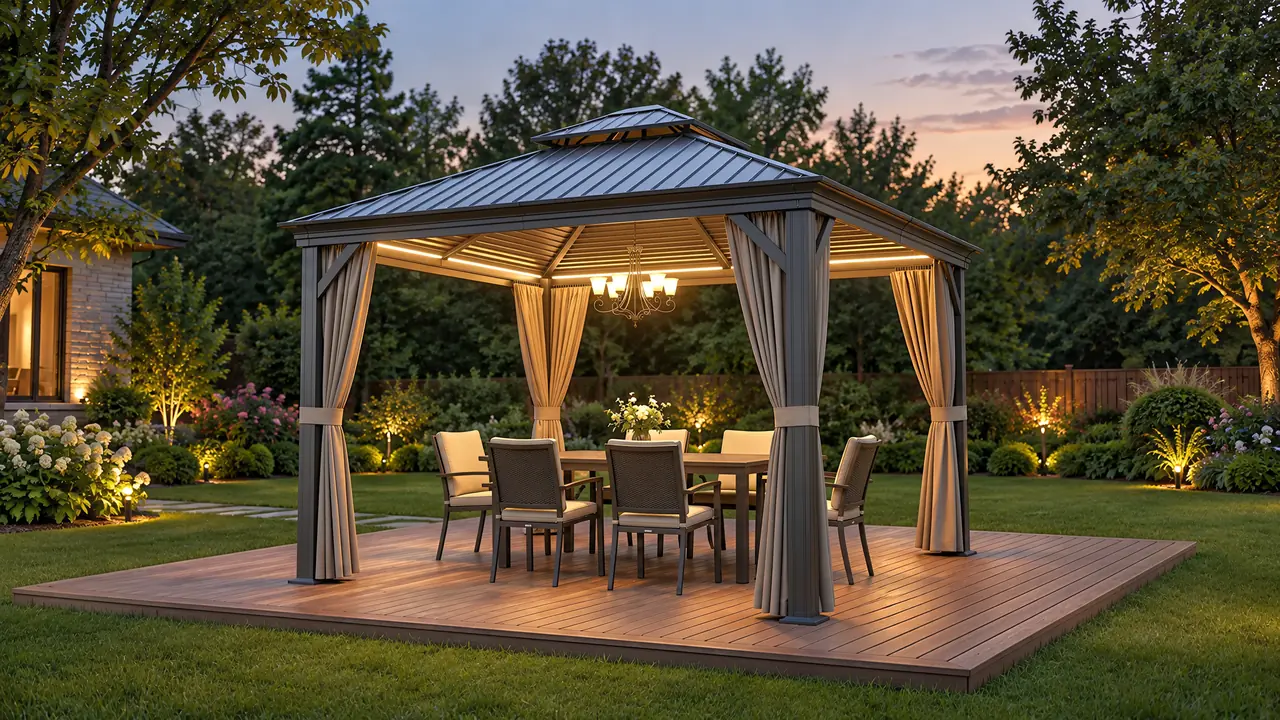
Compare the kind of outdoor experience, not just roof shapes
A fixed-roof pavilion and an adjustable louvered pergola can both define a place to gather, yet their everyday experience is different. The fixed roof gives a consistent overhead presence. Adjustable blades introduce another decision: when to admit more sky and when to change the amount of direct light. Think about whether you enjoy adjusting the setting during the day or prefer a more constant arrangement.
The TTH collection on tthpergola.com presents these as different product approaches rather than two photographs of the same solution. Compare the roof silhouette, the relationship to nearby windows and the way furniture sits below it. A raised hardtop form may suit a freestanding garden destination, while the cleaner horizontal language of a louvered system may relate differently to a modern terrace. These are design considerations, not universal rules. Also compare practical questions such as access for maintenance, operation and any desired side accessories. The most convincing choice is the one that suits the site's proportions and the owner's routine. Choosing only by the most dramatic image can overlook how the structure will look from inside the house or when the garden is otherwise quiet.
Choose the roof experience you want
A hardtop garden pavilion uses a fixed roof, while a louvered pergola changes the roof opening through its louvers. That difference affects the experience of light and openness as much as the appearance of the structure. Decide whether you want a consistently covered garden setting or an adjustable roof environment. Neither category is automatically the right choice for every terrace, and the final product specification still matters.

Compare the decisions that affect everyday use
Look beyond a single promotional image. Consider how the roof appears from inside the house, how often you expect to change its opening and how accessories will fit. Ask for the operating and maintenance information for the exact product being considered. A fixed roof does not remove the need to plan drainage or inspect the structure, and an adjustable roof should be used according to its supplied instructions.
| Priority | Fixed hardtop | Louvered roof |
|---|---|---|
| Roof opening | Fixed roof arrangement | Adjustable louver position |
| Visual character | Pavilion-style garden focal point | Linear pergola roof expression |
| Operation | No louver adjustment | Roof operation is part of daily use |
| Planning | Verify footprint, drainage and access | Verify footprint, drainage, movement and controls |
| Daylight discussion | Review the fixed roof position against the garden and nearby windows | Review open and closed blade positions at the intended hours of use |
| Cost comparison | Confirm the complete roof, frame, accessories and site scope | Confirm the same scope plus the selected louver controls and operating equipment |
| Weather evidence | Request information for the specified product and installation | Request information for the specified product, roof state and installation |
Which roof suits dining, lounging or a garden destination?
Begin with a normal day rather than a best-case promotional scene. For a breakfast terrace, ask how the roof relates to morning light and the window behind it. For an evening dining spot, the fixed furniture, lighting and route to the house may matter more than frequent roof adjustment. A separate garden seating destination may place greater emphasis on the complete pavilion silhouette and the approach from several directions. These are ways to frame the choice, not rules that assign one roof to every use.
A TTH louvered pergola is worth considering when changing the roof opening is part of the desired experience. A hardtop pavilion is worth considering when a fixed overhead arrangement matches the routine and garden composition. In either case, draw occupied chairs, open doors and side accessories before choosing the size. The usable space between posts is often more relevant to daily comfort than the outer roof area alone.
Keep furniture and roof proportions in balance
Draw the planned dining or lounge arrangement before selecting a roof style. Check headroom, entry points and the usable area between posts. A pavilion may work as a distinct garden destination, while a pergola may align with a terrace or building elevation; these are design possibilities, not fixed rules. Use photographs for visual direction and dimensioned drawings for fit. Image cropping can hide roof overhangs and important proportions.
Is a hardtop automatically more rainproof or easier to maintain?
The roof category alone does not answer either question. Ask how the actual product collects and discharges water, how its exposed sides affect the intended use and what maintenance its instructions require. A fixed roof does not remove drainage, finish or access considerations. A louvered roof adds operating parts and an adjustable roof state, so its movement and use instructions also need to be understood.
Compare documentation for the exact TTH products rather than turning one visible difference into a broad weather or maintenance guarantee. If a supplier gives a performance statement, keep its configuration and conditions attached. For comfort, also consider low-angle sun and side exposure: changing the overhead roof does not automatically solve a side-facing glare or privacy problem.
Confirm the complete package
Ask which roof, frame, fixing components and accessories are included in the proposed package. Confirm the installation conditions and who will review the supporting surface. Avoid comparing products solely by their overall roof area, because usable space and included components may differ. The right decision combines the intended outdoor experience with a clear understanding of dimensions, operation and the work needed at the site.
What should I put on a roof comparison checklist?
Compare both options on the same site drawing and intended activities. Request the full outside dimensions, clear usable dimensions and supplied accessories, then identify the work required locally. Keep colors, desired side options and delivery scope consistent when asking for prices. If one roof option changes the furniture layout or the view from the house, record that practical difference beside the cost instead of choosing on a single photograph.
- Do you want a fixed roof or regular adjustment of the roof opening?
- Does the occupied furniture plan fit the clear space between posts?
- How does the full roof look from the house and garden paths?
- What drainage, controls, accessories and local work are included?
- Which product instructions and project-specific details support the proposed installation?
Is one roof type always more suitable for homes?
No. Consider the planned activity, the relationship to the building and how much adjustment you want. Compare the actual TTH products and their documented configurations rather than treating a roof category as a universal recommendation.