Solar canopy decisions
Solar Canopies Over Accessible Parking: Protecting Transfer Space
Check transfer areas, vehicle clearance and arrival routes before adding a solar canopy over accessible parking.
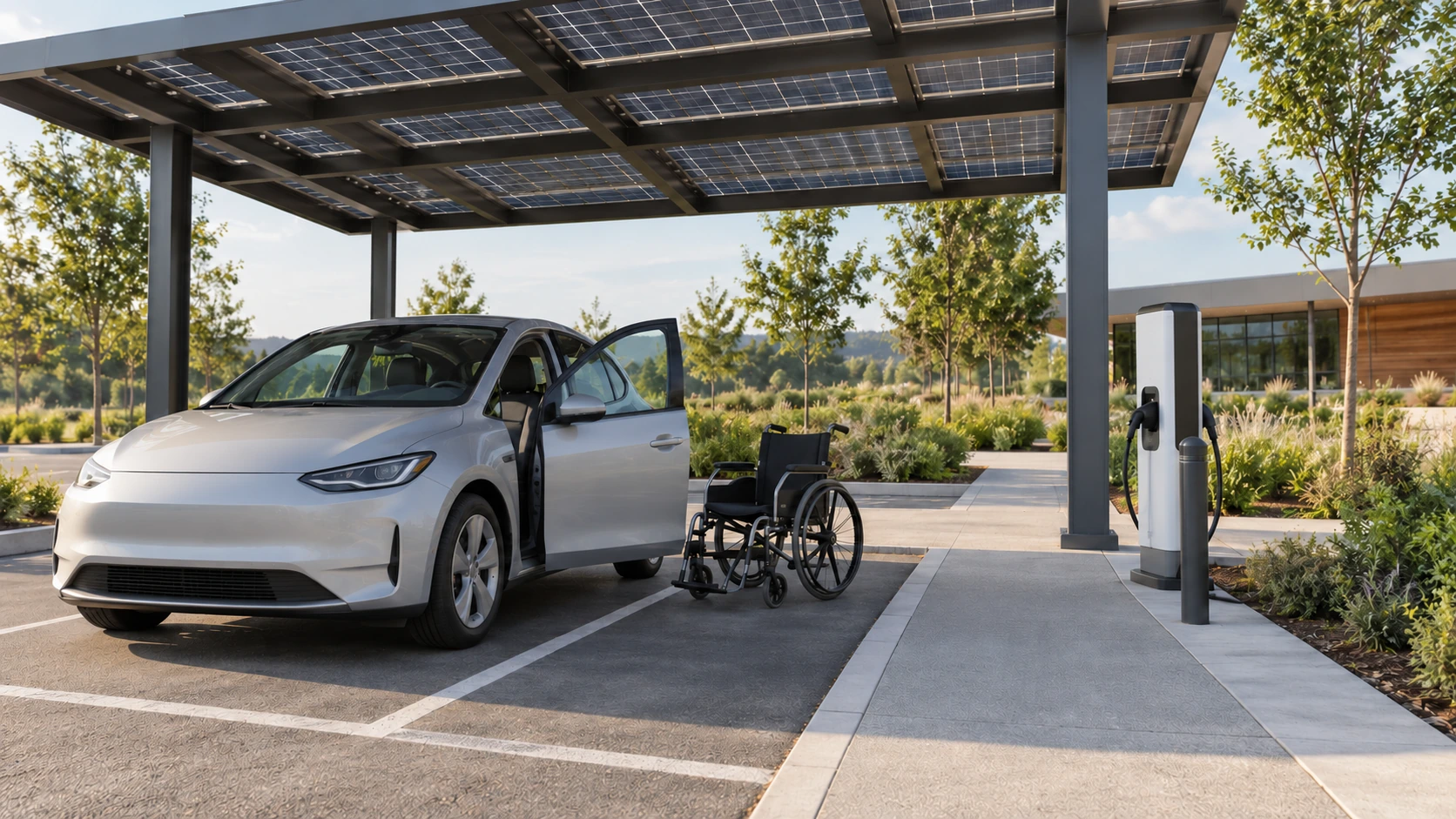
Moving columns outside bay lines is not the whole check
Before adding solar cover to accessible parking, confirm the requirements applying to the existing spaces and arrival routes. Protection extends beyond the vehicle footprint to transfers, mobility aids, movement around the vehicle and a continuous connection to the entrance. Bases, bollards, downpipes and cabinets can intrude without crossing a painted bay line. Designers familiar with local requirements should review the change; an operating car park does not establish that a new canopy preserves accessibility. ADA requirements are relevant to applicable US facilities, but should not be presented as a universal standard for other countries.
Review the layout through actual movements
Follow the user from the driving or passenger position through leaving the vehicle, operating mobility equipment, handling belongings and reaching the entrance. For taller vehicles, review the whole approach rather than one point beneath the roof. Overlay open cabinet doors, maintenance barriers and roof drainage, which can temporarily disable an otherwise usable area. Check alternative arrival directions and do not assume that every vehicle has doors or charging connections on the same side. User feedback helps identify difficulties, while approval remains with the responsible design team.
- Preserve continuous access from transfer area to entrance.
- Check minimum clearance created by the roof and equipment.
- Arrange suitable alternatives during construction or service.
Consider a vehicle using a side ramp
Imagine an existing area beside a bay used to deploy a side-entry ramp. A new downpipe placed at its edge may allow the vehicle to park but prevent the user from turning after leaving it. Testing only a passenger car cannot establish suitability. Reassess the actual movements and check that a relocated pipe or column does not obstruct another route. Accessibility is continuous: resolving one point does not validate the whole journey. At acceptance, compare the built dimensions with approved drawings instead of checking only that the painted symbol has been restored.
If spaces move during construction, review their connection to the entrance rather than merely placing a sign at a distant vacant bay.
Preserve the reviewed spaces through later changes
Give management the final layout, routes and protected areas, noting that later charging equipment needs a separate review. Accessible parking and accessible charging involve different actions; converting one into charging-only use should not bypass reassessment. Keep temporary items and other vehicles out of the protected space and provide a way to report drainage problems. When procuring a TTH canopy, request drawings coordinated with the site's conditions. A model name or product photograph is not evidence of site compliance or acceptance by the relevant authority.
Does existing accessible parking need review when a canopy is added?
Review whether new components affect vehicle entry, transfers, minimum clearance and the route to the entrance. Include bases, protection, services and maintenance activities. Responsible designers should apply local requirements and check the completed layout; later chargers require further review.
More questions, practical answers →