Compact pergola living
Choosing a pergola rug: edges, drainage and removal
Evaluate a pergola rug through edges, chair movement, moisture checks and seasonal removal as well as appearance.
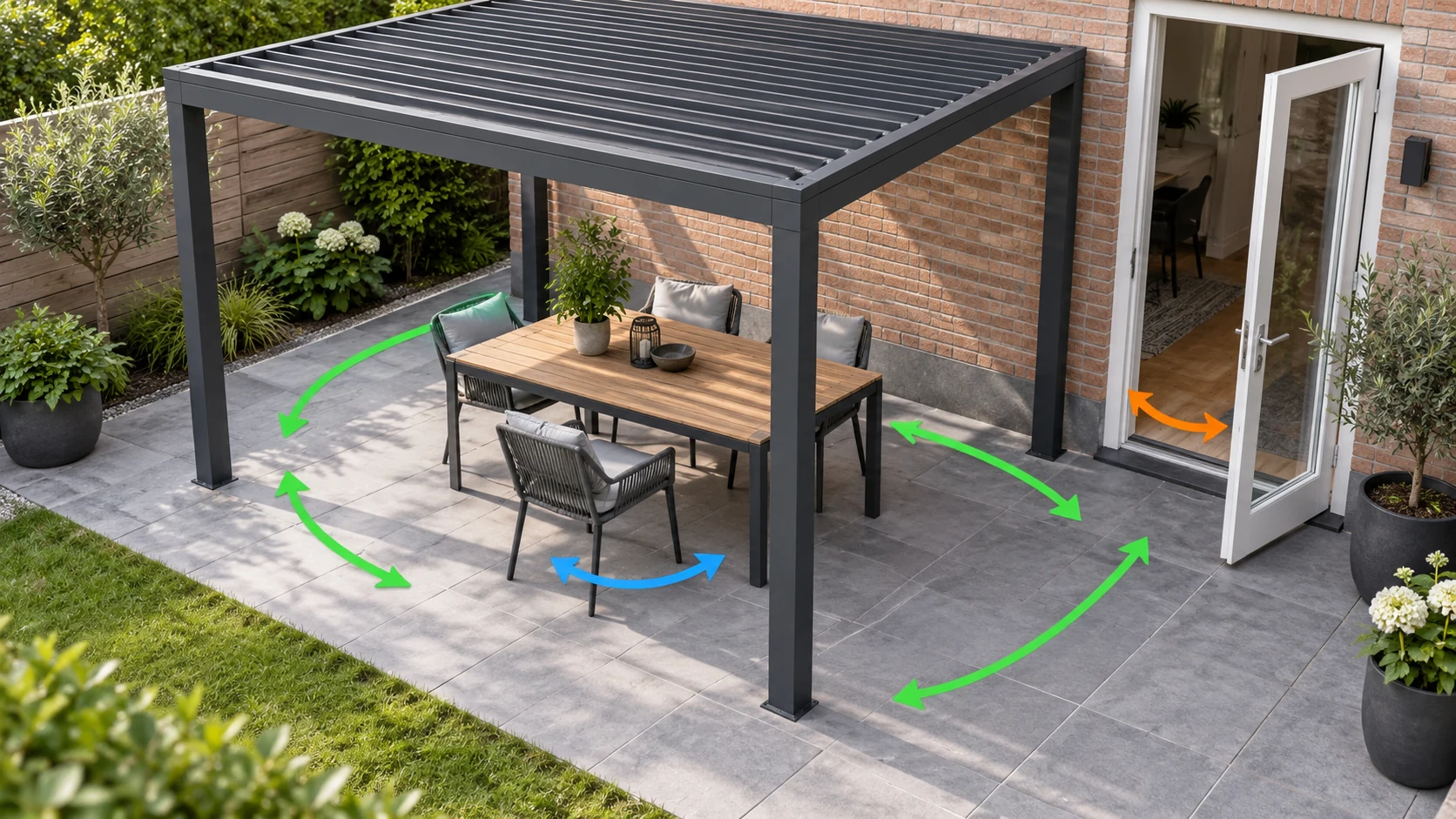
Keep edges out of repeated movements
A rug can visually unite pergola seating, but inspect edge placement before pattern. Chairs may cross an edge when withdrawn, and people may repeatedly step on the same corner between door and seat. Do not simply align the rug with the roof footprint. Tape candidate sizes, occupy chairs and move them in and out, noting catching or shifting. Any slip-resistance claim requires the relevant product evidence. An outdoor label, heavy appearance or informal walking trial does not establish a tested performance rating.
Make the underside inspectable
Cover does not exclude side rain, planter overflow or cleaning water. Assess moisture beneath the rug through its instructions, paving and observation rather than assuming a dry top means a dry underside. Ask about cleaning, drying and seasonal storage, and confirm somewhere to handle the full rug. Cabinets or heavy furniture pinning an edge can make routine inspection impractical. Include lifting or removal in care arrangements, observing pooled water, discoloration or other issues as appropriate rather than waiting for an odor before looking underneath.
Test size through an after-meal cleanup
Imagine a household dining on a rug beneath the table. During cleanup, two chairs repeatedly catch and lift the edge. Compare another size or table position and repeat the entire cleanup. A larger rug pinned beneath a heavy planter may merely replace that problem with difficult removal. This hypothetical example recommends no fixed table-to-rug proportion. Size should follow actual furniture and care routines. Include someone carrying dishes while chairs are temporarily displaced, checking that cleaning does not occupy the main passage.
Rehearse removal and storage before purchase
Verify material, environmental suitability and care instructions, then simulate the rolled size through doors and corners. Identify who moves furniture, who handles the rug and where it goes during care. Do not improvise edge fixings incompatible with the surface or products; follow applicable instructions. Once installed, check changing edges and underside conditions as use requires, adjusting or stopping use when problems appear. Keep both the ordinary layout and a maintenance arrangement so the rug's comfort and handling demands are equally visible.
- Check whether withdrawn chairs cross the edge.
- Identify removal, care and storage locations.
- Inspect both the top and underlying paving.
Should a rug beneath a pergola still be lifted for inspection?
Inspect it according to its instructions and actual conditions. Side rain, watering and washing can affect the underside. Plan furniture movement, full-rug care and storage, and check edges during chair movement; an outdoor label does not establish every performance property.
More questions, practical answers →