Compact pergola living
Bicycle parking under a pergola: plan turning and wheeling space
Plan bicycle parking under a pergola with handlebars, pedals, turning and unlocking, not wheelbase alone.
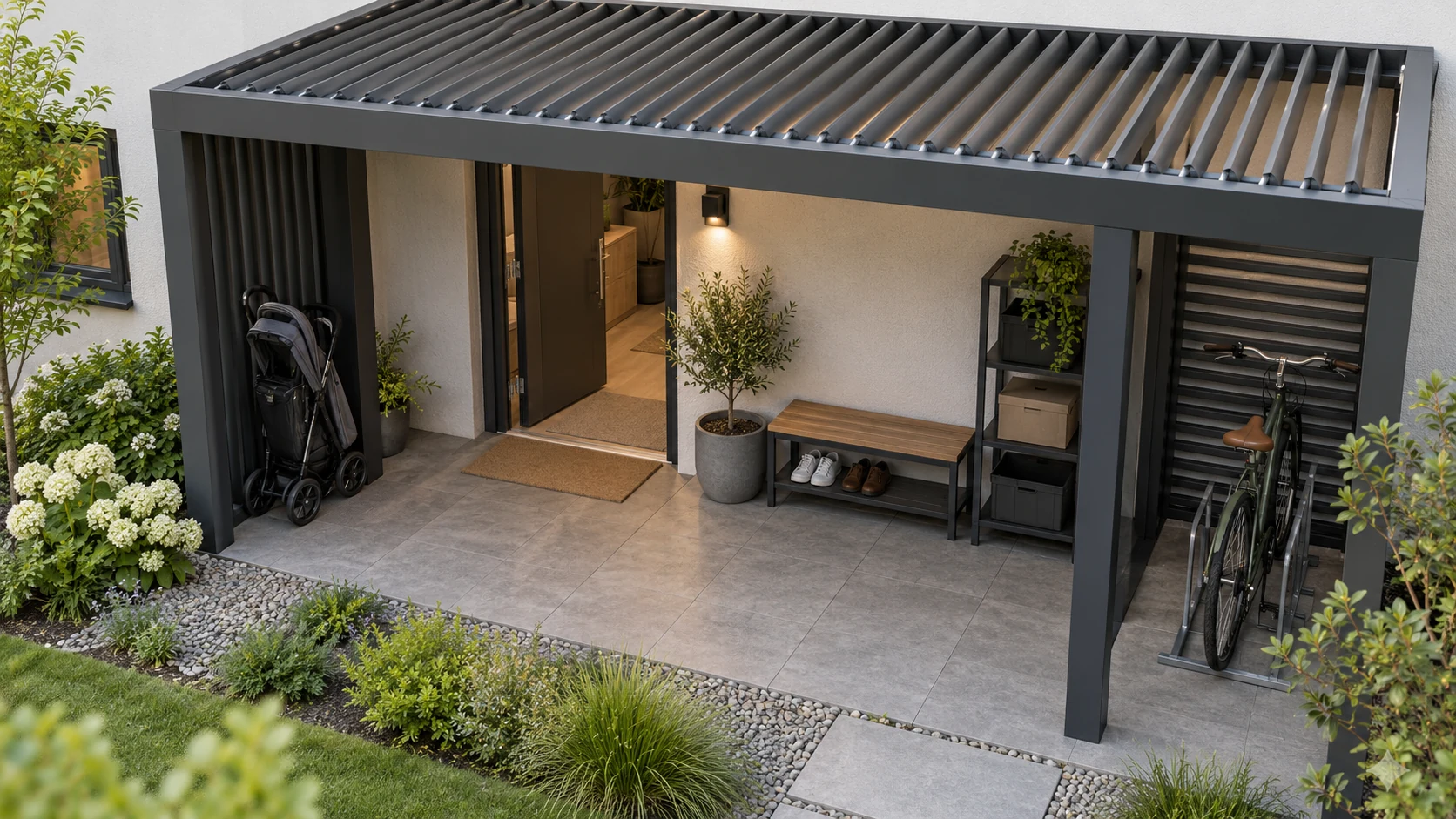
A bicycle's occupied outline turns
A parked bicycle's dimensions do not describe its movement through a compact pergola. Handlebars turn, pedals approach chair legs and the handler stands beside it. Wheel the actual bicycle from garden entry to parking and back instead of inserting a side-view outline into a plan. Bars, accessories and carrying equipment vary, so use the household's real configuration. Separate routine capacity from occasional visitors rather than permanently crowding the sitting area to accommodate a hypothetical maximum that rarely materializes in ordinary use.
Consider racks and unlocking together
Assess how a rack supports the bicycle, its compatible types and fixing instructions. A pergola post is not automatically an authorized rack mount or secure locking point; attachment and theft resistance are separate questions. Test access to locks and whether removal contacts seated people. Wheels and accessories may bring water or dirt, so consider proximity to cushions and rugs. This article guarantees neither theft prevention nor all-condition protection from cover. Those boundaries remain relevant even when the arrangement is primarily intended for convenient daily parking.
Have the regular rider retrieve the bike
Imagine a bicycle behind the pergola table, visually unobtrusive but requiring its bars to thread between two chairs. With ordinary seating occupied, rehearse appropriate retrieval and note when others must yield. Do not force the bike through a constricted gap; use the trial to compare orientation or fewer furnishings. Folding bicycles need their instructed folding and unfolding movements tested too, not just their stored volume. Consider the ordinary hurried departure rather than judging convenience only on a leisurely day when someone willingly moves several pieces of furniture.
Define the parking and equipment scope
Confirm actual bikes, rack and routes, checking ground, fixing and care and providing suitable accessory storage. For electric bicycles, a parking plan is not a charging plan; batteries and charging retain their own instructions and applicable requirements. Cover does not authorize an improvised station. Photograph parked and retrieval states and identify positions kept clear. Watch for new planters or clutter entering turns and adjust when conflicts appear. Useful parking makes the bicycle accessible without requiring the rest of the household repeatedly to surrender dining or passage.
If two riders leave together, check that removing the first bicycle leaves a workable route for the second.
- Test complete movement with actual bars and accessories.
- Try unlocking and retrieval with seats occupied.
- Verify rack fixing separately from other equipment uses.
Does a bicycle shorter than the pergola width fit conveniently?
Check turning bars, pedals, handler position and the complete exit route with furniture occupied. Verify rack and pergola attachment separately. Cover establishes neither theft protection nor charging suitability, so one static dimension cannot settle the arrangement.
More questions, practical answers →