Solar canopy decisions
Solar Canopies Over Permeable Parking: Rechecking Runoff Paths
Review how a solar canopy concentrates rainfall and changes the interface between permeable parking and roof-water outlets.
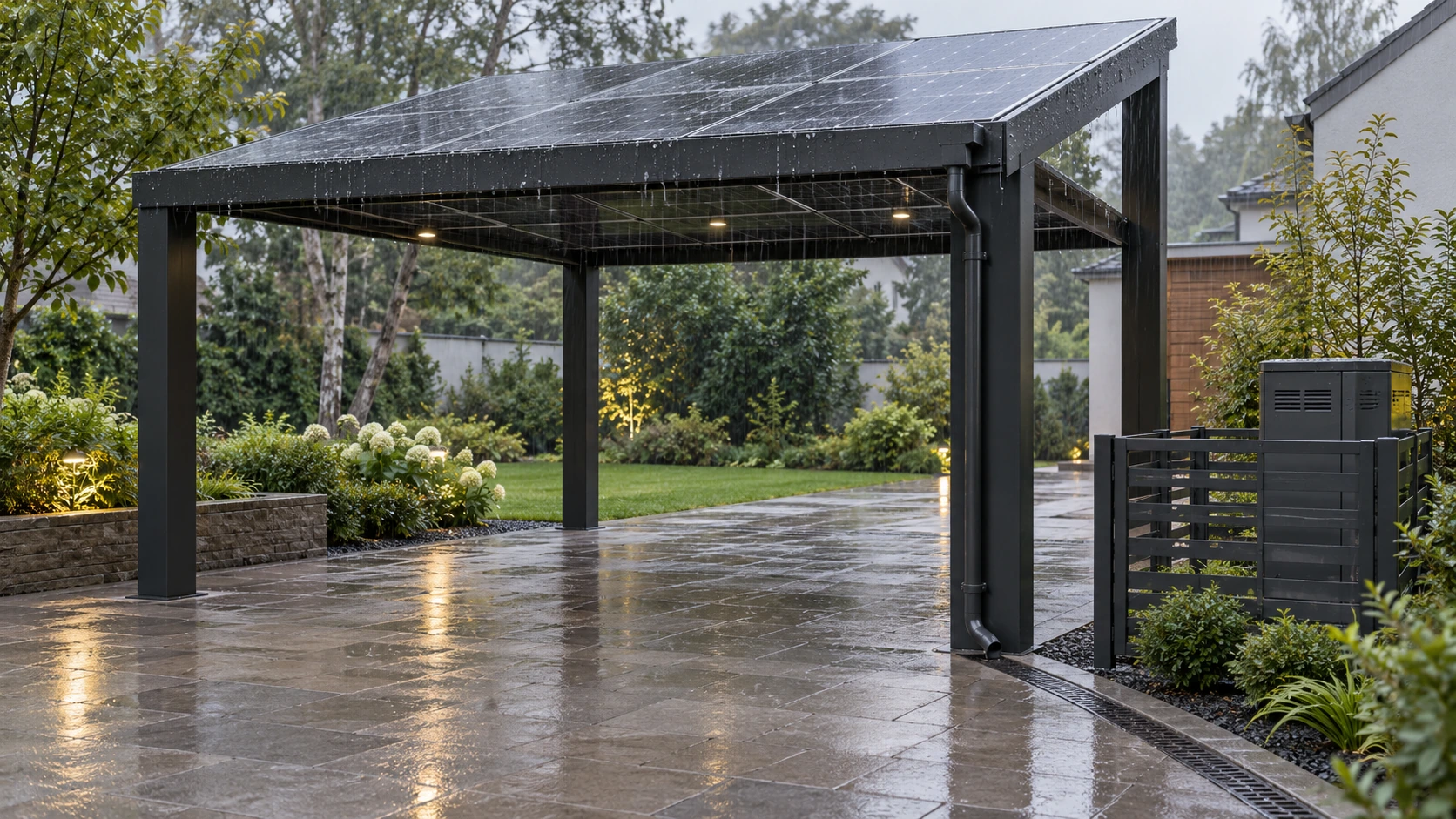
Recognize the change in rainfall distribution
A solar canopy changes how rain reaches permeable parking. Water formerly distributed over a broad paved area may be directed to a few outlets, changing the amounts received beneath the roof and near discharge points. The word permeable does not establish that every location can accept concentrated runoff. Obtain the original drainage design and maintenance records for review against current conditions. Subsurface construction, levels, blockage and surrounding flow paths may matter. Verify the original assumptions rather than substituting one generic infiltration value for a site assessment.
Overlay existing drainage and new roof-water routes
Use one plan to show roof collection areas, outlets, existing drainage, permeable zones and occupied spaces. The design should explain the connection to site drainage, maintenance and paths outside normal operating conditions. Do not place the downpipe at the easiest installation point and assume the paving will accommodate it. Where construction cuts into permeable paving, define reconstruction and acceptance responsibilities rather than matching only surface color. Missing original information calls for investigation within the work scope, not an unresolved note assigning everything to the owner.
- Verify original drawings, present condition and maintenance.
- Map concentrated discharge against walking routes.
- Define restoration and acceptance of disturbed areas.
Compare an outlet near a busy entrance
Imagine a proposed outlet at a permeable corner beside a busy office entrance. Review ordinary rain, debris and maintenance conditions, rather than stating only that water eventually infiltrates. Designers can compare alternative outlets and connections, including effects on parking and servicing. This does not prescribe a drainage construction; it avoids placing unassessed flow on the most-used path. Existing puddling also needs investigation. Adding a roof should not be assumed to cure a pre-existing site drainage problem.
Record locations and completed interfaces before they become concealed, supporting later maintenance access.
Distinguish planning conditions from engineering suitability
Some planning rules specifically address canopy drainage. England's Class OA provisions include conditions for development above permeable surfaces, but these are not a universal drainage design method. Engineering review remains site- and jurisdiction-specific. Handover should include updated water routes and maintenance areas, identifying locations that later parking, storage or paving changes must preserve. Record rainfall conditions and locations of abnormal behavior for review. This establishes whether old and new systems work together, rather than relying on the presence of a permeable label in project documents.
Does permeable parking remove the need to design solar canopy drainage?
Review is still needed. The roof redistributes and may concentrate rain, so suitability depends on construction, falls, current condition and maintenance. Professionals should design connections and define restoration and abnormal flow paths. Permeable paving alone does not validate every outlet location.
More questions, practical answers →