Retractable awning choices
West-facing patio glare: what an awning valance can and cannot change
Evaluate low afternoon sun from seated positions. A suitable valance changes the shading position, together with the view and operating constraints.
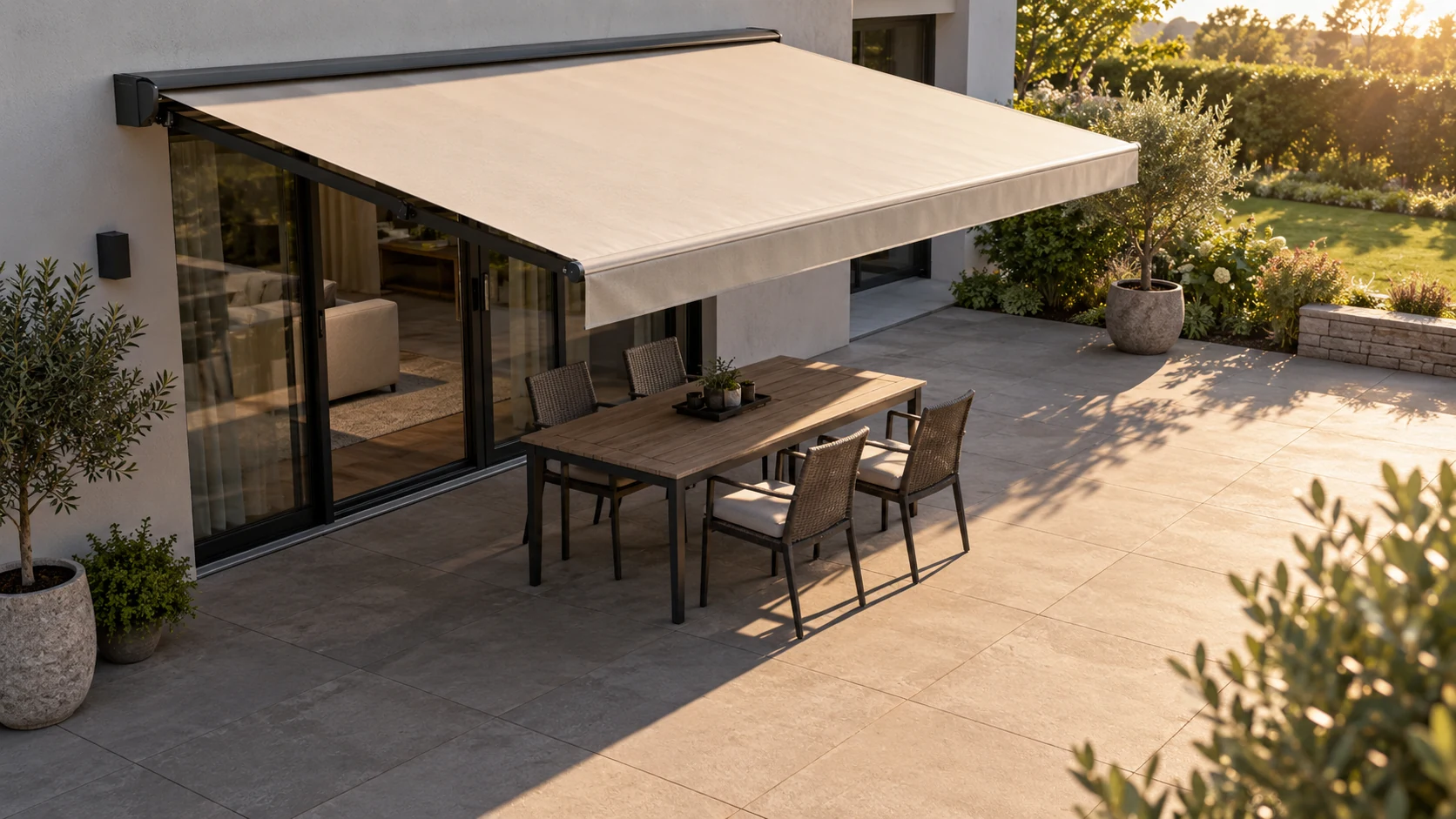
Identify where sunlight enters
When an awning fails to relieve afternoon glare, identify whether sunlight enters below the front edge or from the side. Overhead fabric can leave a seated person looking directly toward low sunlight. A vertical shading element may therefore deserve discussion before a wider canopy. Compatibility must be established for the actual system. A decorative fabric border and an adjustable drop-down accessory are not automatically equivalent. Products sharing a valance label may serve different purposes. Start with the troublesome seat and light direction, then judge whether the proposed accessory addresses that particular problem.
Shading sunlight may also obscure the view
Mark the proposed lower boundary temporarily and inspect the garden, neighboring windows and entrance from regular seats. This reveals the trade-off between direct glare and the view. A family that values seeing the garden may prefer deployment only during particular hours. Compare actual samples for transparency, color and perceived light rather than relying on a photograph made under different conditions. Privacy also needs context: illumination from another direction can change how people and outlines appear. Observe the conditions relevant to your household instead of assuming a single daytime demonstration describes every situation. If a lowered valance obscures supervision across the garden, include the person providing that supervision in the trial instead of deciding from a sales illustration.
Turn a seat-specific complaint into a test
Imagine one end of a long table causing squinting each afternoon while the other seats remain comfortable. Compare rotating the table, changing that seat and adding a compatible front accessory before specifying a full side screen. Have the same person assess the options at similar times and note whether the chair still needs constant repositioning. A front valance may not intercept light arriving from the side. This trial can eliminate unnecessary equipment while revealing conflicts with the normal walking route. The purchase includes daily deployment and stowage decisions, not just additional fabric.
Confirm stowage and operating conditions
Before ordering, ask how the accessory relates to the main awning, how it is stored, when it may be used and how it can be serviced. Additional fabric is not evidence of improved structural wind resistance, and automation does not replace operating instructions. Demonstrate the closing sequence to everyone who will use it and keep the relevant guide near the controls. Itemize the main awning and accessory separately, retaining an alternative furniture layout. For a TTH proposal, verify the configuration actually offered rather than importing a feature from another manufacturer’s photograph.
- Record direction and time at the affected seat.
- Compare the remaining view, entrance and privacy.
- Itemize compatibility, stowage sequence and operating conditions.
Will adding a valance always solve west-facing patio glare?
No. Establish whether sunlight comes from the front or side and assess it from the actual seated position. A front accessory may reduce low frontal sunlight while leaving side glare, obscuring views or affecting access. Compare furniture adjustments and compatible accessories, then confirm stowage and weather limits.
More questions, practical answers →