Solar canopy decisions
Where Should Solar Carport Inverters Be Located?
Site solar carport inverters using equipment requirements, exposure, drainage, vehicle approach and service space.
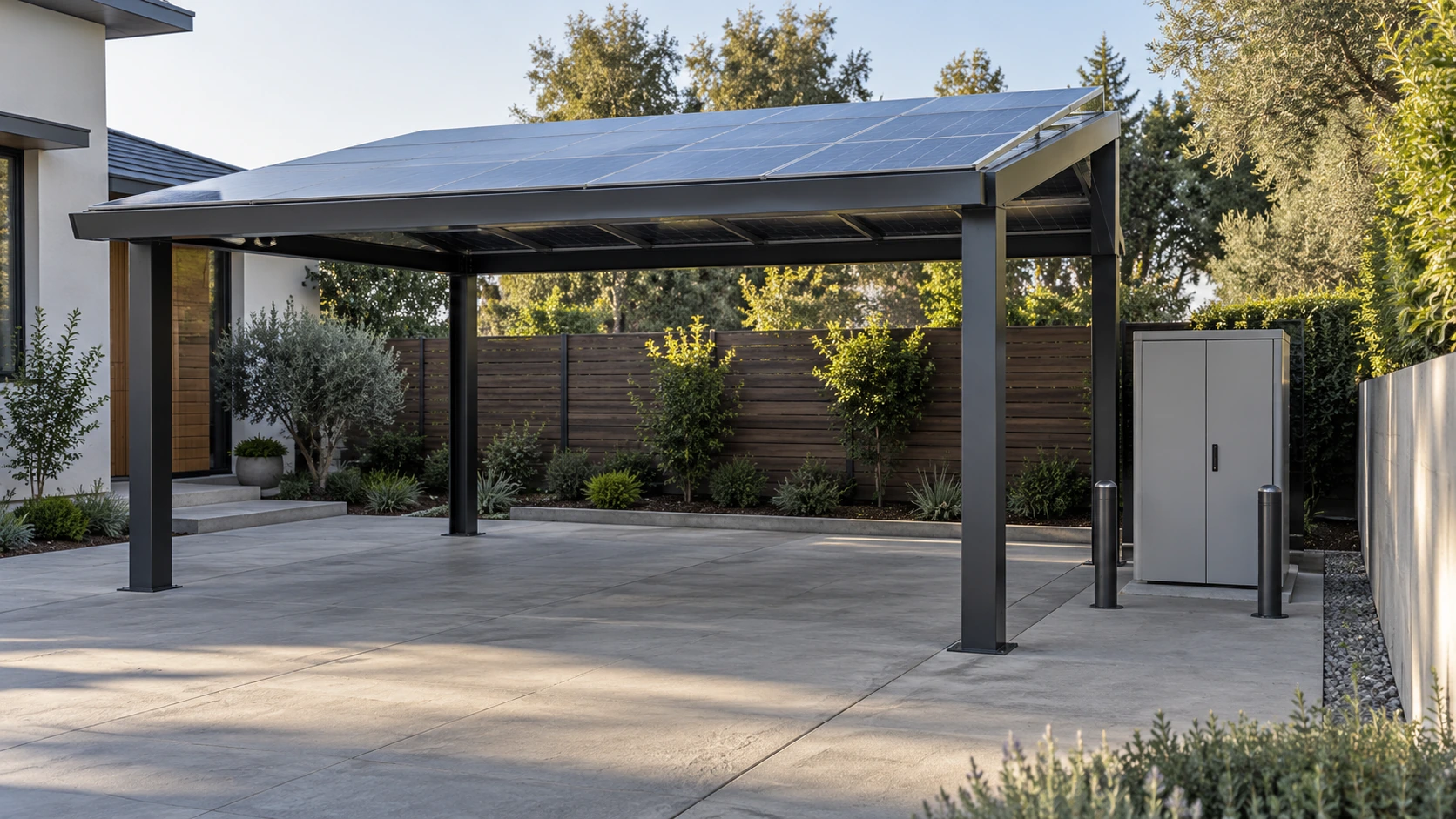
Treat equipment location as an early design decision
Choose solar carport inverter locations during coordinated parking and electrical design. The position must suit actual environmental, ventilation and service instructions, along with sun, rain, flooding and vehicle approach. An unused corner is not automatically suitable, and an outdoor label does not resolve every site condition. Obtain candidate equipment documents and have the electrical designer define space and environmental requirements before selecting locations. Squeezing equipment into whatever remains after the structure is installed shifts avoidable coordination problems to the operator.
Check open doors and equipment removal
Show operating and servicing states. Doors, removable panels, working areas and replacement routes may require more space than the cabinet footprint, which nearby bollards, markings or landscaping must respect. Actual product instructions and local requirements determine distances and ventilation; there is no universal dimension for this guide. Where equipment adjoins public routes, review access management and signs. Discuss service equipment and entry permissions before fixing the location rather than treating a serviceable label on the drawing as evidence.
- Verify environmental and spatial requirements in the manual.
- Map vehicle, water and pedestrian approaches.
- Check door opening and complete-unit replacement space.
Compare the complete effects of two locations
Imagine two options: beside a canopy column or near a building wall. The first offers a direct cable route but approaches vehicle-door space; the second avoids parking movements but may extend wiring and occupy existing service access. Cable length alone should not decide. Review all interfaces with professionals and ask operations about temporary storage and service-vehicle access. A wall location still needs building-interface and site-use approval; a column-side location needs support and protection design. Each creates tasks to resolve rather than an inherently superior label.
For access through locked areas, define authorization outside working hours so an otherwise suitable equipment location can actually be serviced.
Preserve the conditions through handover and change
Record the model, approved position, service area and environmental conditions so later landscaping, advertising or parking changes can be checked. Routine staff can identify blocked service space and refer equipment faults to qualified providers rather than opening cabinets. DOE guidance supports early access planning and weather-appropriate equipment selection; it does not establish a particular rating for a TTH configuration. Review instructions when equipment changes, since similar external dimensions do not validate the old location.
Can an outdoor-rated inverter go anywhere beneath a solar carport?
The location still must suit actual ventilation, exposure, water, vehicle protection and servicing requirements. Have the professional designer verify it and define access. An outdoor label is not universal permission for every environment; review replacement models and surrounding changes.
More questions, practical answers →