Solar canopy decisions
Is a Steeper Solar Carport Always Better?
Compare solar carport tilt through generation assumptions, clearance, wind conditions and drainage rather than one universal optimum angle.
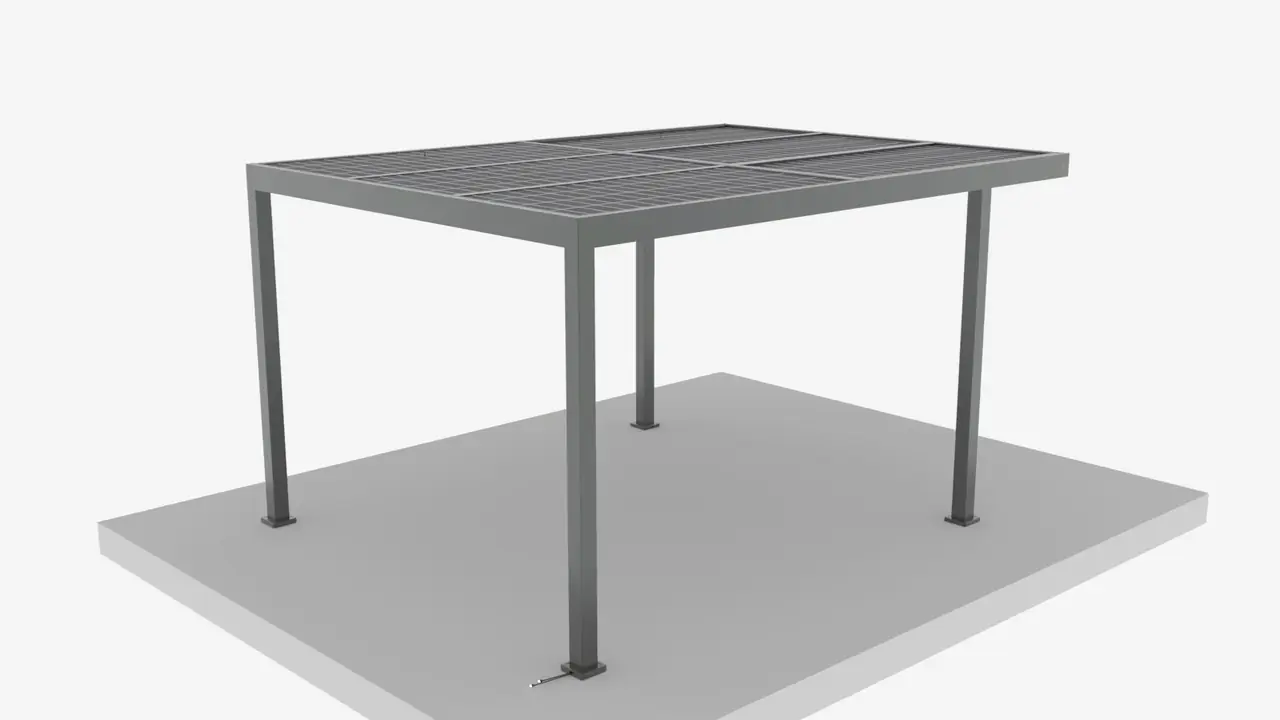
Tilt cannot be selected in isolation
A steeper solar carport is not automatically better, and a regional rule of thumb cannot settle the design. Tilt changes solar geometry, roof height differences, edge positions and vehicle space. Wind, snow and drainage require their own reviews. Establish site boundaries, parking needs and the proposed modules before comparing feasible angles. An option that performs well in software but fails clearance or engineering requirements is not a usable solution. An optimum must identify what is being optimized; the meaning cannot shift unnoticed between energy, geometry and practical use.
Compare candidates under consistent assumptions
Ask designers to compare feasible options showing high and low edges, clearance, outlets and module count. Use consistent weather and equipment assumptions in generation estimates, identifying every changed input. If tilt, capacity and shading change together, do not attribute the entire difference to angle. Structural review must identify its applicable geometry and environmental conditions. A model running without an error does not establish structural adequacy or a workable drainage path. Keep each discipline's evidence connected to the same option so the comparison remains interpretable.
- Show tilt and minimum vehicle clearance on sections.
- Separate capacity changes from angle changes in the model.
- Have structural and drainage specialists confirm feasibility.
Compare a site with a height constraint
Imagine a parking row constrained by adjacent windows or local height conditions. Raising one roof side might reduce low-edge clearance, while lifting the whole canopy may exceed the allowable envelope. Compare a shallower roof, reduced coverage or another structural arrangement, then estimate output for viable candidates. An assumed non-negotiable angle should not repeatedly squeeze parking requirements. If annual estimates are similar, maintenance and drainage differences still matter; small model differences should not be treated as highly certain. This illustrates a decision process, not a specific angle or engineering conclusion.
Tell the modeling team if one season matters more to the project. Maximizing annual energy and matching a particular period are different comparison questions.
Record the compromise and review later changes
Retain the rationale, model inputs and matching engineering drawings, including limits. PVWatts estimates grid-connected production; it is not a structural or drainage design tool. DOE guidance also identifies trade-offs between weather-related objectives, so one recommendation cannot settle the entire project. A procured TTH configuration should match the professionally reviewed geometry. Module replacement, column-height changes or a new roof direction require reconsideration of the original compromise, rather than updated renderings paired with old calculations and forecasts.
Should a solar carport use the tilt with the highest estimated generation?
Check clearance, height constraints, structural actions, drainage and maintenance first. Compare feasible geometries using consistent inputs and record the reasons and limits. The highest model result is not necessarily the best complete project and is not a TTH performance guarantee. Retain the matching design revision.
More questions, practical answers →