Hardtop pavilion planning
A pavilion for tool demonstrations: separate the demonstration and audience zones
Separate demonstration, viewing and storage under the relevant equipment and event requirements.
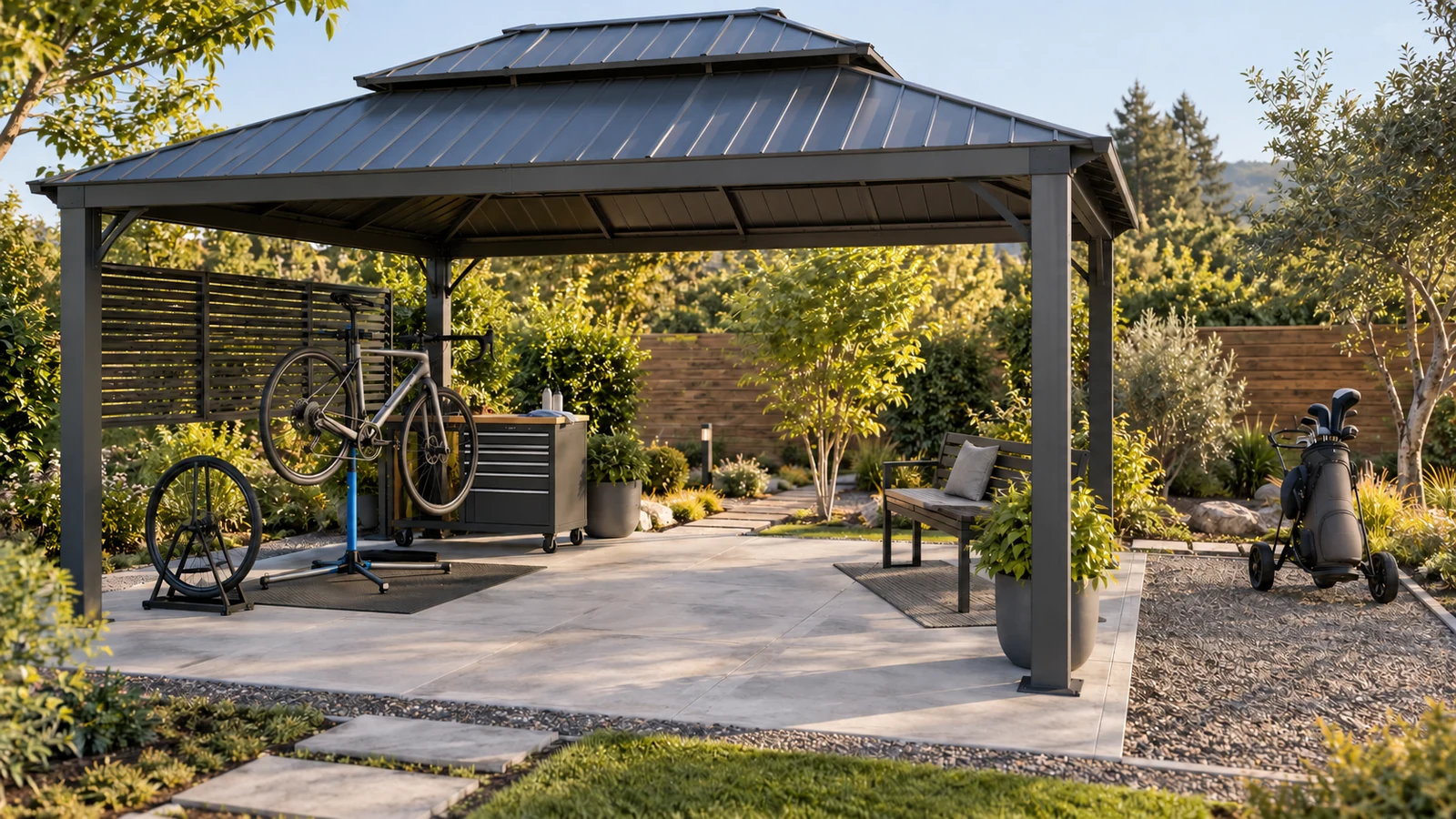
Define the demonstration and its owner
Define the equipment, whether it will operate, the operator and audience participation before arranging a demonstration pavilion. Different tools have different environmental and protective requirements; one furniture diagram cannot cover them all. A pavilion is not an equipment guard, and roof coverage does not establish activity suitability. Have the equipment lead define requirements under its instructions, then coordinate audience and access with the venue. This guide concerns space and responsibility rather than tool operation. A clear activity definition prevents late discovery of missing equipment conditions.
Map the work and audience areas separately
Map equipment, workpieces, operator and the required working envelope before locating viewers and questions. The relevant plan determines distances and protective measures; no generic value is supplied here. Assign demonstration materials, spare tools and completed items rather than hiding everything beneath a table. Confirm power, cables, lighting and equipment environment separately, including any proposed pavilion connection. Where visitors may handle exhibits, define the time, supervision and eligible items. Static display and operating states should be understandable rather than blending into one ambiguous area.
Rehearse the transition after the demonstration
Imagine visitors approach for a closer look while staff reset tools and materials. Rehearse that transition with equipment inactive to see whether viewers enter work space before it is released. Adjust the explanation sequence, question position or static display with the responsible team. This clarifies state changes; it does not certify equipment safety. Reassess different tools or demonstrations rather than treating a successful earlier session as permanent approval. External presenters particularly need the site conditions before they arrive with a completed show plan.
Define completion and the next session
Keep the scope, equipment responsibility, viewing area and reset process so staff can distinguish preparation, operation, display and storage. Return materials and temporary facilities to assigned places; pavilion care follows its own instructions. Address unmet conditions through the event plan rather than improvised audience moves or curtains.
Retain the current equipment and activity version. Similar-looking tools may have different requirements, so old promotional photographs do not establish that a replacement demonstration is ready or that the structure offers industrial protection.
- Confirm equipment and audience areas separately.
- Rehearse the transition into static display.
- Reassess each changed tool or activity.
Does overhead shelter remove the need for a separate audience boundary?
The actual equipment and event requirements still determine working and audience areas. Shelter is not a guard. Rehearse transitions with equipment inactive, assign responsibility and reassess when the demonstration changes.
More questions, practical answers →