Compact pergola living
Hose reels beside a pergola: map the hose when in use
Map the hose during watering and rewinding, not just the compact reel beside the pergola.
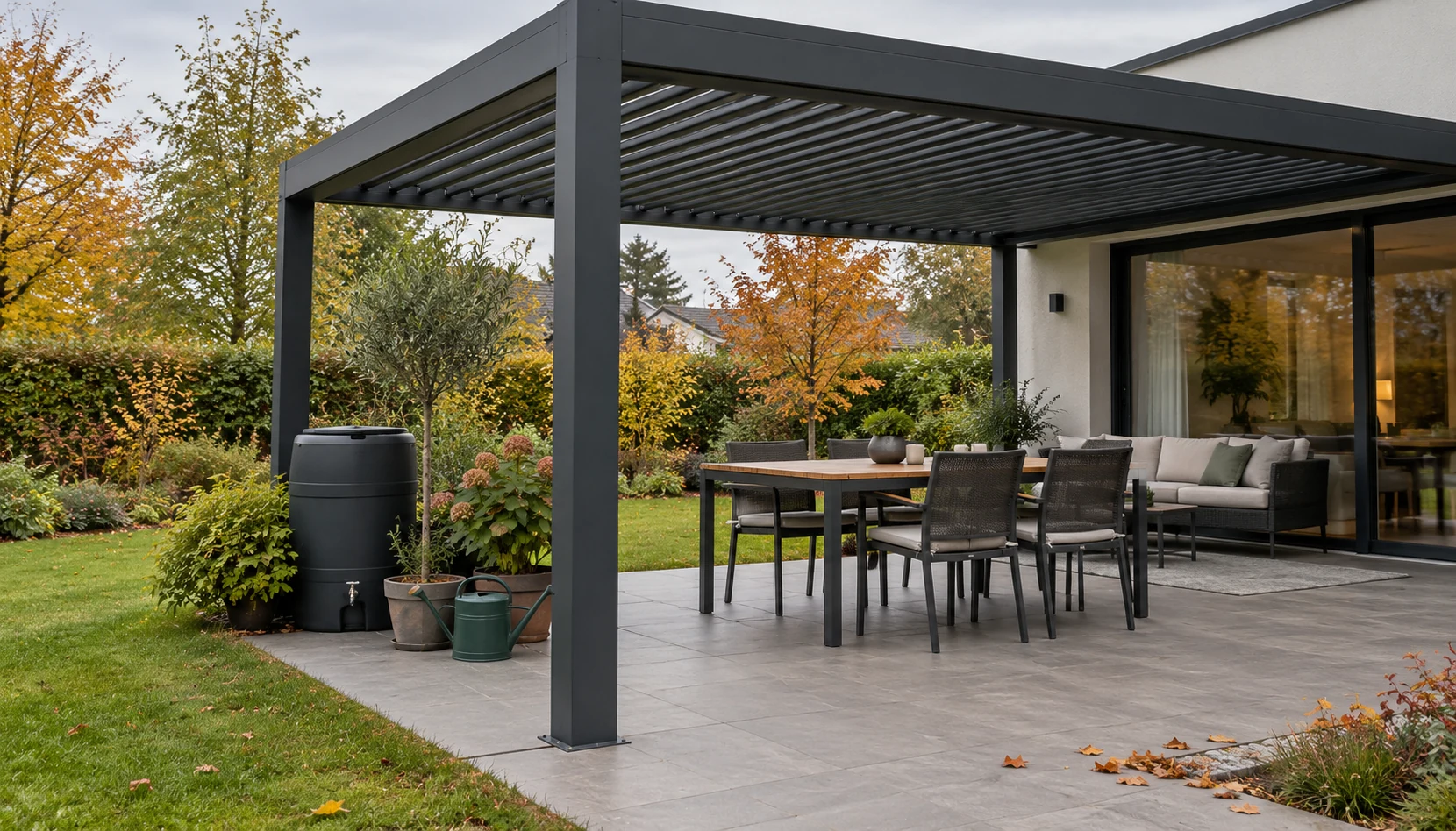
The stored reel shows only part of the footprint
A tap and reel may occupy little ground while stored, but watering extends the hose across the garden. Map regular pots, borders and cleaning points and the route from supply to each. Reel-case dimensions do not establish compatibility with the pergola: the operator and deployed hose need space too. Check installation, extension and rewinding instructions instead of pulling in unsuitable directions or accepting improvised fixing. The important layout is the active one, not simply whether the stored reel looks compact and tidy against an edge.
Keep rewinding positions clear of furniture
Rewinding requires the instructed standing position, nozzle handling, supply shutoff and return. If chairs or planters occupy that spot, every watering session begins with clearing furniture. Test doors, steps and chair legs rather than judging only straight-line reach. Restore the hose appropriately after use instead of leaving it across a household route. Wall and pergola fixing require their own checks; convenience does not authorize holes in unapproved posts, beams or drainage parts. A suitable installation supports reaching, operating and finishing, not length alone.
Rehearse the farthest watering task
Imagine easy watering near the pergola but a hose route around the dining table to reach the far border. Under appropriate conditions, rehearse from taking the nozzle to returning it, recording the route, other people's passage and furniture moves. This hypothetical example asks for no use beyond product limits and supplies no universal route. Compare planter placement, reel siting or another professionally confirmed arrangement if one regular destination causes trouble. Buying a longer hose may add reach without solving the underlying circulation conflict.
Define the end-of-watering routine
Keep a map of supply, reel and destinations, verify mounting and use requirements and involve the regular gardener in the trial. Shut off, rewind and handle the nozzle as instructed, checking water or debris on routes. Water plants according to their needs, not more uniformly just because the hose is convenient. Follow equipment and local conditions for winter or prolonged storage. Acceptance should cover both reaching targets and responsibility for restoration, preventing watering equipment from continually occupying the pergola's everyday dining and passage areas.
- Map deployed routes to regular destinations.
- Rehearse rewinding and shutoff as instructed.
- Check restored passage after finishing.
Does a small hose reel stay out of the way in a pergola corner?
Not necessarily. Deployed hose, operator position and rewinding can conflict with furniture and routes. Test actual watering destinations and full return, checking doors, steps and chairs. Verify mounting requirements rather than judging the stored case alone.
More questions, practical answers →