Hardtop pavilion planning
A farm tasting pavilion: overhead shelter and food protection
Review farm-tasting shelter separately from sample protection and temporary service equipment.
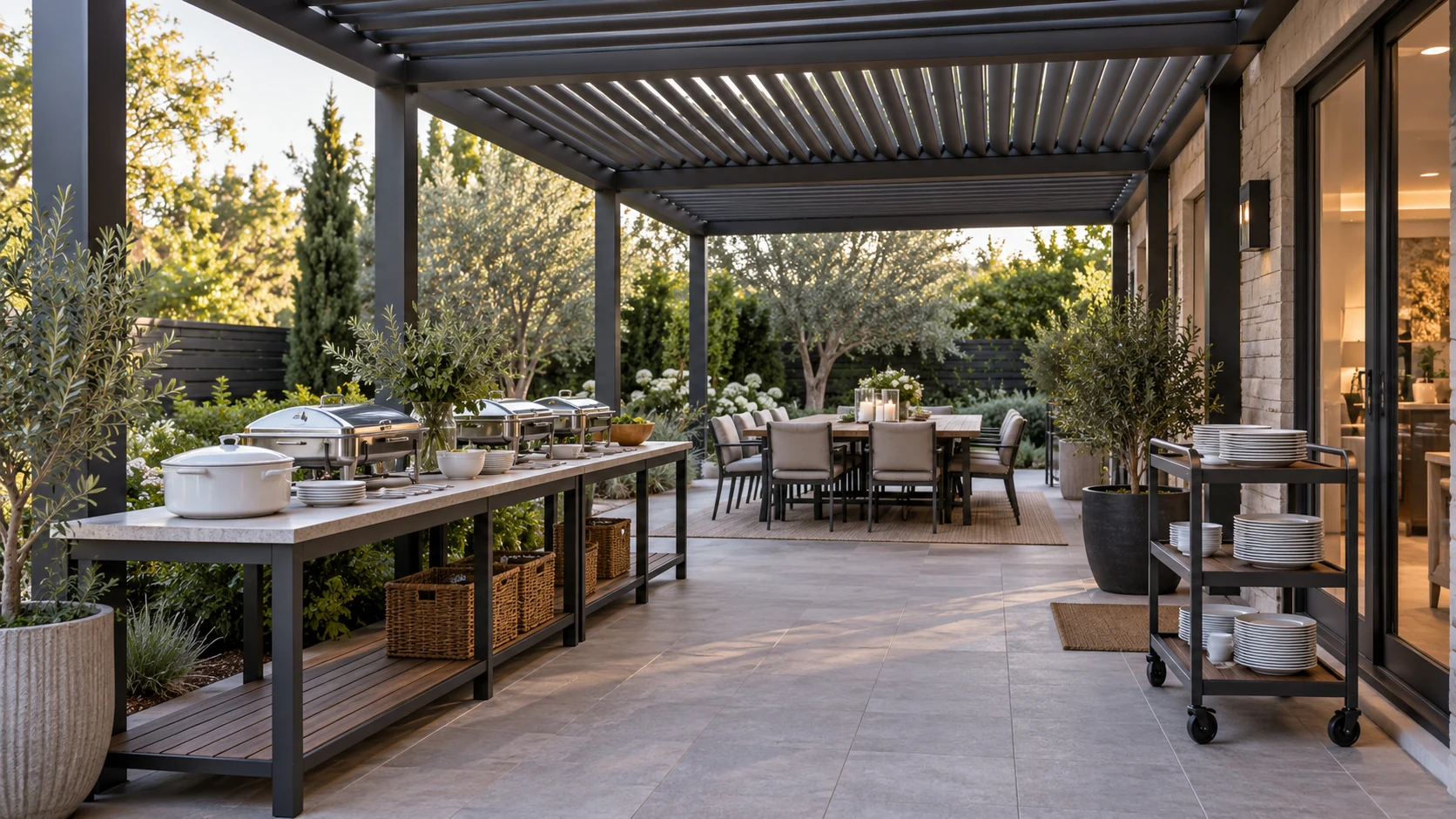
Build the checklist from the tasting service
Describe samples, preparation location, display and serving responsibility before choosing pavilion size. Structural shelter and food protection require separate checklists. A hardtop does not replace applicable operating, cleaning or storage requirements. Confirm local rules for the actual service; general guidance is not project permission. Map preparation, presentation, collection and waste to reveal temporary equipment and staffing needs. This article focuses on food protection and service facilities rather than treating attractive visitor surroundings or a convenient roof as evidence that food handling is ready.
Specify temporary equipment and interfaces
Identify who supplies display containers, utensils, washing or cleaning facilities and other required equipment, then confirm their conditions of use. A short event does not justify omitting essential support, and another farm menu is not a transferable equipment plan. Assign protection, replenishment and waste positions rather than sharing one visitor table for every task. Check the deployed pavilion accessories too. Ask about the actual delivered configuration instead of treating cabinets, refrigeration or protective features shown in another brand photograph as standard supply.
Test replenishment while used items are cleared
Imagine samples are replenished while used utensils return and unopened packaging waits beside the display. Rehearse with empty containers to check distinct positions and a workable handover. Adjust equipment or sequence with the food-service lead. This exercise gives no storage-temperature or shelf-life advice and does not constitute a hygiene acceptance. It exposes operating omissions so facilities and pavilion preparation can be coordinated. The important result is a clear receiving condition for each item, rather than an attractive table that mixes incompatible service tasks.
Confirm both readiness lists before opening
Before opening, confirm pavilion availability and food-service readiness through their respective owners. Delivered equipment still needs its relevant interface checks. Record remaining items, transfers and cleanup at closing. Reassess changes to menu, supply or duration rather than copying an old completion status.
For outside operators, identify venue facilities, brought-in equipment and the required departure condition. Describe the real tasting service without presenting the hardtop itself as permission to operate or a complete food-protection system.
- Separate shelter and food-service checklists.
- Confirm temporary equipment, interfaces and protection.
- Rehearse replenishment and returns with empty containers.
Can a short farm tasting begin as soon as the hardtop is ready?
Confirm preparation, display, protection, cleaning and waste for the actual service and local requirements. Temporary duration does not replace facilities or responsibility. Keep structural availability and operating readiness as distinct checks.
More questions, practical answers →