Hardtop pavilion planning
Questions to ask about an insulated pavilion roof
Clarify layers, joints, test scope and open-sided use conditions before accepting an insulated-roof description.
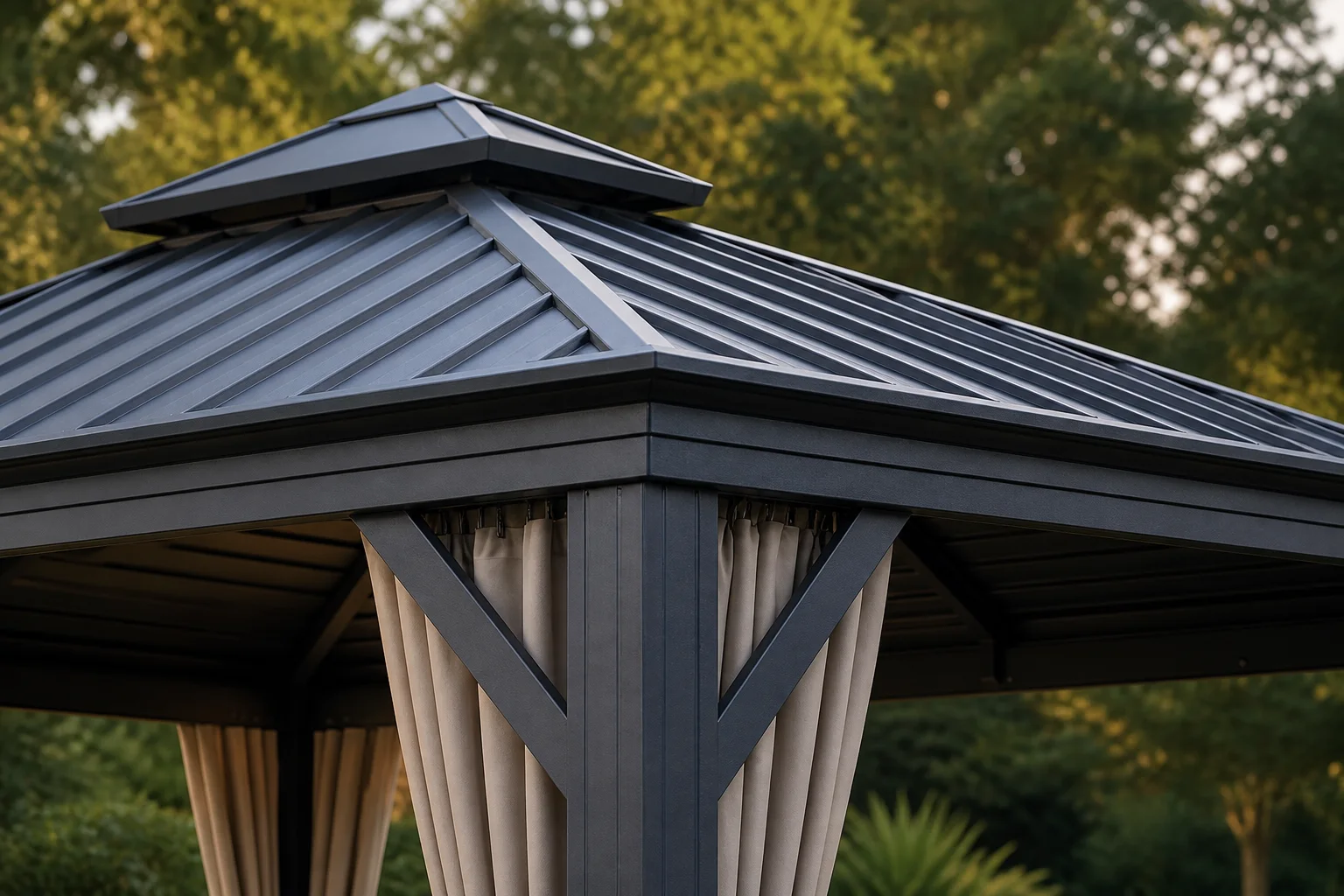
Ask what the insulation description actually covers
When a gazebo roof is described as insulated, first ask which layer, panel or complete assembly the term covers. Material comparisons may involve cellular panels, sandwich constructions or an added lining; these are not interchangeable products. Request a section identifying the outer surface, internal layers, inner face and joints, then establish what the supplied data applies to. This is a purchasing method, not a statement that TTH offers a particular insulated configuration. A label without applicable evidence should not become a thermal rating or a promised temperature change.
Separate panel data from the open pavilion environment
Even with clear panel data, an open pavilion is affected by side exposure, sun direction, surrounding buildings and the hours of use. Ask whether the test concerns one panel, an assembled roof or a structure under defined conditions. There is no need to convert a material figure into a predicted seating temperature. Keep material evidence at material scope, and check whether joints, edges and accessories are included in the assembly description. This uses the available information without extending a local measurement into a comfort guarantee for every setting.
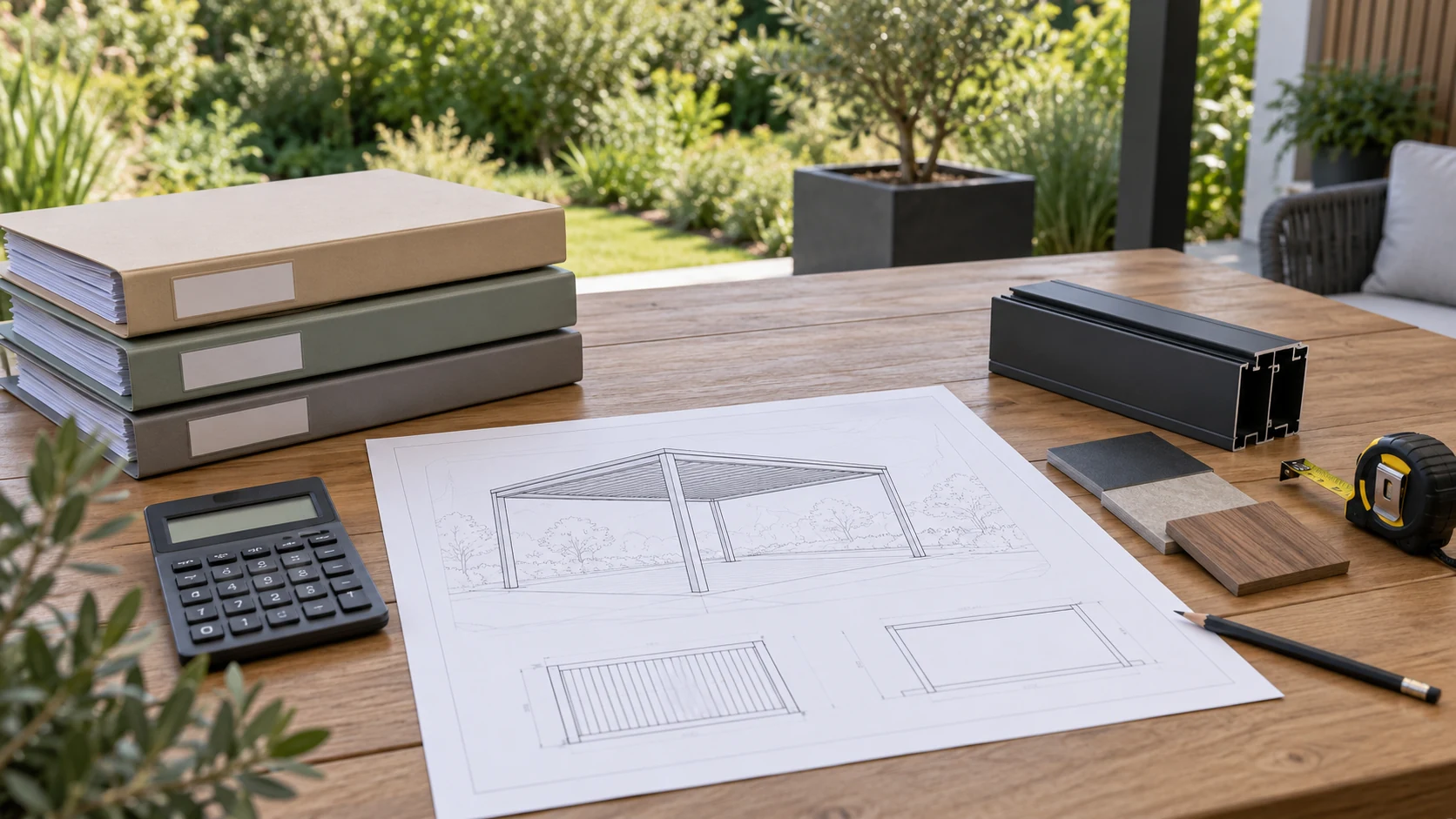
Test the proposal against an afternoon resting use
Imagine an owner who wants a better afternoon seating experience and receives a proposal for a thicker roof. Describe seating direction, curtain positions and the specific concern: overhead sensation, direct sunlight or limited air movement. Request relevant evidence or an appropriate demonstration. A concern dominated by low-angle side sun may not be addressed simply by adding roof layers. Where applicable tests exist, identify how their conditions differ from the garden. The exercise does not diagnose thermal performance; it keeps the purchasing discussion connected to the actual problem instead of a thickness contest.
Include maintenance and replacement in the decision
Additional roof layers also raise questions about edge details, signs of water entry and whether damage requires a surface or complete component replacement. Do not imitate another system by opening panels or adding lining independently. Record assembly, evidence, limitations and repair method together, leaving unresolved questions open rather than assuming thicker is better. The selected option should have an understandable purpose and maintenance path.
Ask whether the configuration changes accessory positions or service access. Even when comfort drives the purchase, identifying and replacing relevant components matters to the long-term suitability of the upgrade.
- Identify whether the claim covers a panel or complete roof.
- Request the assembly, conditions and scope behind test information.
- Review joints, edges, accessories and repair methods together.
Does a thicker gazebo roof necessarily make the space cooler?
No. Establish the construction behind the thickness and whether the evidence covers a panel or roof assembly. Side exposure, sunlight and curtains also matter. Request relevant evidence rather than converting thickness into a temperature promise.
More questions, practical answers →