Retractable awning choices
Striped fabric on a narrow balcony: look beyond the small swatch
Use a sufficiently large sample to assess stripe repeat, deployment direction and edge cuts instead of judging the complete fabric from a tiny swatch.
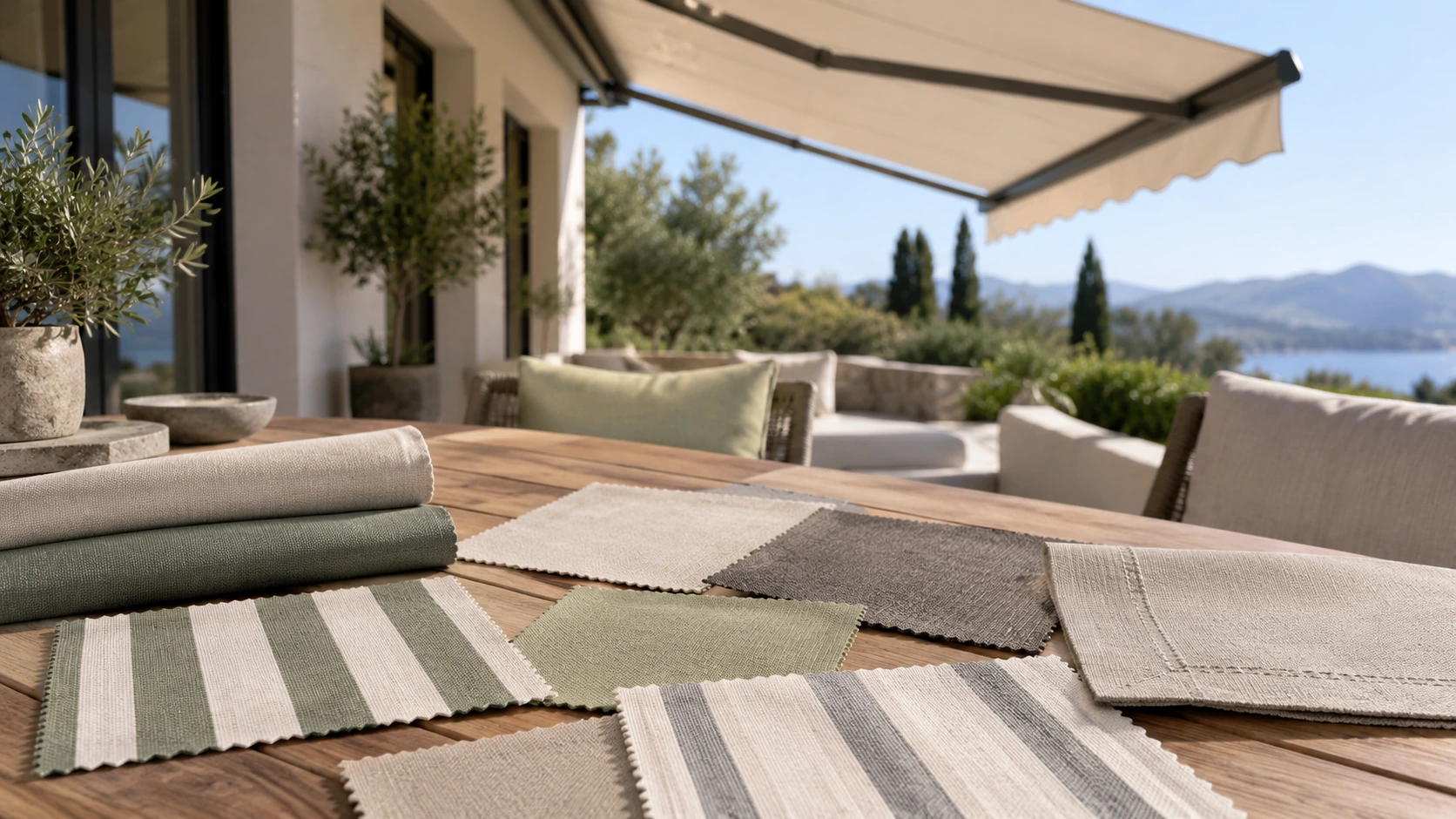
A small swatch shows color but may hide proportion
A swatch helps compare colors but may omit a complete stripe repeat. Broad bands, narrow lines and spacing need to be seen against the actual visible fabric width. Ask about pattern repeat and placement, using a larger sample or a model-specific layout rather than an enlarged phone image. Identify what is visible from indoors and from the street, then assess how many complete repeats fit those areas. This reveals cases where an attractive small sample becomes visually fragmented or more dominant than expected across the finished narrow balcony.
Confirm the stripe direction in the finished fabric
The relationship between stripes, projection and the front edge affects appearance, but available orientation must come from the fabric and equipment proposal. Do not request arbitrary fabric rotation without checking manufacturing and application requirements. Review the deployed surface, valance and any visible portion when stowed together. Ask where seams or joined panels occur and how their patterns relate. A seamless rendering does not establish uninterrupted stripes on the manufactured article. The supplier should explain the layout that can actually be delivered rather than merely reproduce an idealized visual effect.
Compare with the lines already on the balcony
Imagine closely spaced railings and narrow window frames alongside high-contrast fine stripes. The combined elevation may feel busier than the fabric alone. Place samples beside the actual facade and frames, viewing from the usual indoor seat and an appropriate exterior position. There is no universal requirement that a narrow balcony use a particular direction or pale color. Compare a few candidates under similar light and viewpoints, recording what feels coordinated or too prominent. Specific reactions are more useful than unsupported claims that a pattern automatically makes every space larger or more sophisticated.
Carry the pattern confirmation into the order
Before ordering, confirm fabric reference, orientation, visible valance style and supplied seam information, linking the accepted sample to the order. A similar replacement pattern needs another repeat-scale review, not only a color-name comparison. Check delivery against the agreed appearance and applicable manufacturing guidance rather than judging from an unrelated online image. Later fabric replacement also needs renewed confirmation; old records support discussion without guaranteeing a perfect new-to-old match. The aim is a coherent complete installation, not selecting the most striking isolated swatch.
- Review a complete pattern repeat rather than a tiny swatch.
- Confirm orientation, valance, joins and edge cuts.
- Compare beside real frames and railings and retain the fabric reference.
Is color enough when choosing striped awning fabric for a narrow balcony?
Also assess repeat scale, actual orientation, edge cuts and joins. A small swatch may hide the full effect. Compare a larger sample beside the real frames and railings from the usual indoor view, then link fabric reference, direction and valance style to the accepted order information.
More questions, practical answers →