Retractable awning choices
Before printing a shop name on an awning, check both operating states
Check artwork position, street viewpoints and stowed visibility separately before confirming printing scope and applicable signage requirements.
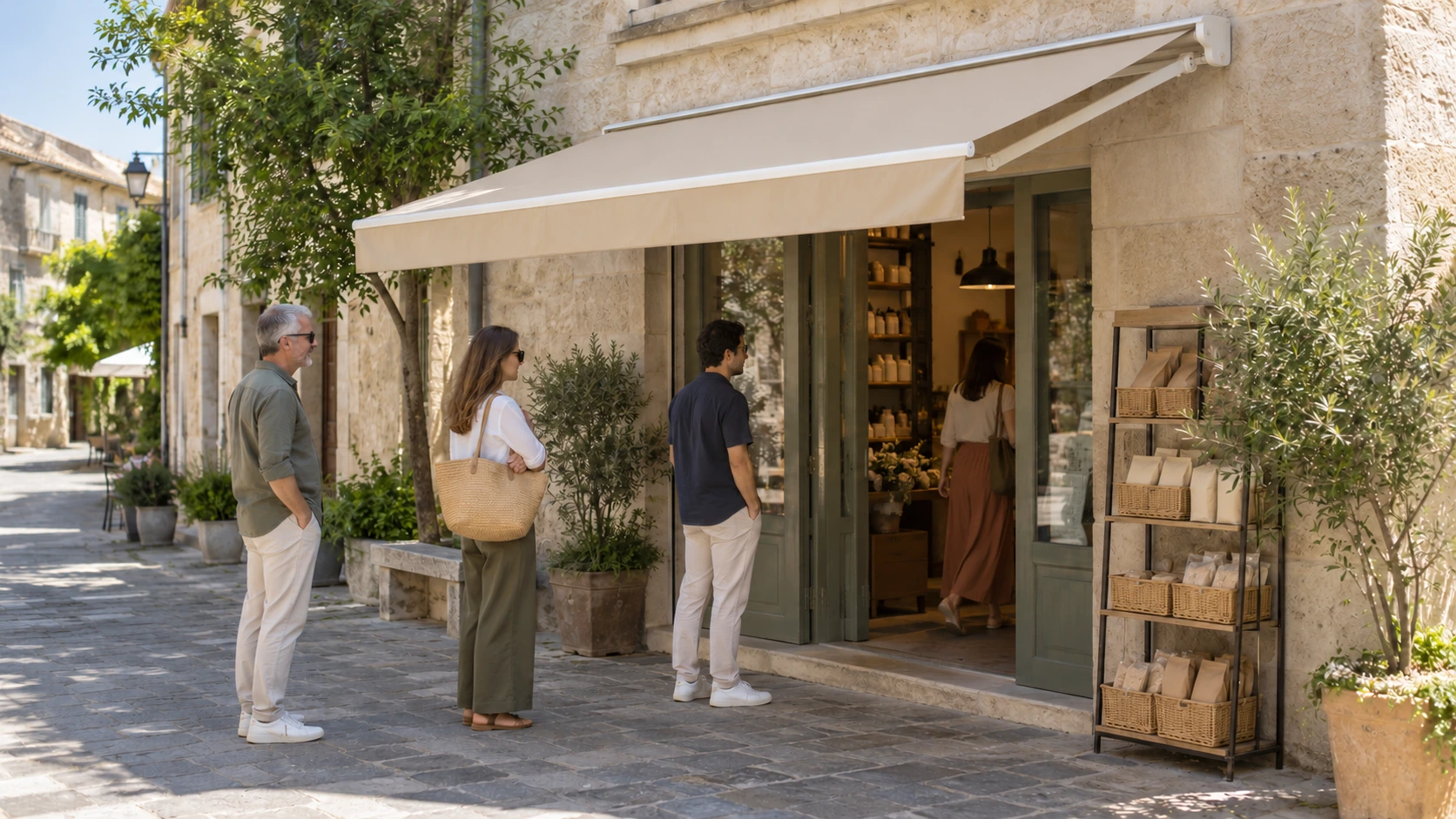
Define who should see the name and from where
Before printing, identify the intended viewer: passing pedestrians, people waiting opposite or customers approaching from parking. Different viewpoints need different placement and lettering, so a straight-on rendering is insufficient. Mark approach directions, obstructions and the existing storefront sign on real photographs, comparing permitted artwork areas. This concerns recognition, not promised increases in footfall or sales. Check relevant property and local signage requirements with the appropriate decision maker rather than treating a neighboring business’s existing sign as automatic permission for the same arrangement.
Check what remains visible after retraction
Artwork visible when deployed may disappear into the roll or behind the cassette when stowed. Request views of the actual model in retracted and normal deployed states and consider whether the shop still needs a separate fixed sign. An awning is not a billboard with constant visible area, and branding should not require unsuitable continued deployment. For a valance, confirm the actual style and printable area instead of lengthening it arbitrarily in a rendering. Operational needs and equipment instructions must inform the sign arrangement together rather than advertising overriding normal use limits.
Review artwork at a meaningful scale
A long shop name compressed into a narrow valance may look readable on a monitor but perform poorly from the street. Use correctly scaled artwork or an appropriate site mock-up, comparing contrast and asking someone unfamiliar with the name to assess recognition. Do not enter unsafe or restricted street positions for the exercise. Include manufacturing margins, seams and other supplier requirements in the artwork review. Approval should identify a producible layout with position and scale, not merely provide a logo file and assume the manufacturer will infer the intended result.
Keep print approval with the fabric specification
Retain the final artwork version, color reference, placement, operating-state views and supplier-approved scope. Confirm whether printing affects the applicability of fabric information rather than adding an unassessed treatment later. Check delivered visibility against the approved artwork and record appearance or placement questions. A new business name, fabric or valance requires renewed review; old artwork is not automatically suitable for new dimensions. Completion should address manufacturability, visibility and relevant requirements together, rather than simply approving an attractive front-facing rendering.
- Define customer viewpoints and real approach directions.
- Review visible artwork when stowed and deployed.
- Keep producible artwork, fabric confirmation and required signage consent.
Can a shop replace its fixed sign with a name printed on the awning?
Review visibility when retracted and how customers identify the shop when deployment is unsuitable. Check relevant property and local signage requirements, and confirm printing and fabric scope with the supplier. Assess real customer viewpoints; continuous identification may require a separate fixed-sign arrangement.
More questions, practical answers →