Solar canopy decisions
Snow and Ice Under Solar Carports: Planning the Areas Below
Separate structural snow review from falling snow, icicles and icy surfaces beneath cold-climate solar carports.
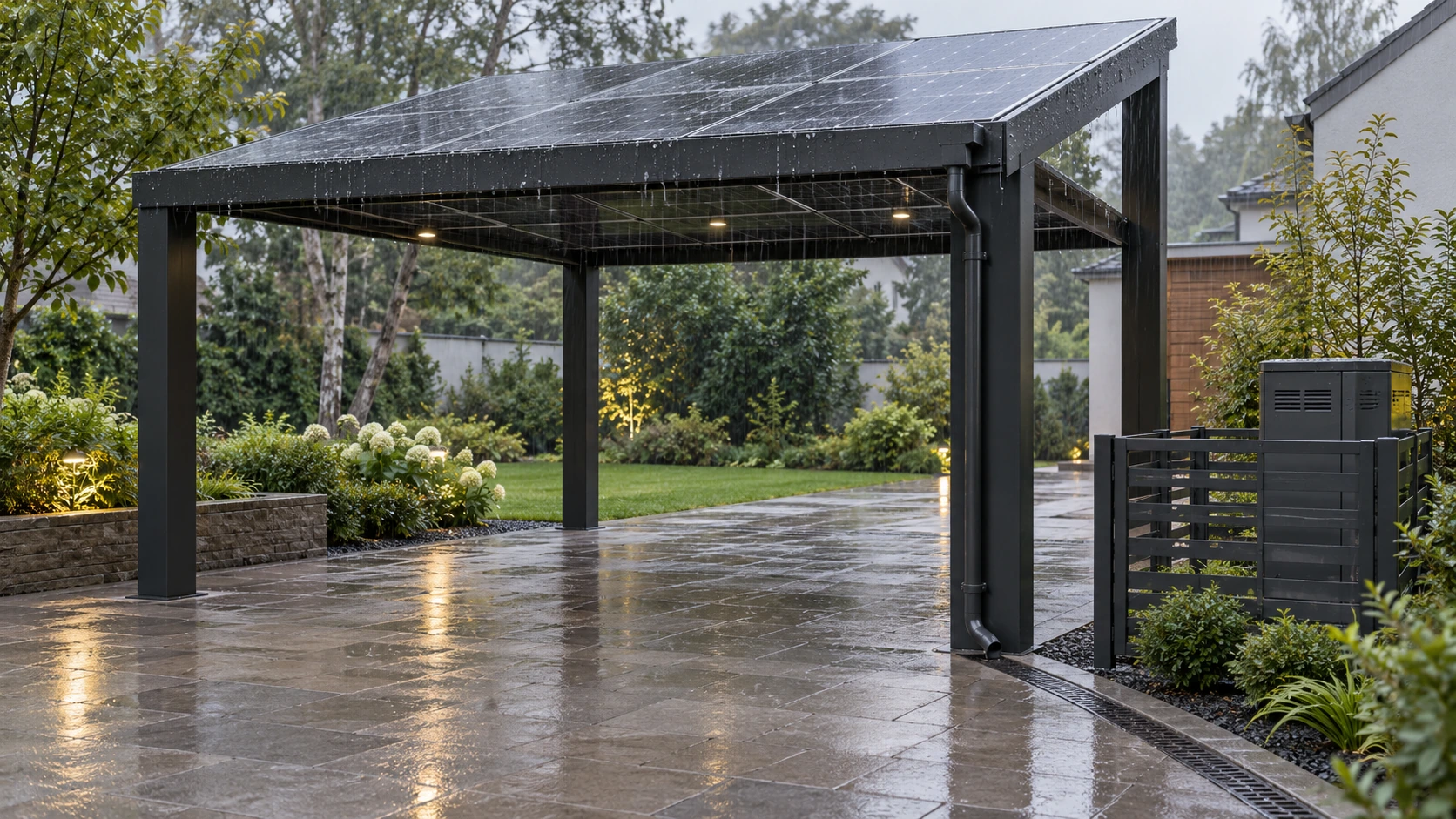
Structural capacity does not settle use beneath the roof
Cold-climate solar carports involve separate questions: structural design for snow, possible movement of snow or ice, and where meltwater reaches areas used by people and vehicles. They are related but cannot all be answered with one snow-load figure. A structure assessed for applicable conditions does not establish that roof edges present no falling-snow or icicle exposure. Describe parking, walking and maintenance locations during procurement and ask the responsible team to define design and operational measures. Use project and equipment documents for specific loads, operating instructions and snow-removal arrangements.
Trace winter water paths from edge to ground
Mark roof edges, collection points and outlets on sections and site drawings, then overlay door-exit areas, paths and ground falls. An outlet near a busy entrance needs winter review, not merely confirmation that summer rain drains away. Some projects may need dedicated snow or drainage measures, but their selection, control and maintenance belong in the actual design rather than a universal specification. Any snow-retention components also require identified products, support interfaces and inspection requirements; a photograph is not sufficient justification for adding them.
- Map occupied areas and potential snow-fall areas separately.
- Review outlets against winter walking routes.
- Assign closure, inspection and reopening after unusual weather.
Test an early-morning arrival scenario
Imagine daytime meltwater followed by a colder night, with employees arriving near the outlet early the next morning. A daytime drainage check can miss the surface conditions at the next arrival peak. The seasonal plan can include an early inspection and specify changes to pedestrian guidance and parking access when a problem is found, including who decides before professional treatment is complete. This is not a prediction that every site freezes; it aligns checks with weather and use. Give external cleaning or snow contractors the locations of equipment they must not disturb or obstruct with piled snow.
Coordinate ground clearing with equipment maintenance so removed material is not pushed into outlets or electrical service areas.
Make winter arrangements usable at handover
Handover should include applicable design conditions, operating limits, inspection locations and professional contacts. Ordinary users should not climb the canopy, strike modules or approach potentially damaged electrical equipment. DOE winter PV guidance organizes relevant risks, but its examples require project interpretation and do not establish a universal TTH capacity or no-ice guarantee. After winter incidents, record findings, closed areas and outcomes. Repeated problems at one location should prompt design and maintenance review of drainage or use, rather than endless repetition of temporary clearing.
Does snow-load documentation mean a solar carport can operate normally all winter?
Check the document's scope and separately address falling snow, icicles, drainage and ground ice. Structural design does not replace operational assessment. Follow project arrangements for inspection, restrictions and professional response, with assigned reopening authority; do not climb or clear potentially damaged PV equipment yourself.
More questions, practical answers →