Solar canopy decisions
Are Solar Carport Panels a Weatherproof Roof?
Distinguish PV modules from the carport roofing system and review joints, drainage details and agreed rain-test conditions.
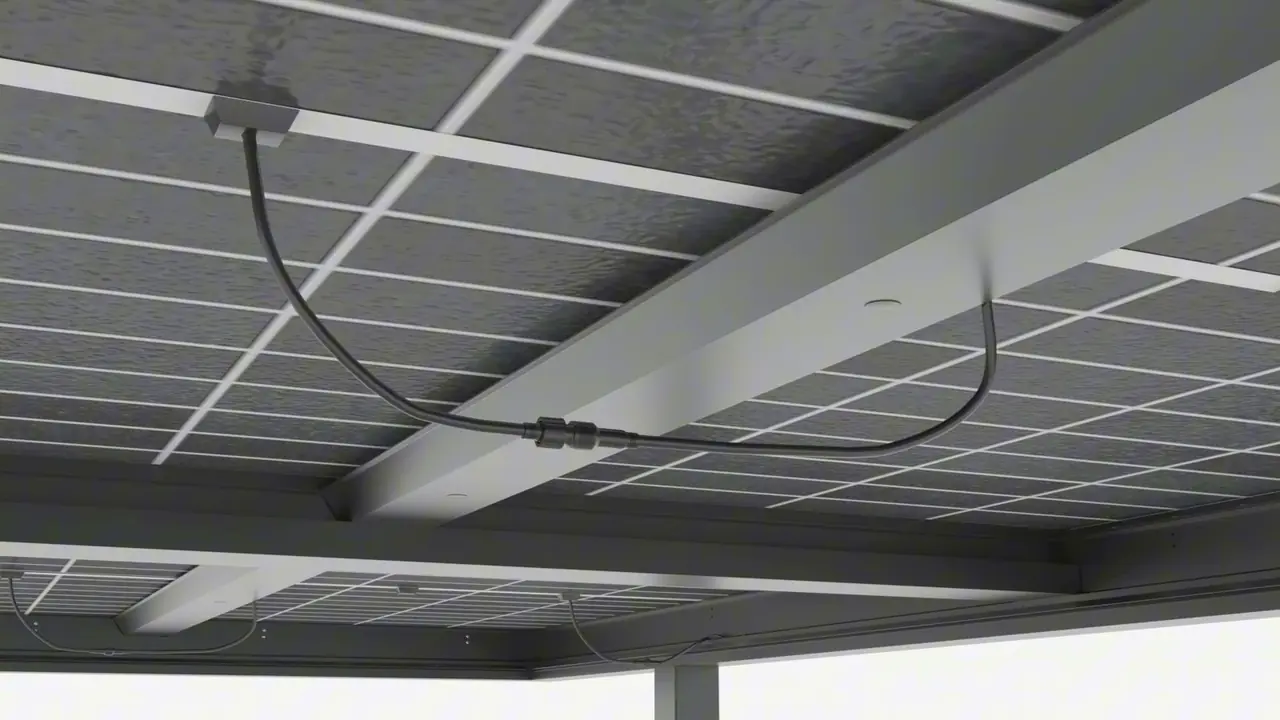
Ask separately about generation and weather protection
Neatly arranged PV panels do not establish rain protection. Modules generate electricity, while joints, supports, underlying layers, edges and drainage details determine how the roof handles water. A proposal may include a separate water-bearing layer or a particular module-joint system; inspect the actual design rather than guessing from photographs. Module documentation does not automatically prove a watertight canopy, and general PV installation experience is not a substitute for roof design. Define the parking or walking area to be sheltered, then request construction details addressing that requirement.
Follow the water through every interface
Trace water from module surfaces to its final discharge. Ask how joints collect it, how supports are detailed, whether edges direct water toward people leaving cars and how outlets connect with site drainage. Rather than labelling every detail waterproof, identify responsibility for design and installation at each interface. Check whether component replacement affects neighboring joints and whether debris-prone areas remain accessible for inspection. Sealants and construction methods should follow the actual system requirements; improvised sealing is not a substitute for a complete detail.
- Request details for panel joints, edges and outlets.
- Define the protected area and intended use conditions.
- Agree checks after roof service or module replacement.
Consider dripping beside an opening car door
Imagine a canopy that appears complete on a dry day but drips through a joint directly where the driver steps out. Most of the car remains covered, yet the agreed use may still be unmet. Record the location, rainfall conditions and corresponding detail for the roofing specialist instead of asking an electrician or caretaker to seal it informally. Wind-driven water entering at an edge may be a different issue from a leaking joint. Acceptance should address agreed user locations, rather than merely observing from a distance that the car sits under the roof.
Review differences between a display canopy and the ordered modules or joints; one observation of a display is not acceptance of another configuration.
Agree roof acceptance and issue handling in advance
Specify sheltered areas, inspection conditions, records and defect responsibilities during procurement, and organize roof-water checks separately from electrical acceptance. Qualified personnel must arrange safe testing near electrical equipment; ordinary users should not hose the system to assess it. DOE carport guidance discusses roof and drainage considerations but does not establish identical construction across all solar canopies. A TTH project likewise depends on approved drawings, configuration and site acceptance. Changes to module dimensions or supports require roof details to be reconsidered rather than retaining the old shelter conclusion.
Why might a carport leak even if its PV panels are suitable for outdoor weather?
Outdoor-suitable modules do not establish weather protection at joints, edges and supports. Review the actual connections, water-bearing construction and drainage against the agreed use. Record defects for professional assessment rather than testing with water near live equipment or sealing details informally.
More questions, practical answers →