Hardtop pavilion planning
Choosing a winter cover for a hardtop gazebo
Check model fit, attachment, storage and inspection before purchasing a seasonal gazebo cover.
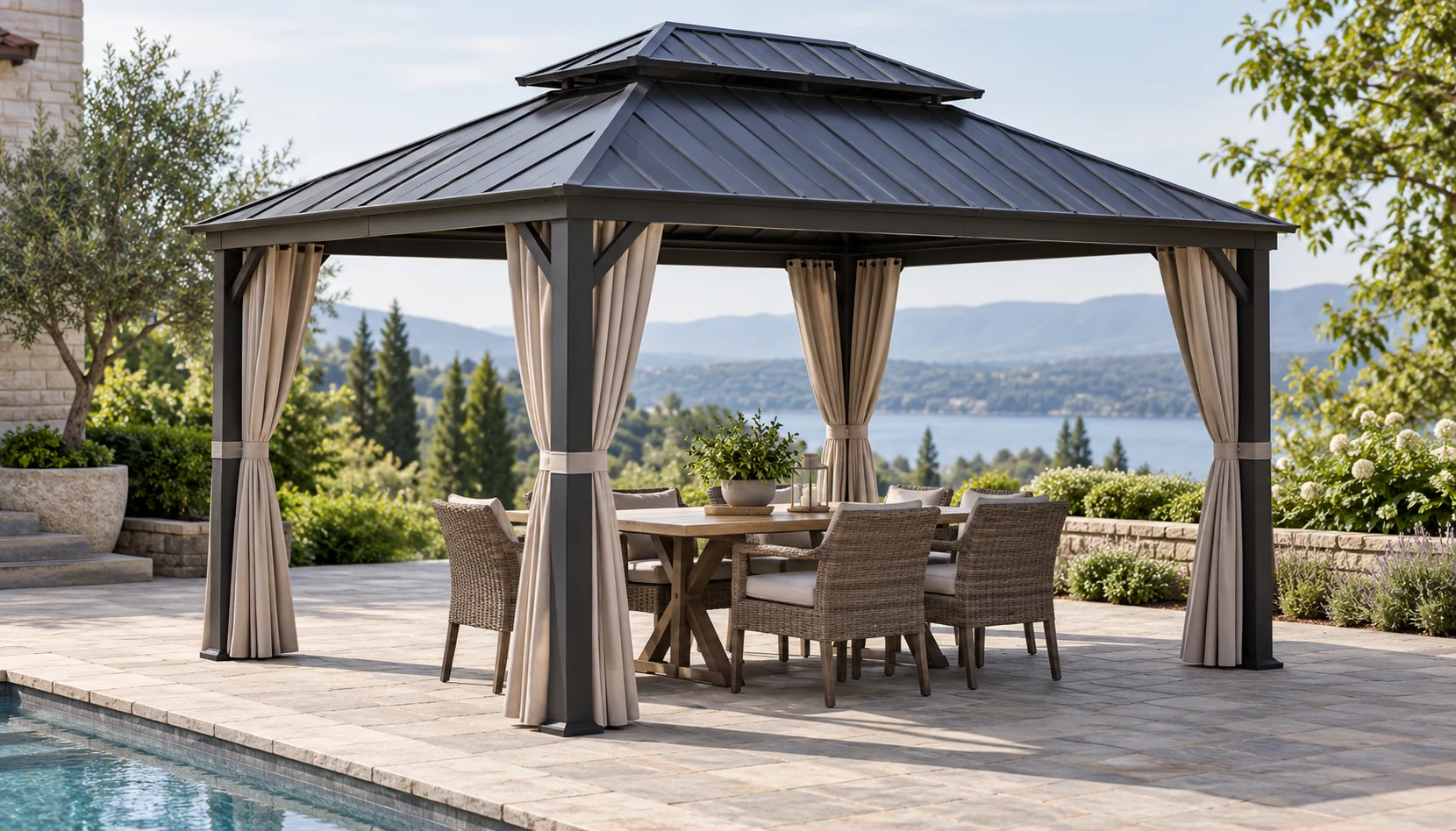
Identify the pavilion covered by the accessory
Start a winter-cover purchase with the supported gazebo model, not matching advertised length and width alone. Eave shape, roof tiers, posts and accessories may affect fit and attachment. Confirm the actual combination and intended purpose. A cover is not evidence of structural reinforcement or increased wind or snow capacity. If no cover is confirmed for the selected TTH model, treat it as a separate accessory proposal. Describe the storage duration, inspection arrangements and any items remaining inside so the supplier can address the full use condition.
Review attachments and inspection arrangements
The instructions should identify attachments, permitted fitting methods, openings or other conditions that must remain, and checks during use. Lack of a convenient attachment is not a reason to drill the frame or stretch every area as tightly as possible. Confirm that permitted tasks can be performed with appropriate access. Establish how abnormal conditions are noticed, who responds and when use must stop under the actual instructions. A cover does not remove the need for management; its suitability includes whether the owner can carry out the required checks.
Consider a garden left unattended for a season
Imagine an owner leaving for several months and hoping to cover the pavilion and furniture without further visits. State that unattended condition explicitly instead of relying on a demonstration involving regular checks. Ask whether the accessory supports the arrangement, then assign furniture storage, cover inspections and unusual-weather response separately. If nobody can perform necessary tasks, revise the plan rather than assuming a thicker or more expensive cover replaces management. Seasonal venues likewise need a responsible contact even when closed.
Plan for the cover when it is not in use
Include removal, cleaning, drying and storage when the season ends, following the actual textile and accessory instructions. Keep model and direction identifiers with matching fittings. Obtain a supported response for wear or missing pieces instead of improvised patches. Before-and-after photographs help explain changes without replacing a structural check.
Confirm furniture storage requirements separately. Compatibility between cover and pavilion does not guarantee suitable long-term storage for every item underneath it.
- Check shape, accessories and attachment against the actual model.
- State unattended periods and feasible inspection arrangements.
- Plan cover storage and furniture protection separately.
Does a winter cover increase the gazebo wind or snow capacity?
No such conclusion follows from adding a cover. Structural capacity and accessory compatibility are separate matters. Confirm attachments, use limits, inspections and storage conditions rather than treating the cover as reinforcement or an indoor store.
More questions, practical answers →