Installation & care
Pergola below a higher roof: include drifting and sliding snow in the review
Record nearby roof heights, slopes and obstacles so the project snow review can address uneven accumulation and the site's actual geometry.
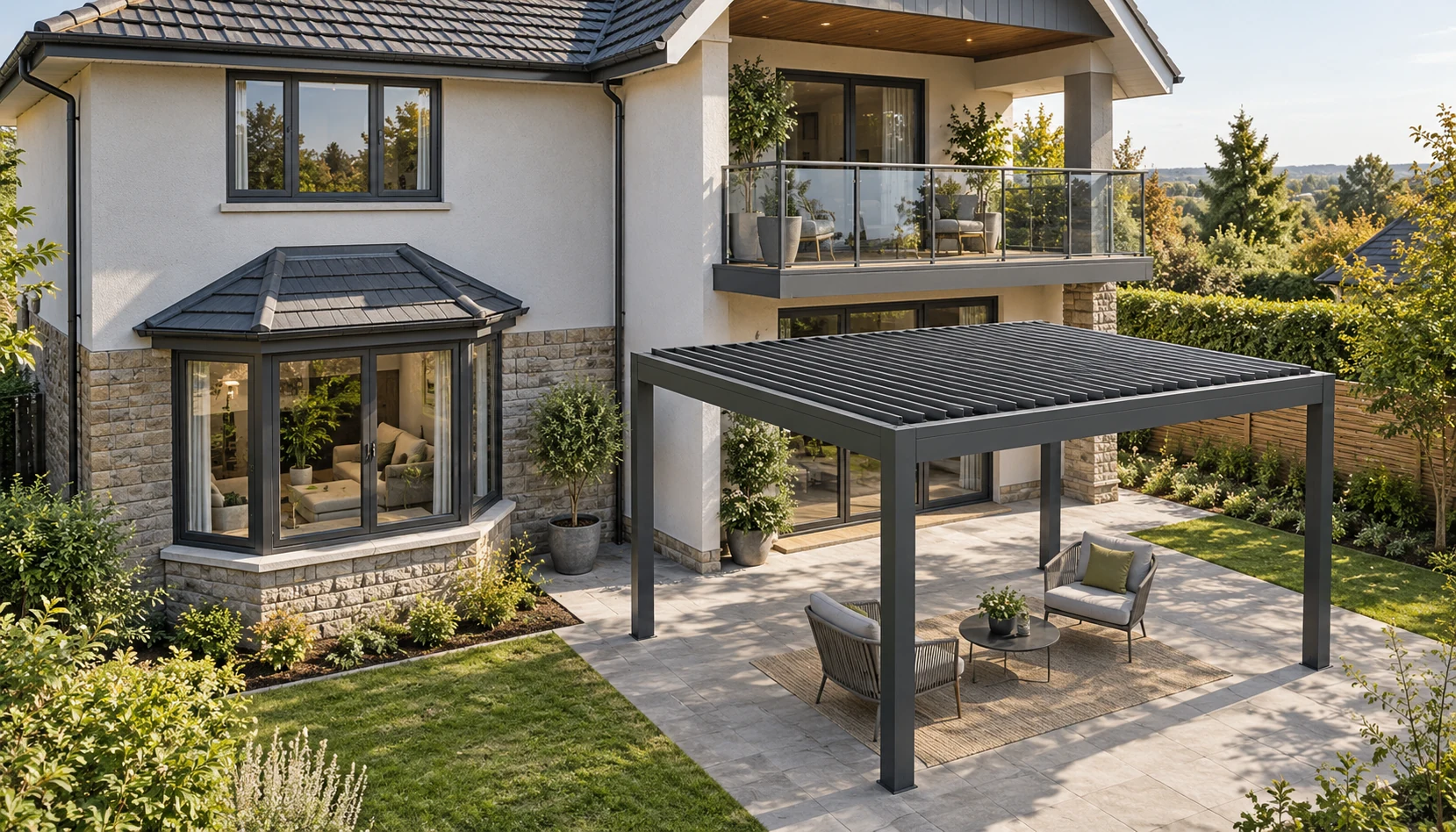
Show the building around the pergola
A pergola plan that shows only its own footprint can omit important snow conditions. Include nearby higher roofs, roof slopes, parapets and other obstructions. FEMA's snow guidance explains that wind can redistribute snow and that snow from a higher roof can accumulate on a lower one. These are general mechanisms, not a prediction for a specific TTH configuration. Ask the responsible structural reviewer to consider the actual site geometry and applicable design information. A photograph of a different installation carrying snow cannot establish the suitability of the proposed pergola below your building.
Separate design from the winter-use plan
The structural review and the owner's operating plan serve different purposes. Ask what documentation applies to the installed roof arrangement and what the manufacturer requires during winter conditions. Do not infer an acceptable snow depth from appearance, or convert a generic load statement into a removal instruction. Clearing snow may involve fall, collapse and falling-material hazards and should be planned by competent parties for the specific installation. The operating plan should identify who monitors conditions, when access is restricted and how support is requested, before the first significant event arrives.
A lower terrace example
Imagine a pergola proposed beneath the sloping roof of a taller house. The owner compares it with a freestanding garden display in the same town and assumes the snow conditions are equivalent. The missing information is the relationship between the upper roof and the proposed lower structure. Provide elevations and photographs showing that relationship, then compare possible positions through the project review. This example does not say that the pergola must move or prescribe a snow-control device. It shows why town-level climate information and site-level geometry both belong in the decision.
Keep observations useful and safe
From an accessible safe position, record when accumulation appears, where it is concentrated and whether the adjacent building contributes falling material. Keep people away from areas identified in the operating plan. Send the observations with the installation identity and relevant drawings to the responsible team. For a TTH enquiry, describing nearby roofs early helps establish which additional project information is needed. It is more useful than asking for a universal snow number without specifying the location or configuration. The observer supplies information rather than declaring the structure suitable for continued use from photographs. If site behaviour differs from the written instructions, use the agreed contact process and retain the resulting decision so that the next weather event is approached with the same verified context.
- Include higher roofs, slopes and obstructions in the site information.
- Request a configuration-specific snow review and a separate operating plan.
- Assign observation, access control and professional response responsibilities.
Is local snowfall information enough for a pergola beside a taller building?
No. Nearby roof geometry and obstructions can affect where snow accumulates or falls. Provide the higher roof's position, slope and relationship to the pergola so the responsible reviewer can assess the actual site. Keep structural conclusions separate from operating and snow-response instructions.
More questions, practical answers →