Solar canopy decisions
Collecting Rainwater From a Solar Carport: Storage and Overflow
Define water use, storage, overflow and maintenance before connecting rainwater collection to a solar carport.
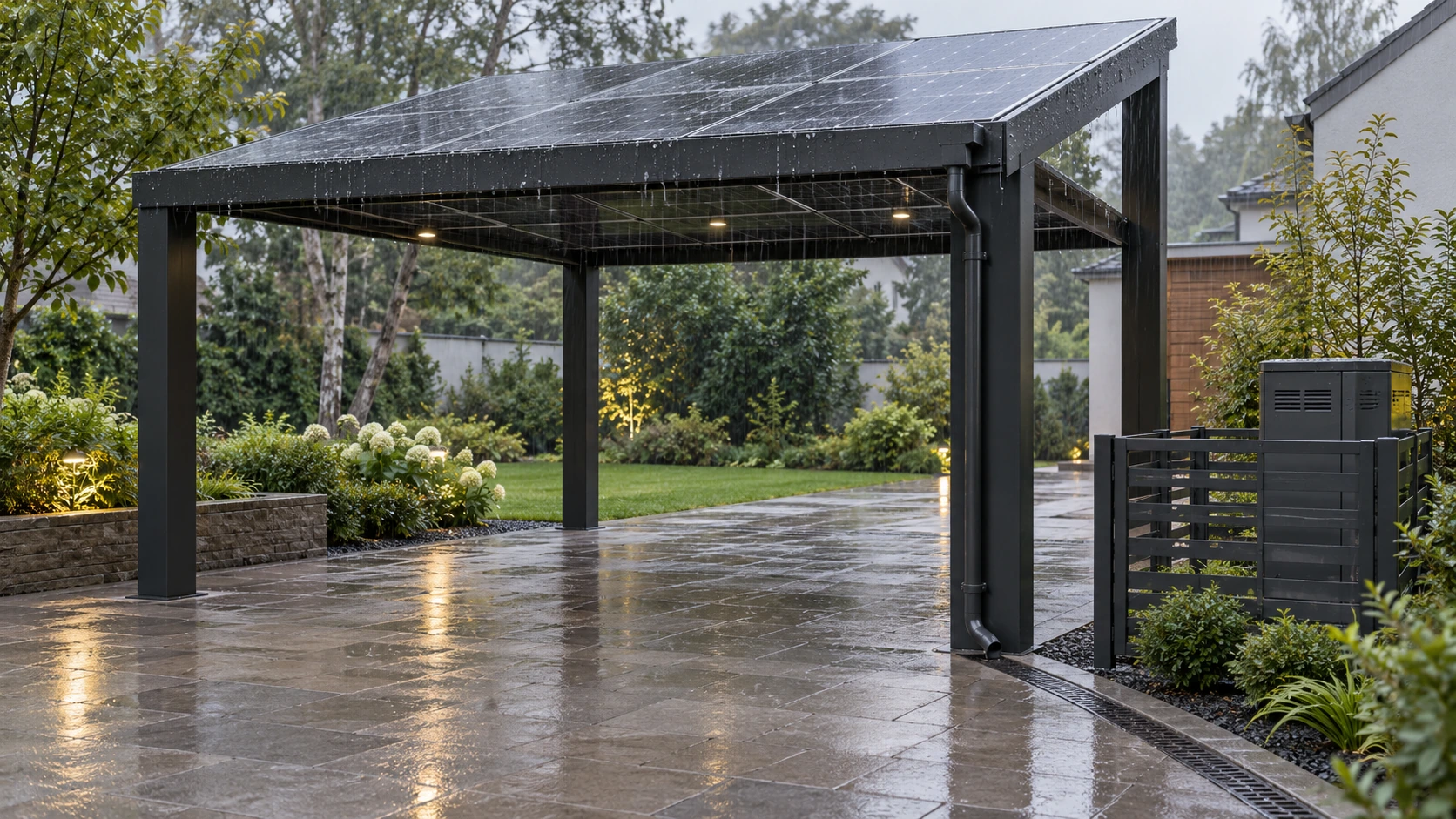
Define the water's use before selecting storage
Begin rainwater collection with intended uses and site conditions. Landscape irrigation, cleaning and other uses may need different quality management, storage and pipework. Clear-looking rainwater does not establish drinking suitability or compatibility with every appliance. The canopy's collection function is only one part of a water system requiring professional design under local requirements. List where and when water would be used, who can manage it and what space is available. Without a defined demand, a tank may add upkeep and occupation of space without serving a useful task.
Design for a full tank as well as normal storage
Review the full route from roof to collection equipment, including debris management, access, storage and overflow. Water still needs a designed discharge path when storage is full or collection is unavailable; it should not be left to reach bays, paths or electrical equipment unexpectedly. Storage support, protection and vehicle exposure need separate checks, rather than assigning the load to an unassessed column or surface. Procurement drawings should distinguish canopy supply from the separate water system and identify interfaces requiring joint approval.
- State intended uses and required management conditions.
- Show water paths when storage is full or unavailable.
- Assign cleaning access, overflow checks and responsibilities.

Test an unattended weekend scenario
Imagine a campus collecting canopy runoff for landscaping, with weekday inspections but no staff at weekends. The proposal should explain extended rain, full storage and a debris-blocked inlet as well as ordinary use. Ask designers to show the water paths in each state and check nearby paths, doors and electrical cabinets. Maintenance staff should confirm access to managed components without climbing on modules. This scenario tests whether the arrangement suits actual staffing; it does not guarantee stored volume or replace water-system design.
Check whether irrigation demand and rainfall seasons align. Use that discussion to define the task, not to claim uncalculated annual water or cost savings.
Decide from interfaces and maintenance tasks
The selected arrangement should preserve canopy drainage and allow independent servicing of the collection system. Request interface drawings, use limitations, cleaning and inspection tasks and shutdown arrangements. Recheck discharge paths after alterations. DOE PV drainage and flood guidance helps frame questions but does not determine this project's water quality or storage capacity. Where staffing or site conditions cannot yet support the system, professionally reviewed interfaces may be reserved for later rather than installing unowned equipment solely to display a sustainability concept.
Can a solar carport downpipe simply be connected to a storage tank?
First design intended use, quality management, support, overflow and unavailable-system conditions, while preserving canopy drainage. Provide cleaning access and maintenance ownership. Connecting a tank alone does not complete the system; appropriate uses depend on actual conditions and local requirements.
More questions, practical answers →