Compact pergola living
A robotic mower and a new pergola: reassess the route
Review a robotic mower's work area and docking route after adding a pergola, using the actual model and final layout.
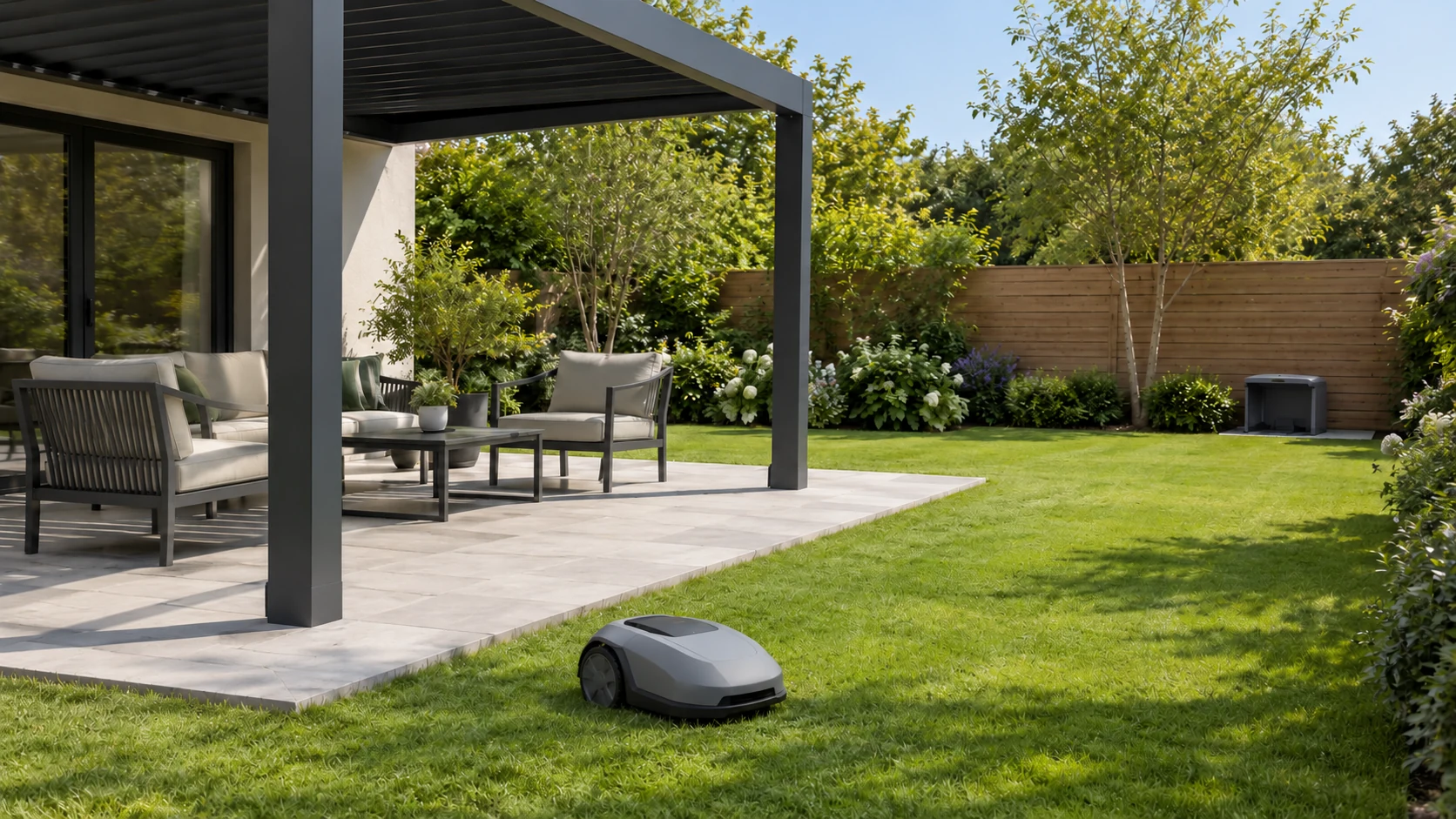
The garden map has changed
A mower working in the old garden does not prove its setup remains suitable after a pergola arrives. Posts, paving edges, planters and furniture can change work areas and passage. Map the final layout against the actual model's instructions. Husqvarna installation guidance recommends sketches of obstacles and garden features, a useful organizing method without transferring one model's parameters to all machines. Identify the boundary and navigation system, retain existing settings and follow manufacturer procedures or appropriate service assistance. Starting successfully is not the end of verification.
Review the docking route separately
Entering a mowing area and returning correctly to the dock are related but distinct tasks. Furniture can turn an open approach into a constrained route, while the new structure may affect installation conditions. Check passage dimensions, boundary distances and other limits for the exact model rather than using universal numbers. Include everyday states such as withdrawn chairs or a deployed drying rack. Follow all instructions concerning people and pets during operation; do not combine a household walking rehearsal with an active mowing test.
Review the final furniture arrangement
Imagine a return route along a terrace now bordered by two pergola chairs. An empty-area test may pass while chairs left out after dinner create a new obstacle. Record both states and have someone familiar with the equipment determine setup or layout changes. This hypothetical case guarantees no object recognition and recommends no deliberate collision test. It brings everyday furniture into the design instead of expecting the machine to accommodate every temporary change. If a route must remain clear, make its location and purpose understandable to the whole household.
Retain changes and verification records
Share posts, paving, permanent furniture and temporary items with equipment support to review boundaries, docking and operation. If construction affects existing wires or devices, inspect them appropriately before restarting. Verify required coverage and return under manufacturer-approved conditions, recording unresolved positions. Reconsider review after changes to planters, sides or furniture quantity. Automated mowing remains dependent on setup and care suited to the current garden; the word automatic does not remove the need to examine changes created by a new structure.
- Update the sketch with final posts, paving and furniture.
- Check work-area entry and docking return separately.
- Use the exact model's setup and verification process.
Does obstacle avoidance remove the need to review a new pergola?
No. Navigation, boundaries and detection vary by model. Posts, paving and furniture can affect working and return conditions. Review the final layout, obtain service adjustments where needed and verify under approved conditions, without deliberate collision or pedestrian tests.
More questions, practical answers →