Compact pergola living
Where to place a pet bed under a pergola as the sun moves
Observe changing conditions at the pet bed and retain an appropriate indoor option rather than relying on overhead cover.
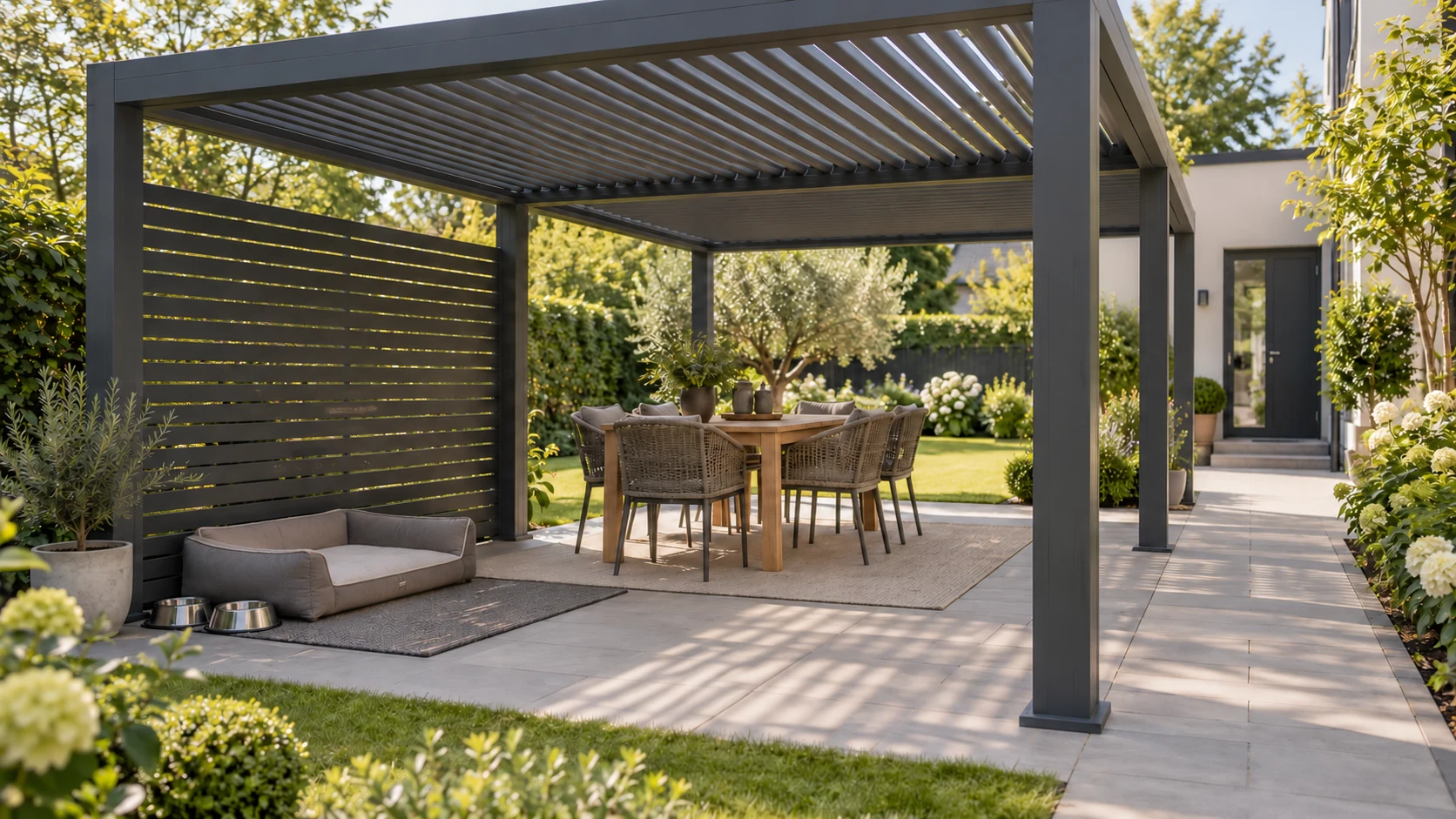
Shade at the bed changes with time
A shaded morning position can receive side sun later, so observe the bed through its actual hours of use. One midday photograph and a person's comfort in a raised chair do not describe conditions near the ground. Record where the pet rests, when it enters and whether the carer can observe it. Breed, age and health needs differ; veterinary guidance governs individual care. This layout article supplies no universal temperature or duration. Cover is one environmental factor, not a reason to leave the animal without appropriate attention.
Retain an indoor route and alternative
Plan an appropriate route back indoors, keeping later chairs, doors and side features from changing it unnoticed. ASPCA hot-weather guidance emphasizes shade and fresh water and recommends indoors in extreme heat; those principles do not certify any particular pergola environment. Arrange care for actual conditions and the pet rather than treating a fixed bed as a permanent solution. Check the bed's environmental and cleaning requirements too. Overhead cover does not remove moisture or material-care considerations. Place it where ongoing observation and appropriate handling remain practical.
Compare the position at two relevant times
Imagine a pet joining breakfast beneath the pergola while its morning-shaded bed receives afternoon side sun. Observe that change without using the animal as a test subject, then choose another suitable arrangement or indoors according to care needs. This hypothetical case asks for no tolerance experiment and promises no elimination of heat risk by moving a bed. It connects use periods with a responsible person. If appropriate daytime care is unavailable, reconsider the routine rather than assuming the structure's name or appearance permits prolonged occupancy.
Make the care arrangement specific
Map bed, water and indoor return positions alongside everyday furniture, avoiding repeated kicks or relocation of supplies. Review cleaning, ground conditions and entry with the actual carer. During handovers, explain the arrangement and relevant conditions rather than merely saying the pet is under the roof. Contact a veterinarian promptly if overheating or another problem is suspected instead of treating furniture adjustment as a substitute for professional help. The plan should support observation, water, care and movement to a suitable environment, without promising a safety outcome from shade alone.
- Observe light at the bed during real use periods.
- Retain an appropriate indoor place and route.
- Assign care and adjust to the pet's needs.
Does a bed beneath a pergola roof prevent overheating?
No. Side sun, conditions and individual needs matter. Cover does not replace care, water and an appropriate indoor option. Follow veterinary and reliable care guidance, and promptly contact a veterinarian for suspected overheating or other abnormalities.
More questions, practical answers →