Compact pergola living
Measure a recliner fully open before planning your pergola
Measure a recliner's back, footrest and occupied movement instead of relying on closed dimensions.
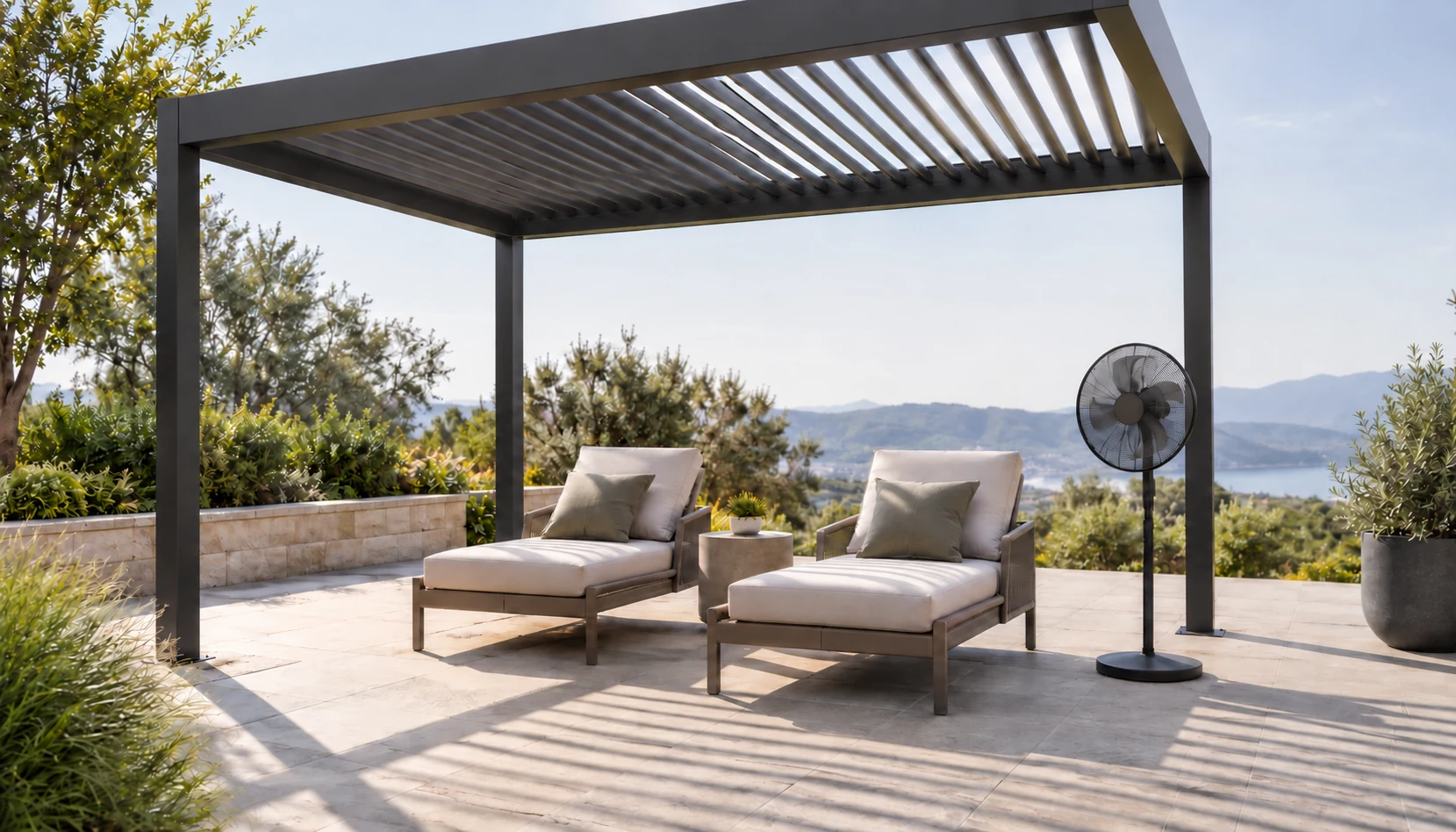
Closed dimensions are not resting dimensions
Product images often show recliners closed, encouraging underestimation of resting space. A reclining back, raised footrest and the user's feet may extend beyond that footprint. Obtain full dimensions and operation instructions for the actual model, including whether it shifts, pivots or uses a separate stool. Two closed chairs fitting side by side does not establish simultaneous reclining. Mark the outer limits of movement on the ground, retaining posts, doors and fixed objects, and check the complete operation rather than only its final position.
Check sitting down and getting up
Full extension matters, but users must first reach the chair, sit, adjust themselves and operate the footrest or back. Getting up may require returning it to a specified position. Follow the furniture instructions through those steps and check access to controls and nearby space. A side table too close can obstruct arms or feet; too far away it creates excessive reaching. Do not preserve an attractive straight route on a drawing by leaving the actual user on the awkward side of the chair with inaccessible controls.
Rehearse two people resting together
Imagine a couple wanting parallel recliners, with one usually returning indoors first. Open both, then rehearse one person sitting upright, collecting a cup and reaching the door. If the other must first retract a footrest, the layout depends on coordinated operation. Compare staggering, rotating or using one recliner, with both people trying each proposal. This hypothetical exercise addresses habits, not a universal spacing standard or suitability claim. Recording the actions requiring cooperation helps reveal whether the arrangement will remain convenient beyond the showroom visit.
Check the actual chair before fixing the layout
Take post and doorway measurements to try the actual furniture, measure its fully open limits and ask about movement, locking and outdoor care. For wheeled chairs, check surface suitability and securing instructions instead of treating easy rolling as an unconditional benefit. Recreate the dimensions on site and place side tables and slippers. Test storage routes, especially narrow doors and steps. Keep photographs of closed and occupied states so other household members understand why apparently empty areas cannot become permanent storage.
Test reaching the empty chair after the first person has reclined, since different arrival times may expose another blocked route.
- Mark both reclining-back and footrest movement.
- Keep one chair open while the other user leaves.
- Test the storage route and follow operation instructions.
Should someone sit in a recliner while measuring the layout?
Check both documented dimensions and occupied use. Feet, standing movement and control access may extend beyond the empty chair. Test full extension, sitting, reaching and leaving, and rehearse two chairs together rather than adding their closed dimensions.
More questions, practical answers →