Compact pergola living
Plan both states of an extending table under a pergola
Check an extending table closed, during extension and fully occupied, including spare chairs and packing away.
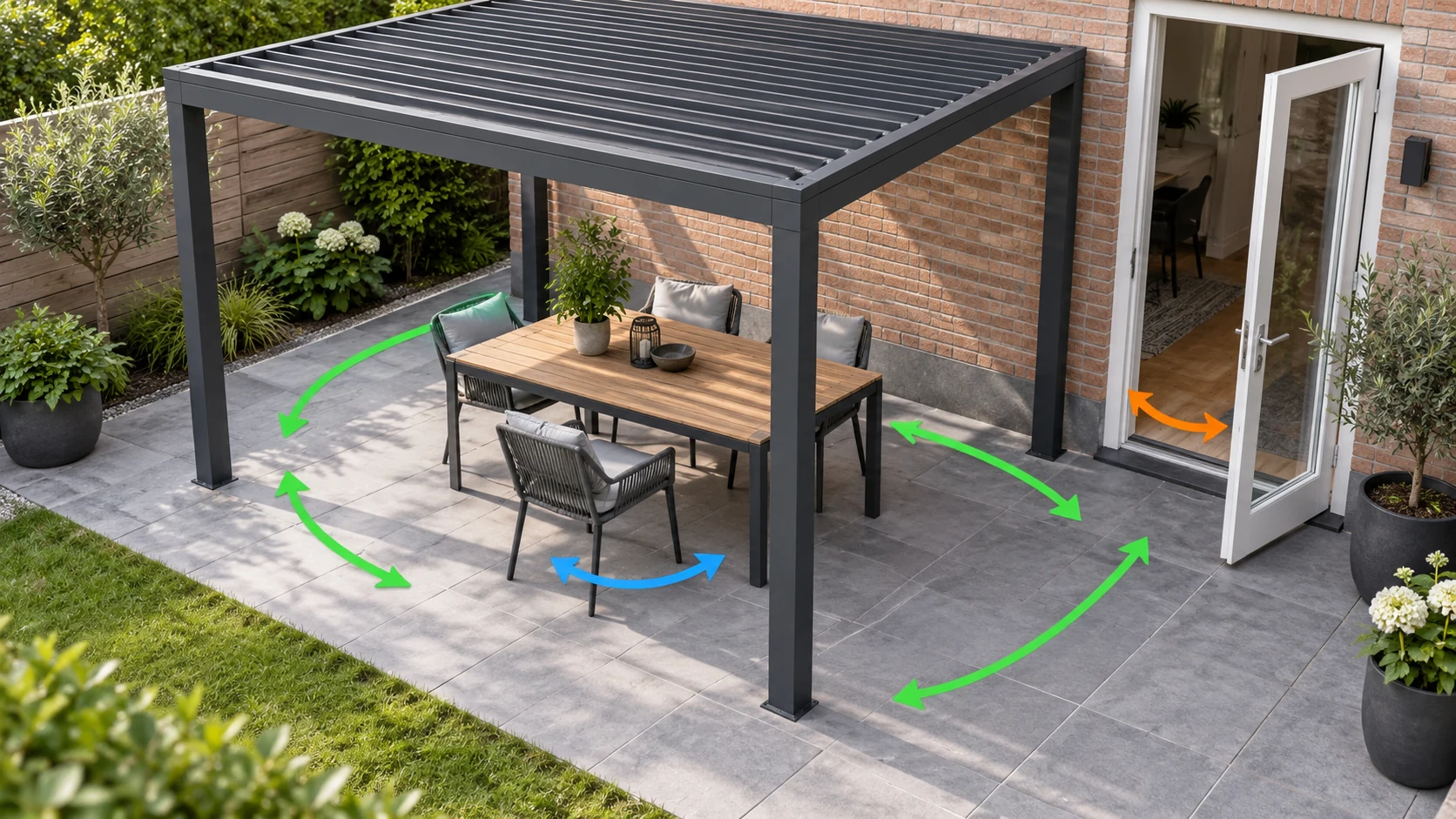
Map three states on one plan
An extending table can suit changing household needs, but its closed and maximum dimensions are only part of the decision. Extension itself needs space: tops may slide, leaves emerge from underneath and operators stand at particular positions. Read the actual instructions and map closed, extending and extended states. Keep posts, doorways and cabinets on every version. When extra chairs appear for guests, show the route from their real storage location rather than depicting only the final arrangement after everything has somehow arrived.
Check passage with every seat occupied
A tabletop fitting under the roof does not establish a workable meal. People must carry plates, withdraw chairs and leave temporarily. Check end seats against side features and whether someone standing near the kitchen blocks others. Empty chairs tightly pushed under the table are no substitute. Spare chairs can differ in height and armrests, changing posture and occupied space. If extra seating requires moving heavy planters, record that work in the setup routine and decide whether the arrangement remains worthwhile in practice.
Rehearse a complete family gathering
Imagine a couple eating breakfast at a short table and hosting relatives monthly. Retrieve leaves and chairs on an ordinary weekend, extend as instructed, set dishes and have diners leave in turn. Rehearse packing away too: must everything leave the top, and where do leaves go? This hypothetical exercise tests the full changeover without assuming any mechanism is easier. If preparation exceeds the effort the household accepts, compare other furniture arrangements rather than maximizing seats for an occasional event at the expense of everyday convenience.
Confirm operators and storage before purchase
Have the regular setup person try candidate tables and check required operators, pinch warnings, leaf storage and outdoor care. Pergola cover does not replace furniture moisture and storage requirements. Photograph ordinary and gathering layouts, note what moves and assign responsibility for restoring them afterward. Recheck space if side features are installed later rather than assuming the original passage remains available. Clear changeover steps turn extension into practical convenience instead of a flexibility claim that looks attractive only at the time of purchase.
If extension requires two people, have both rehearse their positions without crowding each other or standing awkwardly beside planters or steps.
- Record closed, extending and occupied states.
- Retrieve every spare chair from actual storage.
- Confirm where leaves and chairs return afterward.
Is it enough for the extended table to fit?
No. Test operation, chair withdrawal, serving, leaving and spare-chair retrieval. Rehearse the complete opening and closing process as instructed, identify heavy items that must move and verify outdoor care and storage requirements separately.
More questions, practical answers →