Compact pergola living
Bench or individual chairs under a pergola: include the way people sit
Compare benches and chairs through entry order, support, moving and cleaning rather than seat count alone.

Distinguish stored space from occupied space
A bench tucked under a table looks tidy, encouraging the assumption that it always saves space. Storage and occupied use are different. Include knees, feet and the path into each position. Whether a middle diner enters from an end or the bench can move back depends on the actual table legs and bench. Do not size a pergola from a photograph with seating pushed tight against the tabletop. Rehearse the length with existing furniture or cardboard, have users sit in sequence and count places they would willingly use.
Check how middle diners enter and leave
People rarely sit and leave simultaneously. Someone retrieves food or helps a child, and a middle bench position may require neighbors to stand first. Frequent coordination is a practical cost even if the furniture occupies less ground. Separate chairs move individually but have their own back and armrest requirements. Test both. Let a person who needs support assess the actual bench, seeking individual professional advice where appropriate. Age or family role does not establish a shared posture or ability to rise, so include each regular user in the comparison.
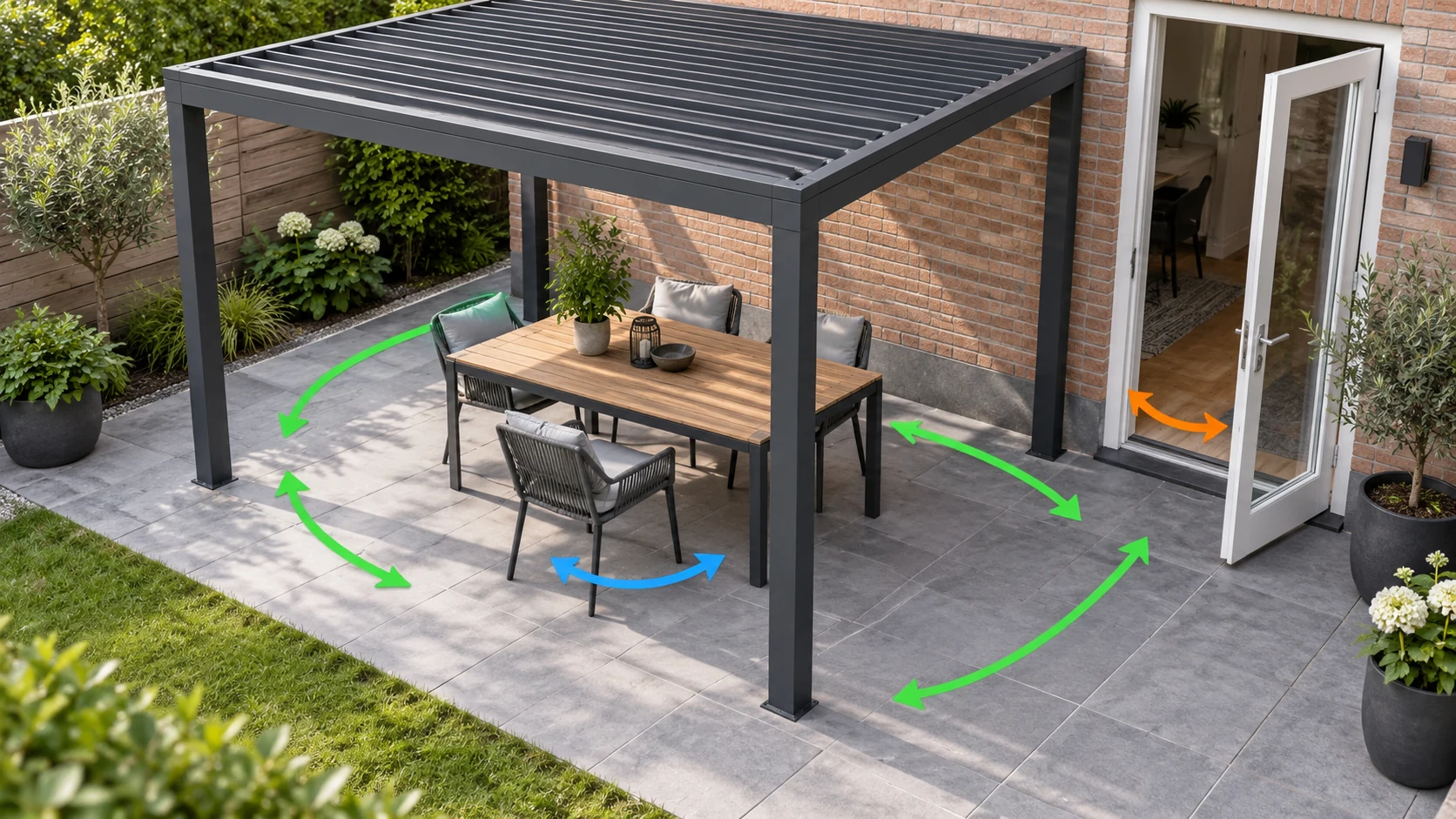
Compare a meal with someone leaving midway
Imagine one family member regularly visiting the kitchen and another preferring the garden-facing side. A bench might keep that view open while making a middle diner harder to release. Try a bench on one side with individual chairs opposite, or rotate the table, and record when people must yield. This hypothetical example recommends no fixed combination. It asks that seating follow actual habits. Have each person leave with an empty plate and check contact with posts or furniture; movement reveals more than a photograph of full seating.
Include moving and cleaning effort
Next, pull a candidate bench out, move it for cleaning and return it. Check whether two people are required and whether the surface suits that movement. Length does not guarantee easy care, just as several chairs do not necessarily create disorder. What matters is whether the household can manage routine setup. Verify the furniture's outdoor suitability, load instructions and care independently of the pergola material. Record ordinary and occasional occupancy plus leaving order, preserving an arrangement that lets each user reach a suitable place.
Include the person who serves most often; repeated trips past the same end seat may reveal the most disruptive entry sequence.
- Have a middle diner leave independently.
- Check arms, backs and table-leg interference.
- Move the bench and confirm its return position after cleaning.
Does a bench always save pergola space?
Not always. A tucked-away bench may be compact, but occupied use includes access to middle places, feet and support when rising. Test actual users leaving during a meal and compare moving and cleaning. A combination may work better than choosing by capacity alone.
More questions, practical answers →