Compact pergola living
Pet feeding under a pergola: place bowls away from shared dining
Locate pet bowls through household routes, cleaning and refilling, with clear separation from shared dining tasks.
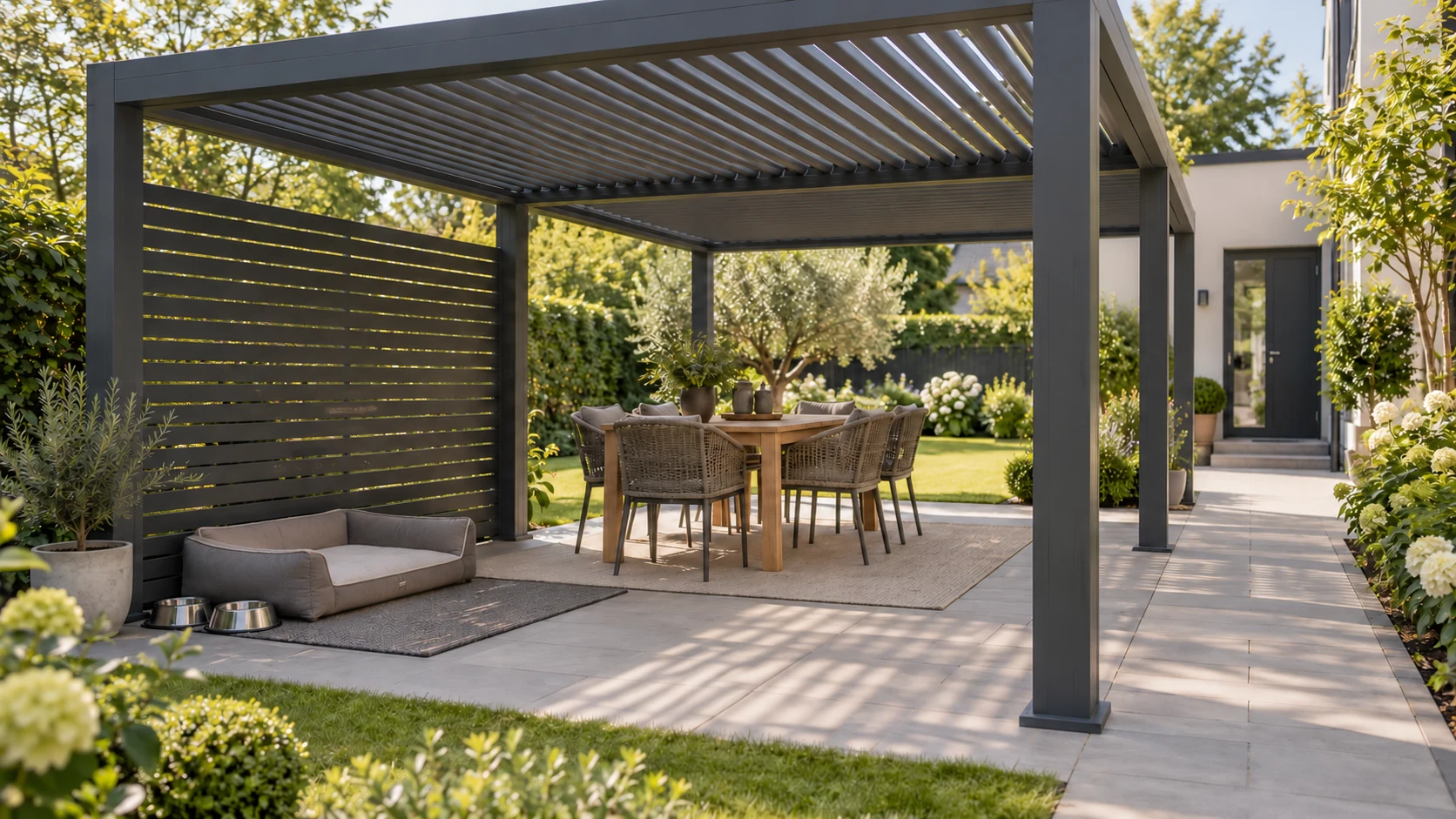
Bowl placement changes human routes
An empty pergola corner may seem ideal for bowls, but check chair movement, serving and the route indoors. Low objects can disappear behind furniture, and visitors may not know they are there. Use empty bowls to rehearse household passage and pet access, avoiding positions people must step over. This article addresses layout and cleaning, not diet or veterinary treatment; feeding should follow relevant product and veterinary guidance. Human dining and pet care can share the area, with clear positions and an identified person responsible for the routine.
Give cleaning and refilling a complete route
Placement is only one part of feeding. Identify where bowls are washed, how remaining food is handled as required and where clean bowls return from. FDA pet-food guidance emphasizes clean utensils and appropriate storage, providing a checking basis without replacing the food label. Cover does not justify storing all food in an outdoor cabinet or treating a decorative box as suitable packaging. Water bowls also need assigned inspection and cleaning. Keeping them out of the route should not make them too remote to check regularly.
Test the arrangement during family dinner
Imagine pet feeding near the kitchen door during family dinner, directly across the serving route. Compare another appropriately accessible, observable position and rehearse carrying empty plates and retrieving bowls. This hypothetical case prescribes no universal feeding schedule and promises no behavioral outcome from relocation. It identifies conflicting actions. Where individual pet needs make a position unsuitable, follow appropriate professional advice rather than forcing the arrangement for visual neatness. Evaluate both the animal's access and the carer's ability to perform the routine.
Check the floor and supplies after use
Trial actual bowls and furniture and assign washing, refilling and storage. Handle residues and spills as required, checking water on routes before the next family meal. If a stand or cabinet needs securing, verify its instructions and permitted attachment rather than using operating or drainage parts. Tell visitors where bowls are, and avoid hiding supplies in a position incompatible with their purpose. A manageable feeding area should support pet access and visible, reachable care, not simply appear tidy immediately after the bowls are first arranged.
- Rehearse chairs, serving and entry with empty bowls.
- Locate washing and food storage.
- Check residues and water on routes after use.
Is beneath the dining table the best space-saving bowl position?
It may conflict with feet, chairs and cleaning, and visitors may not see it. Test actual furniture and empty bowls, checking easy adult retrieval, washing and refilling. Follow food instructions and individual professional guidance rather than choosing solely for compactness.
More questions, practical answers →