Compact pergola living
Using a pergola for yoga: test the surface and movement area
Plan a pergola practice area around the surface, mat, familiar movements and furniture reset.
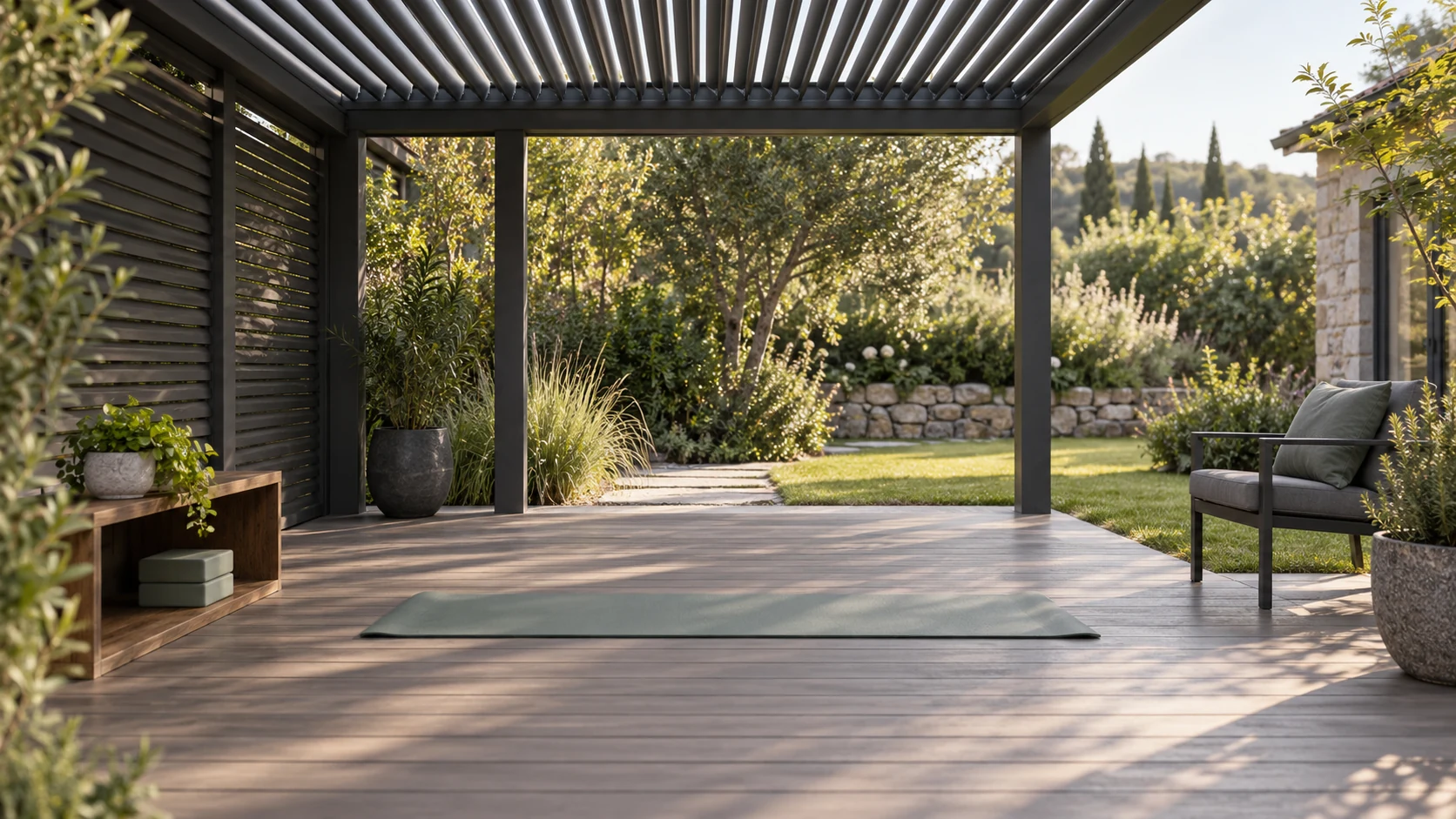
Measure movement rather than the mat alone
A mat fitting beneath a pergola does not establish adequate practice space. Arm extension, rising and moving around it can exceed its boundary. Let the user identify space for familiar, suitable movements rather than forcing movement to adapt to furniture. This is layout planning, not exercise prescription or a health-benefit claim. Individual limitations belong with the person's professional guidance. Mark posts, planters, table corners and surface changes before deciding which items move for a session instead of treating the mat rectangle as the whole occupied area.
Assess the mat and surface together
A level-looking floor does not establish suitable mat and foot contact during activity. Check surface and mat instructions, inspecting debris, water and edges without inventing a slip rating. Arriving in shoes and practicing without them may need different arrangements, including a place for footwear and belongings. Do not put a bottle in a kicking or walking path simply to keep the scene visually sparse. Stop and address instability or sliding rather than continuing to adapt to it. Actual surface conditions matter more directly than the label given to the pergola.
Rehearse clearing through restoration
Imagine morning stretching in an area that becomes a two-chair sitting corner later. Move chairs as planned, place a suitable mat and check boundaries using familiar gentle movements while another person rehearses entry. Heavy planters or displaced furniture blocking another route may make the changeover impractical. This hypothetical exercise introduces no challenging movement or intensity standard. It checks independent preparation and restoration, alongside other household members' access. A complete rehearsal is more informative than a photograph showing an empty mat centered neatly beneath the roof.
Retain a short pre-use check
Record movable furniture, mat storage and cleanup, then have the regular user perform the routine. Operate roof and sides as instructed without treating cover as suitability for every weather condition. Before each session, inspect the surface and nearby objects against the tested arrangement; afterward, care for the mat and restore routes. Agree simple timing where the household shares the area so furniture is not moved through an active session. A practical practice corner reduces preparation friction while respecting individual needs and ordinary garden use.
- Mark movement beyond the mat using familiar activities.
- Check surface, mat and object placement together.
- Rehearse clearing, preparation, cleanup and restoration.
Does room for a yoga mat establish a suitable practice area?
Check movement beyond the mat, rising, circulation and actual surface conditions. Use familiar suitable activities and follow individual professional advice where needed. A layout trial is neither exercise instruction nor slip certification, and moved furniture must not block other routes.
More questions, practical answers →