Compact pergola living
Pergola over gravel: test chair stability and everyday movement
Test chairs, carrying and cleanup on gravel before choosing the ground finish beneath a pergola.
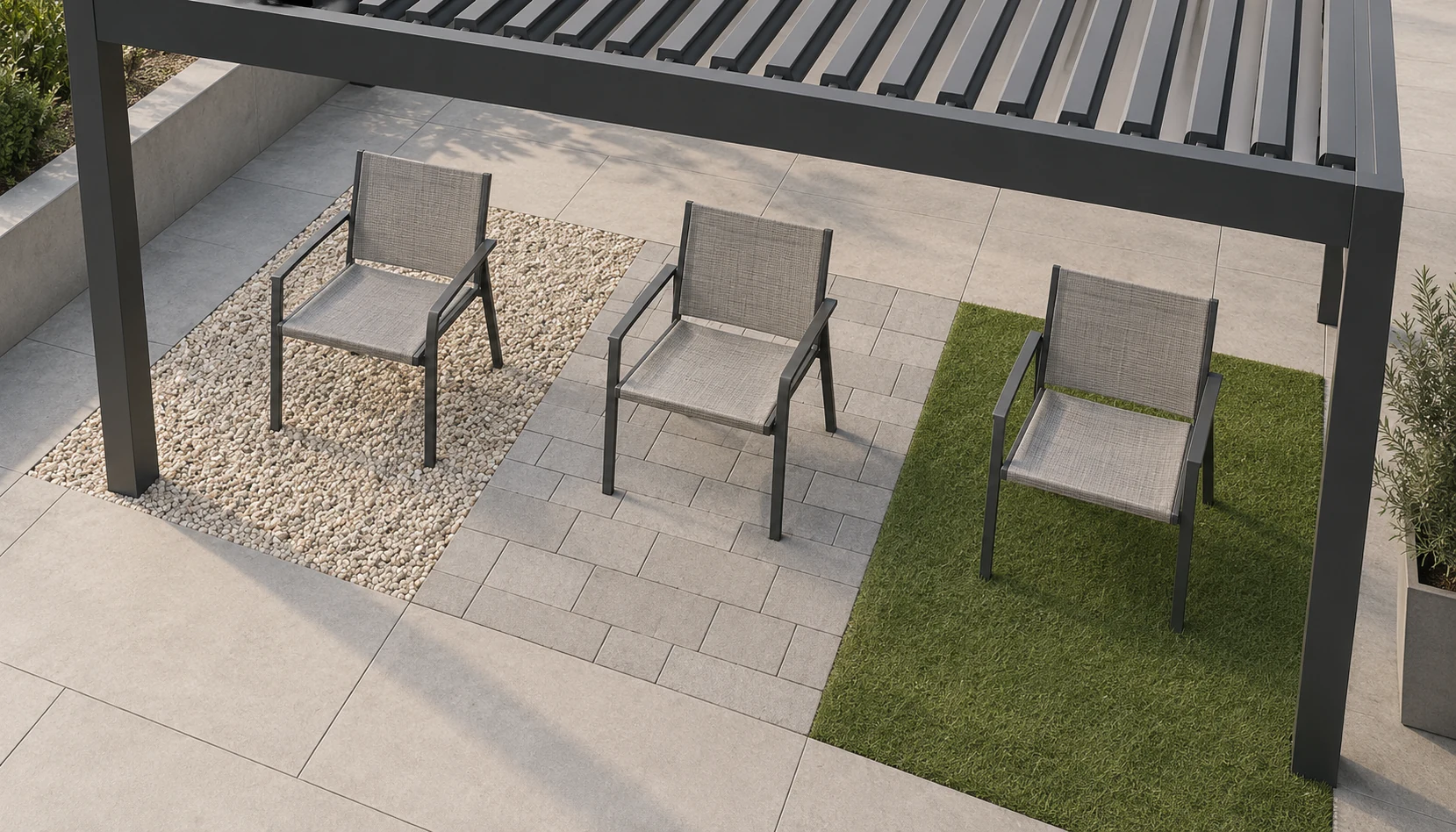
A level-looking photograph does not prove stability
A gravel pergola can look relaxed and natural, but furniture use needs a separate assessment. Foot contact area, gravel, layers and underlying conditions affect feel; a distant photograph proves no occupied stability. List proposed chairs, tables and mobility equipment and discuss the surface with its responsible installer. Keep post foundations separate from the gravel finish. Begin observing empty furniture and use an appropriate gradual trial of normal use. Stop when instability is apparent rather than repeatedly rocking the chair to demonstrate that someone can tolerate it.
Movement often reveals the difficulty
Dining chairs must move for sitting and leaving, not merely stand still. Check dragging, uneven settling and carrying plates in the actual location. Footwear, carts and other regular equipment may behave differently. Where an accessible route is needed, plan against applicable requirements and individual needs; one person's informal walk is not compliance evidence. Mark problem positions and determine whether furniture, surface treatment or routing needs adjustment instead of generalizing that all gravel gardens are unsuitable for dining.
Compare everyday tasks on a trial area
Imagine an owner preserving an existing gravel garden while adding a dining table. Test actual furniture in a representative area through eating, chair movement and retrieving a dropped utensil, then compare an appropriately designed local paving option. Its junction with gravel still needs edge and level checks; a firmer table area does not resolve the route automatically. This hypothetical example prescribes no construction layers or thicknesses. It clarifies use needs and compares care, appearance and handling before permanent work makes an awkward routine harder to change.
Include cleaning and material management
Ask the ground-work professional about leaf removal, displaced material and local repairs, and verify furniture suitability. Do not sweep gravel into drains or bury connections requiring inspection. If gravel remains, photograph the table and regular routes to compare later changes. With local paving, clarify its relationship to pergola foundations and drainage. Choose a confirmed proposal that supports actual tasks and assigned maintenance. A natural appearance can remain part of the design, but it cannot replace checking furniture and ground together on site.
- Test sitting, chair movement and carrying plates.
- Check junctions between paving and gravel.
- Verify foundations separately from surface maintenance.
Is a steady table enough to make gravel suitable for dining?
Also check chair withdrawal, standing, carrying and retrieving dropped items. A steady table does not establish a suitable route. Test real equipment, compare local paving where useful and verify foundations, drainage and access requirements separately.
More questions, practical answers →