Installation & care
Pergola freeze and thaw: blocked outlets and moving parts need separate checks
Prepare a winter plan that distinguishes frozen drainage, visible ice and controller protection, without forcing louvers or improvising thawing methods.
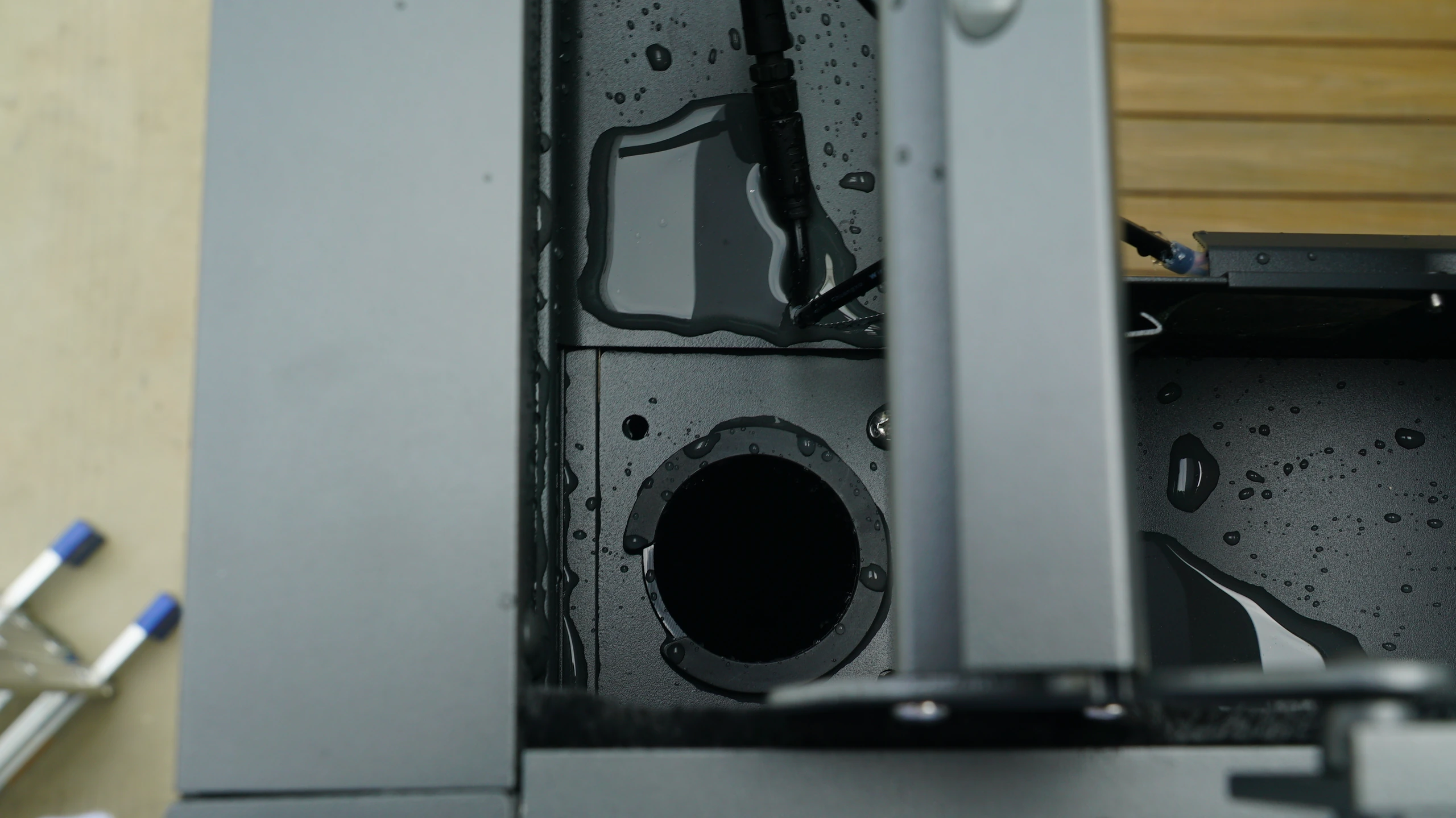
Distinguish three winter observations
Visible ice, water remaining in a drainage route and a controller refusing a command are different observations. They may occur together, but one does not fully explain the others. Record where ice is visible and whether the system has a documented low-temperature protection state. A warmer afternoon does not establish that shaded outlets or concealed interfaces have recovered. Ask the supplier for instructions specific to the supplied roof and controls rather than borrowing a temperature setting from another manufacturer's manual. The first useful step is to identify the installed configuration and the observed condition, not to keep pressing the remote.
Do not confuse a command with permission to move
A handset transmitting successfully does not mean the mechanism is ready to move. Ice may affect moving interfaces, and a controller may deliberately restrict commands under its documented logic. Do not bypass protection, force louvers or apply improvised heat or chemicals on the basis of a general guide. Ask the responsible service party what assessment and recovery process applies. Winter planning should also identify where falling ice or unexpected meltwater could affect people. That site consequence belongs in the owner's routine, separately from any decision about whether the roof may operate.
A sunny afternoon example
Imagine a pergola receiving sun on the roof while one post outlet remains shaded beside a wall. Surface snow begins to melt, but the owner sees little water at that outlet and the roof does not respond as expected. Treating the warm roof surface as proof that everything is clear would skip two separate questions: drainage condition and the controller's state. Record both and use the service instructions. This hypothetical example does not diagnose a fault or prescribe a thawing method. It illustrates why the whole water route and the actual operating indication need attention.
Prepare the cold-weather handover early
Before winter, obtain the applicable instructions, identify accessible observation points and keep the service contact available. Ask how users should recognize a protective state and what evidence is needed before normal operation resumes. Keep the record of any later controller or accessory changes with the winter instructions. For a TTH enquiry, describe the climate and exposed or shaded outlet locations so the project team can identify the information still needed, without inventing a universal freezing threshold. Keep the responsible service party's conclusions with records of previous events. An improvised action taken on one occasion should not become the assumed procedure for every winter. Equipment changes must also be reconciled with the existing instructions before those instructions are handed to another user.
- Record visible ice, drainage behaviour and control indications separately.
- Keep people clear of areas affected by falling ice or unexpected meltwater.
- Use the supplied recovery instructions and request service when the condition is uncertain.
Can I operate the louvers as soon as the weather warms above freezing?
Not from air temperature alone. Shaded outlets, concealed interfaces or protective controller states may not match the visible roof surface. Follow the exact system's winter and recovery instructions, record the observed condition and request service if uncertain. Do not force movement or bypass protection to test it.
More questions, practical answers →