Retractable awning choices
Before a week away: check the awning’s unattended arrangement
Before leaving, review instructions, automatic modes and an available contact; one successful automatic retraction is not a complete unattended-use plan.

Check the instructed unattended state
The state to leave an awning in for a week should follow its instructions and site arrangement, not the habit used for stepping away briefly. Review relevant unattended-use, seasonal and weather guidance, ensuring it matches the current drive, sensors and controls. Obtain missing documentation before departure instead of improvising from memory on the day. There is no universal switch combination for every system. Ordinary operation and an extended unattended period are different situations, and each needs a documented basis that the household understands.
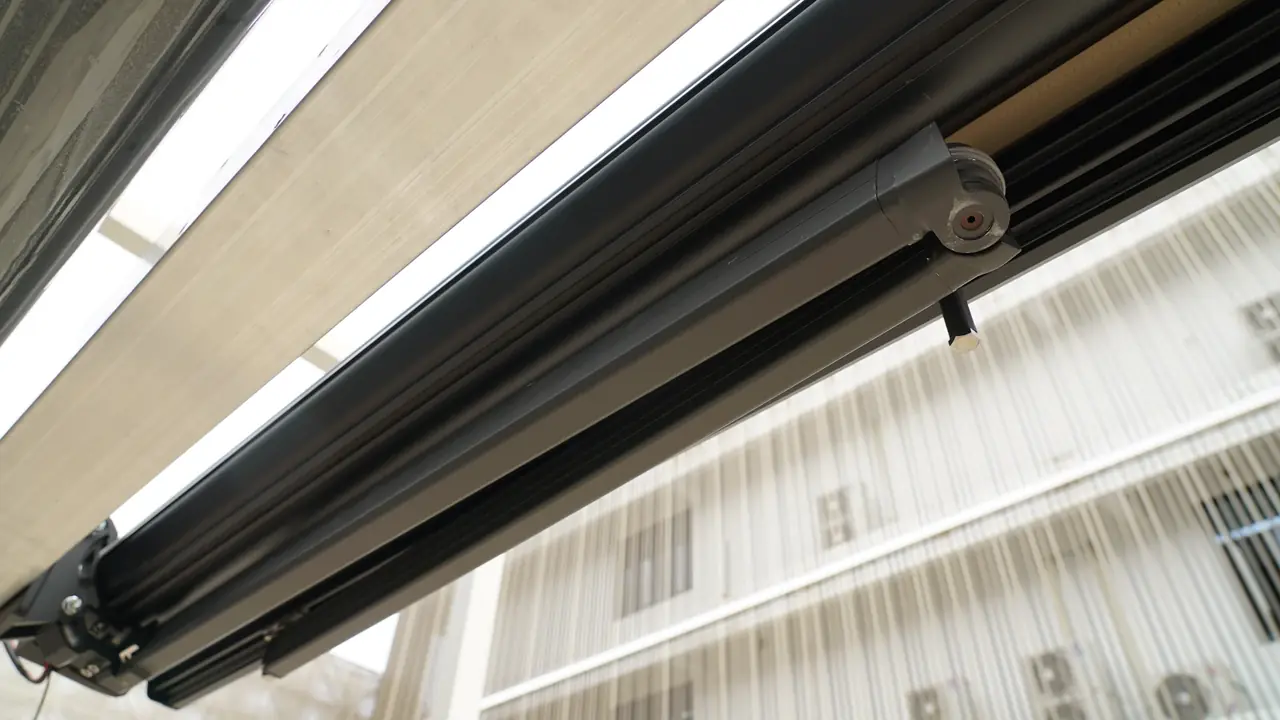
Include automation configured on phones
Review remotes, timers, phone scenes and fitted sensors, not just whether the fabric is currently retracted. A daily afternoon scene may still issue an opening command after departure. Ask how the selected system should be arranged and how users verify its mode. Do not delete pairings or disconnect unfamiliar components to create an improvised shutdown, making return-to-use harder to interpret. Record ordinary setting changes so other household members understand the arrangement and can restore the intended configuration through the documented process afterward.
Identify an available on-site contact
If an abnormal indication arrives during a holiday, a remote user may not know the actual position, nearby obstacles or whether anyone is present. Arrange a contact process with an authorized family member or property representative, defining ordinary observation versus service work. Having a key is not authorization to dismantle equipment, and no one should be expected to test it in unsuitable conditions. Provide instructions, identifiers and service contacts. The aim is to establish facts before deciding what happens next, rather than several people issuing competing commands from different phones.
Include the return-to-use step
On return, review unresolved indications, debris, changed objects and maintenance records before resuming operation as instructed. One successful movement does not establish every condition. Follow up on earlier wet retraction or unresolved abnormalities. During selection, ask what arrangements a frequently absent household will need and whether those are practical. A short leaving checklist can cover equipment state, automation, outstanding tasks and contacts. Its value is continuity of responsibility, not a promise that no issue can occur while the property is unoccupied.
- Review the equipment instructions for unattended periods.
- Check all automated scenes and the current mode.
- Assign an authorized contact and record return-to-use tasks.
If the awning is retracted before departure, can I ignore automatic mode?
Check whether schedules, phone scenes or sensors may issue later commands, and follow the system instructions for unattended periods. Current position alone is not the whole leaving process. Record setting changes, outstanding tasks and an authorized contact, then review the site on return instead of improvising disconnections or deleting pairings.
More questions, practical answers →