Home planning
Family pergolas: plan controls and moving parts around children
Plan adult operation, sightlines, toy storage and household handover without treating automatic functions as a substitute for supervision.
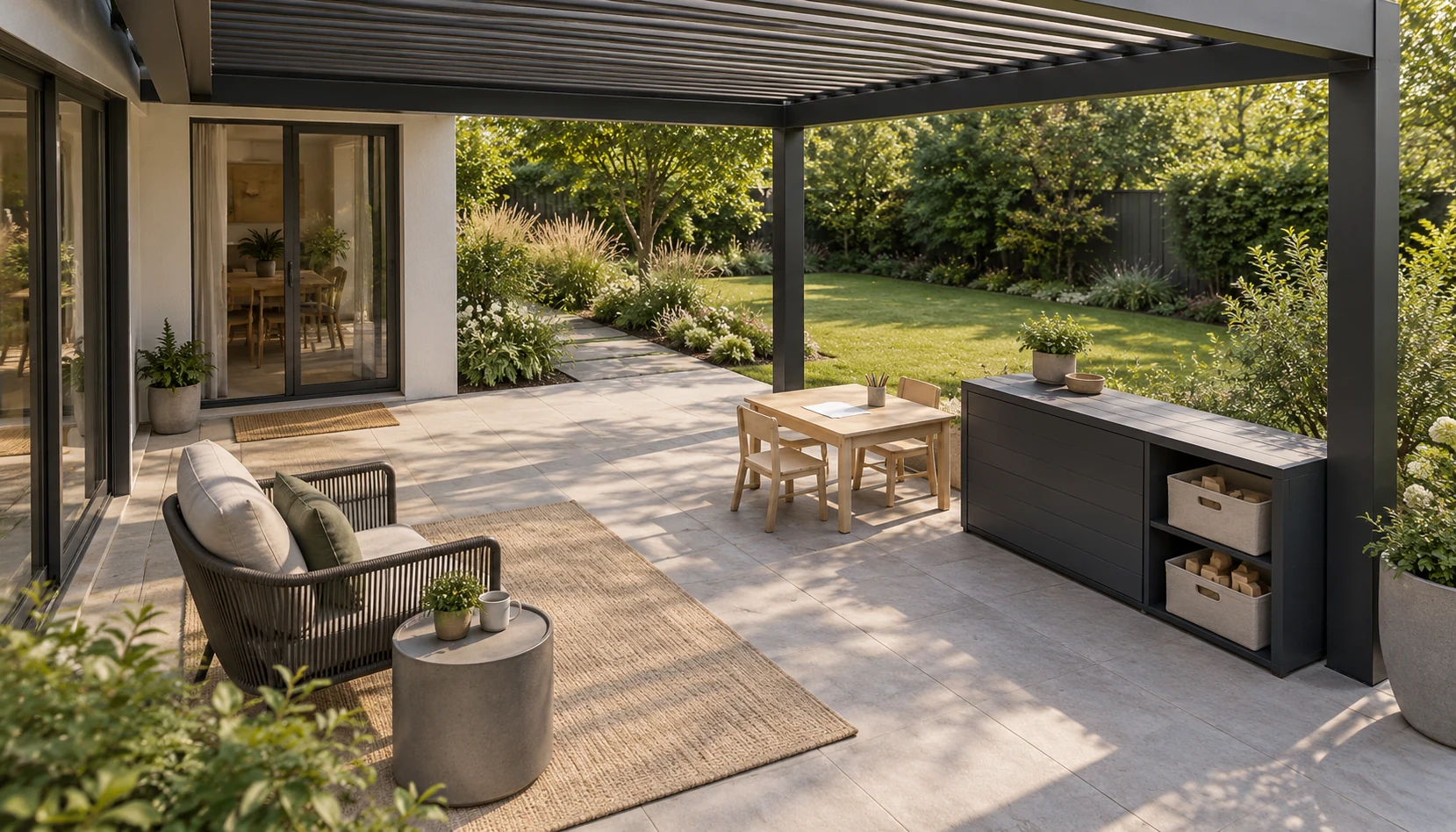
Make operating rules part of selection
Families should consider who operates the pergola and what that person can see, alongside space for toys and chairs. Obtain the actual control instructions, including starting, stopping and resuming roof or side-component movement. Claims about obstruction detection, sensors or automatic protection require documentation for the specific product; features from another model cannot be transferred by assumption. Adults need to understand system limits, and automation is not a reason to allow independent child operation. Establishing these questions during selection is easier than inventing household rules after installation.
Coordinate controls with a useful view
Store and position controls according to the instructions, keeping them out of the toy collection. Before starting movement, the adult operator should check the relevant area as required and maintain observation of nearby moving components. Avoid planning climbing or hiding games around beams, guides and enclosures, and keep toy storage outside movement areas. This article does not prescribe a universal mounting height or protection rating; actual instructions and conditions govern. If a location cannot be seen clearly, reconsider the layout and operating arrangement rather than relying on assumptions.
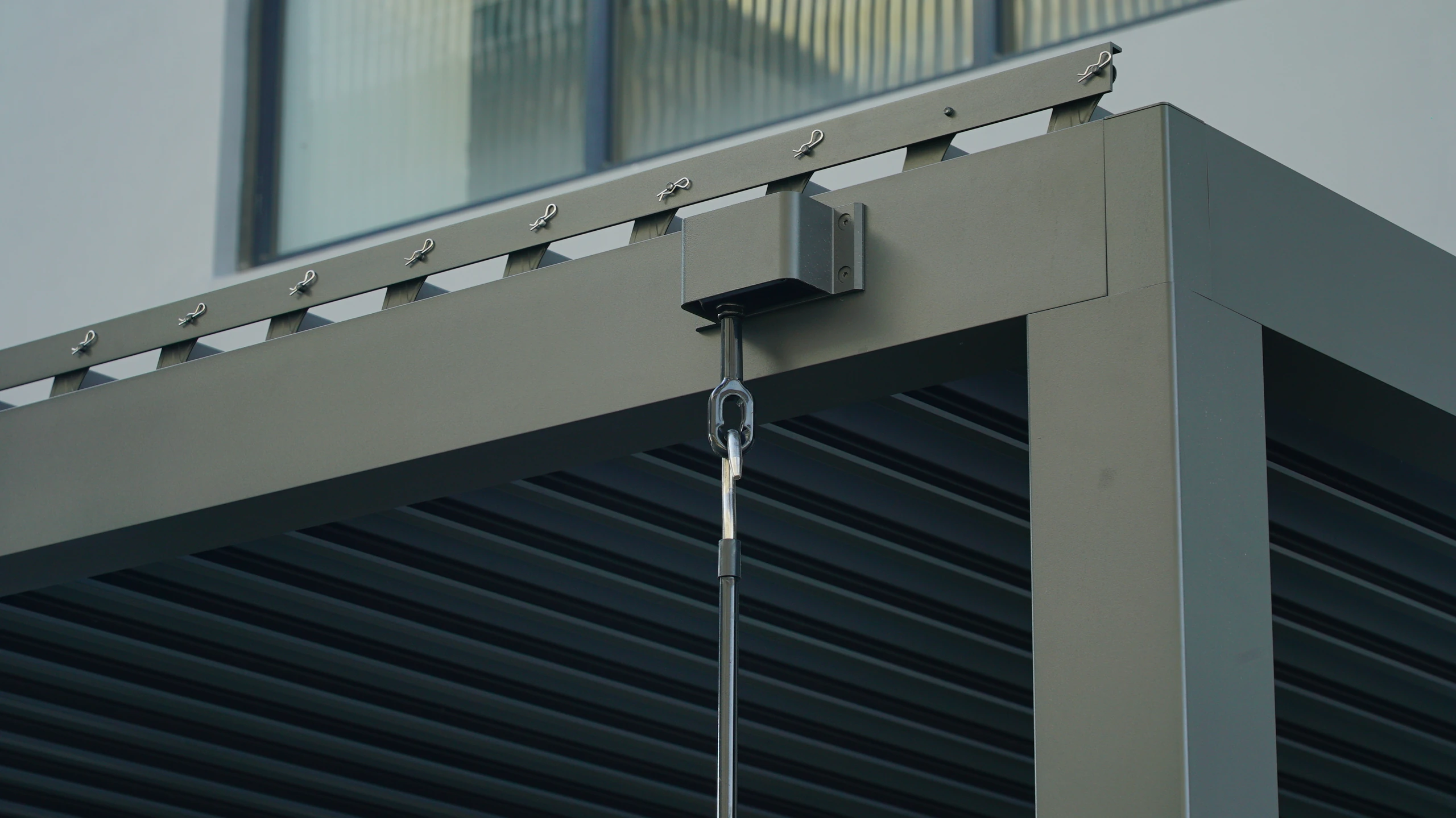
Test a hypothetical busy family gathering
Imagine several children playing during a weekend gathering while an adult carries food and considers adjusting a side screen. A useful routine is to pause, have the responsible adult locate children and objects, then operate according to the instructions. Distinguishing dining, play and control responsibilities reduces the assumption that another adult is watching. This hypothetical scenario illustrates handover, not a substitute for supervision. Grandparents, carers and guests also need a brief explanation; correct operation should not be knowledge held only by the person who purchased the system.
Keep household rules simple enough to follow
At handover, keep normal operation, stopping instructions, fault contacts and control storage on one clear page. Align the routine with the actual product; do not create complicated workarounds or bypass protection. If there is unusual noise, uneven movement or a control fault, stop using the affected function and follow the supplier's process rather than involving children in troubleshooting. Revisit observation and passage space as furniture and play patterns change. Sustainable household management combines adult responsibility, product instructions and practical habits instead of depending on an unverified safety slogan.
A visible place to gather toys can support a consistent pre-operation check by an adult. Keep that habit simple and aligned with the instructions. A notice does not replace observation, and an older child should not be assigned an operating check that belongs to an adult.
- Verify operating instructions and the evidence for protective features.
- Assign adult operation and maintain clear observation positions.
- Keep toys and climbing opportunities away from component movement.
Can children operate a pergola independently if it has automatic protection?
That feature alone does not establish permission. Verify the product's use restrictions and documentation. Assign adult operation and supervision, maintain a clear view of movement areas and keep controls from becoming toys. Follow the supplier's fault process rather than repeatedly testing movement.
More questions, practical answers →