Large pergola projects
Can separate areas of a large pergola operate independently?
Ask how physical roof sections, controls and any shared commands work before ordering independently operated zones.
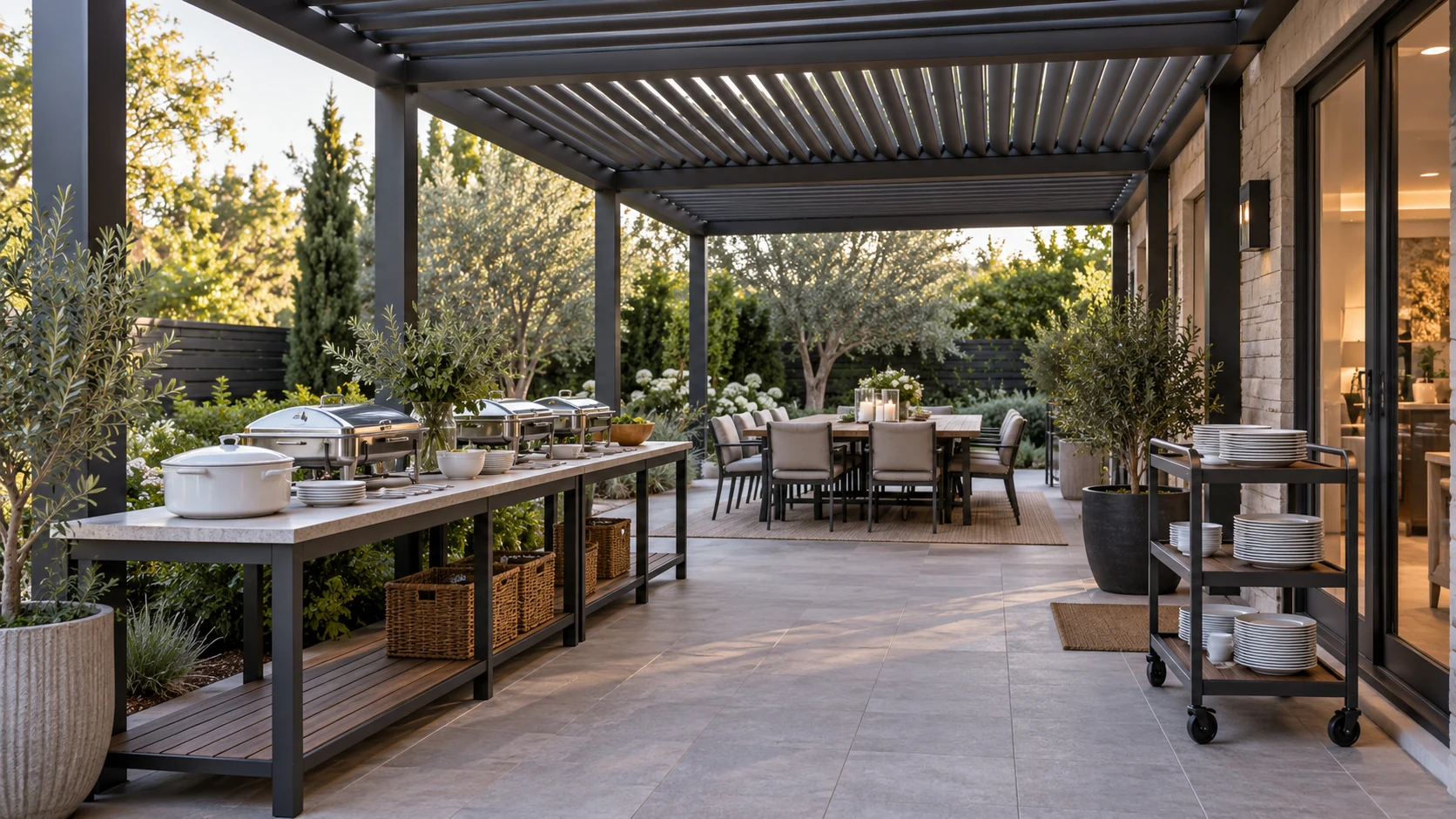
Describe the purpose of separate operation
One part of a large pergola may serve lunch while another holds loungers, creating a wish for different shade settings at the same time. Draw those simultaneous needs and identify operators, control locations and areas that should move together. Zoning mentioned in manufacturer FAQs can suggest questions, but it describes the relevant system rather than a universal pergola feature. Confirm availability for the actual supplier and order. Explaining the practical purpose first also helps avoid adding complexity to an otherwise simple daily routine merely because a feature sounds attractive.
Ask separately about sections, groups and automatic actions
Separate three questions: which roof parts actually move, what drives and controls them, and which confirmed groups or automatic actions exist. Multiple remote buttons do not necessarily mean the desired independent operation, while several controllers may address the same equipment. If sensors, schedules or a whole-system command are proposed, ask how these interact with individual-zone actions and what happens during interruptions or faults. Keep undocumented functions unconfirmed. A brief showroom demonstration should not be stretched into an assumption about the complete control logic of the delivered configuration.
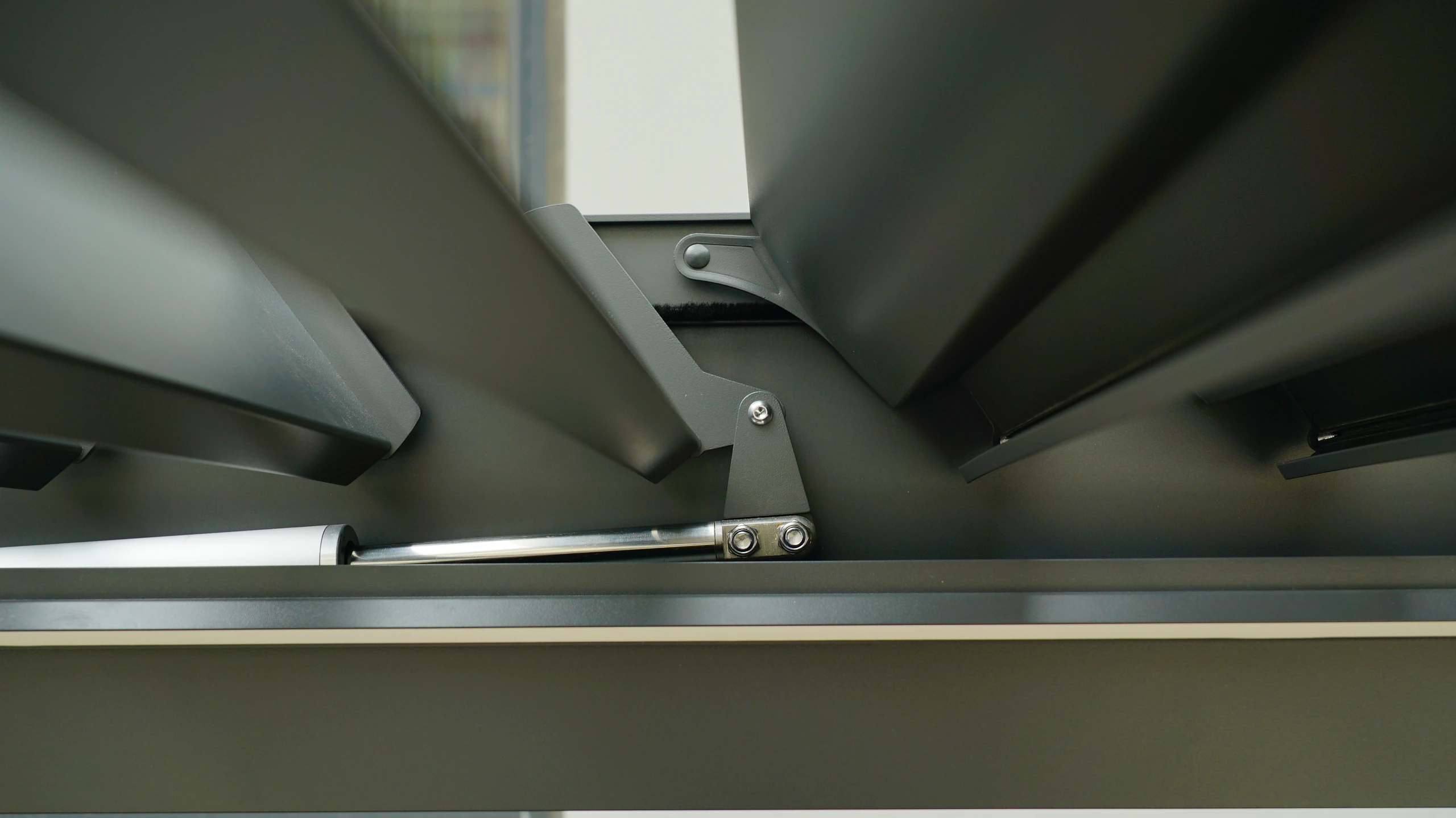
Suppose two users issue different commands
Imagine one person adjusting the dining area while another presses a button they believe affects only the sofa area. Unclear naming can lead to repeated commands and confusion. Use this scenario during procurement and ask the supplier to explain the actual response, labels and appropriate access arrangements. Do not discover the answer by repeatedly issuing conflicting commands on site; suitable personnel should verify the system through its permitted commissioning process. Independent zones, where available, still follow the product’s operating requirements and do not imply unrestricted positions in every weather condition.
Document the agreed zones for handover
The handover should map zone names to positions, list control equipment and describe confirmed operations and limitations. Demonstrate the ordered configuration so household members can identify their intended area, stop normal movement and find help. Itemise functions requiring additional equipment or services separately from the base package. Update the mapping when controls or accessories change so old labels do not mislead users. Judge the proposal against the real scenarios drawn at the start, rather than treating the number of zones as an independent measure of product quality.
- Draw areas needing different simultaneous states.
- Ask separately about drives, controls and automation.
- Document confirmed logic in the order and handover.
Do two connected modules necessarily provide independent controls?
No. Confirm the actual drives, controls and configuration. Ask for a zone map and written explanation of individual, grouped and any automatic actions. Appearance and another brand’s example do not establish this order’s capabilities.
More questions, practical answers →