Compact pergola living
Pergola beside a garden pond: separate viewing and maintenance
Plan pondside pergola seating alongside separate maintenance access and household requirements.
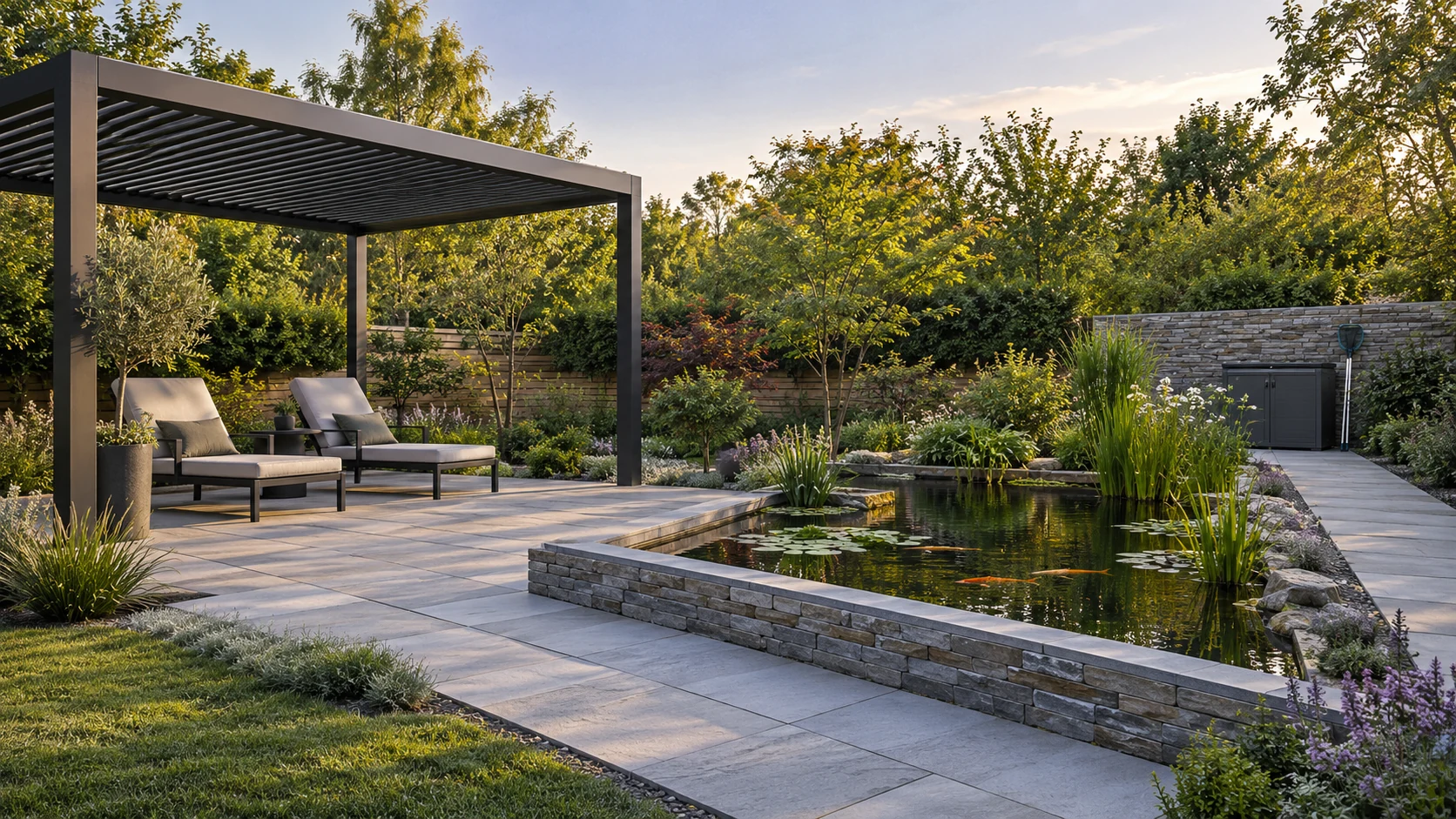
Check the seated view and the route out
A pondside pergola offers a view, but the prettiest seated perspective may lead to an awkward route out. Observe from actual chair height, then stand, turn and walk toward the house, checking whether furniture directs people along a narrow pond edge. Include posts, planters and the real edge on the same plan. This rehearsal identifies movement conflicts; it does not establish edge or structural safety. Pond construction, ground support and protective measures need assessment by people qualified for the site, independently of the pleasing view.
Maintenance needs tools and working positions
Pond care may involve leaf removal, equipment checks and water-edge planting, with actual tasks defined by the supplier or maintainer. Confirm working positions, tool entry and equipment access before placing furniture. Do not designate a chair footprint as permanent service space without assigning who moves it. Electrical equipment near water retains its applicable instructions and local requirements; adding cover does not change those conditions automatically. Reviewing the complete layout with the maintainer is more practical than later expecting them to work through narrow gaps between furnishings.
Rehearse viewing and servicing separately
Imagine two chairs facing a pond beside equipment needing regular attention. Rehearse family entry and exit, then ask the maintainer to follow the normal tool route. Both activities may claim the same corner. Compare chair orientation, planter placement or an appropriately reviewed service approach, rechecking any pond or equipment change. This hypothetical example is a shared-space test, not pond-remodeling advice. Where children or others need particular care, discuss protective and supervision arrangements independently; sitting under the pergola does not create an effective barrier.
Record the site review in the layout
Map seats, pond edges, equipment and routes for both pond and pergola reviewers. Identify movable furniture, positions that remain accessible and responsibility for restoring the daily arrangement. Confirm protective measures, local requirements and individual needs specifically; general home-safety guidance cannot substitute for a pond assessment. After servicing, remove tools and temporary objects before returning to leisure use. The arrangement can preserve the desired water view while giving equipment care and household activities defined places, rather than forcing every task onto one narrow edge.
- Rehearse seating and service routes separately.
- Have the pond specialist review edges and access.
- Confirm child protection and site requirements independently.
Is a walk-through gap enough beside a pondside pergola?
Not necessarily. Include turning, tools, equipment access and protection. Review the actual proposal with pond and pergola specialists, identify movable furniture and keep required access. Protective arrangements for children and others need separate confirmation.
More questions, practical answers →