Large pergola projects
An equestrian club pergola near tack preparation: separate the uses
Separate rider equipment, visitor rest and animal movement beside an equestrian preparation area.
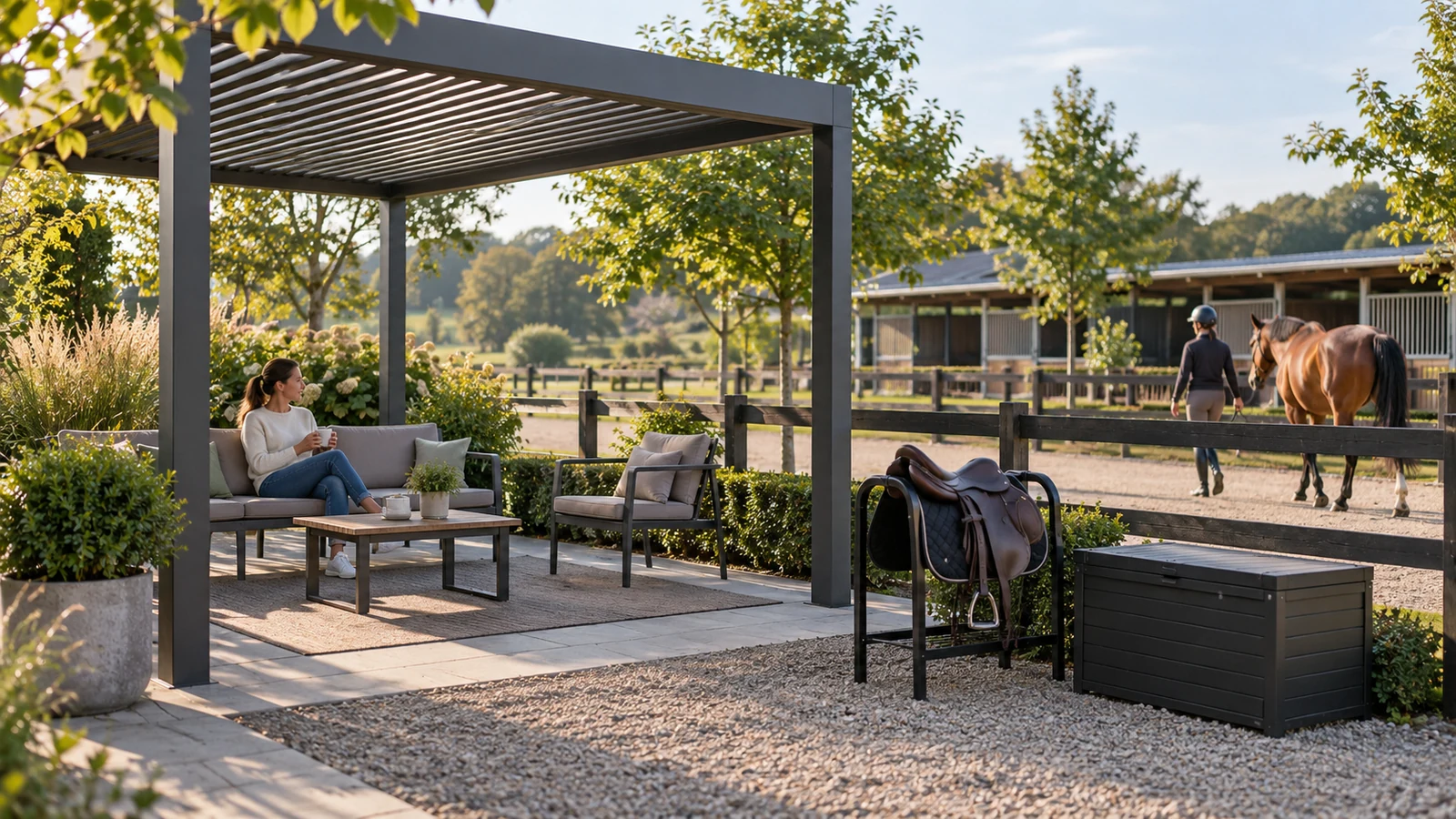
Have the venue define three distinct uses
Ask the equestrian venue team to identify rider equipment preparation, visitor rest and animal movement separately. Convenient adjacency does not establish that they can share an entrance or stopping point. This guide concerns spatial handover, not horse handling, training or facility certification. Equestrian personnel define the boundaries and management arrangements while the supplier confirms the pergola configuration. A large pergola may provide rest space, but columns are not assumed tethering or equipment supports. Those functions need independently appropriate facilities and responsibility.
Check deployed equipment beside visitor waiting
Include equipment cases, seating, bags and staff positions, considering visitors who stop for photographs or questions. Event publicity images do not establish everyday preparation space. Temporary storage should not quietly extend across an agreed boundary. Confirm access and accessibility through local project requirements; foreign guidance can inform questions without becoming a legal conclusion for this site. Relevant specialists select signs or separation facilities. New visitors should understand the relationship between resting and working areas without depending entirely on explanations from regular members.
Rehearse overlapping preparation and visitor arrival
Imagine equipment preparation is underway when visitors arrive and another rider needs to organize belongings. Rehearse visitor receiving and empty-case placement without live animal activity to check signs, waiting and staff contact. Appropriate equestrian personnel separately assess animal operations; the spatial exercise is not comprehensive safety verification. Review reception or storage ownership and share the result with the venue team. The aim is distinct receiving boundaries for different tasks, not an apparently convenient shortcut that combines people, equipment and animal movements without assessment.
Retain boundaries and change responsibility
Keep rest boundaries, equipment positions and contacts, reassessing changed facilities or uses. Separate pavilion care from equestrian operations and describe only actual rest facilities. If visitors repeatedly stop in unsuitable places, review the receiving arrangement rather than relying on more verbal reminders.
Restore signs and item positions after temporary events. A photography or competition setup should not silently redefine permanent boundaries. Staff on a later shift need a current arrangement and a clear owner for approving any change.
- Define rider, visitor and animal boundaries separately.
- Test reception and storage using people and empty cases.
- Do not assume columns serve tethering or equipment functions.
Can a substantial-looking pergola column double as a tethering point?
Appearance does not establish suitability. Confirm rest and equestrian functions separately through appropriate arrangements. Venue specialists should review the boundaries, and a spatial rehearsal does not replace assessment of animal operations.
More questions, practical answers →