Home planning
Pergola spaces with pets: inspect screens, floor gaps and everyday access
Assess enclosure contact, scratching and floor boundaries through your pet's actual behavior without assuming a shade screen is a verified pet barrier.
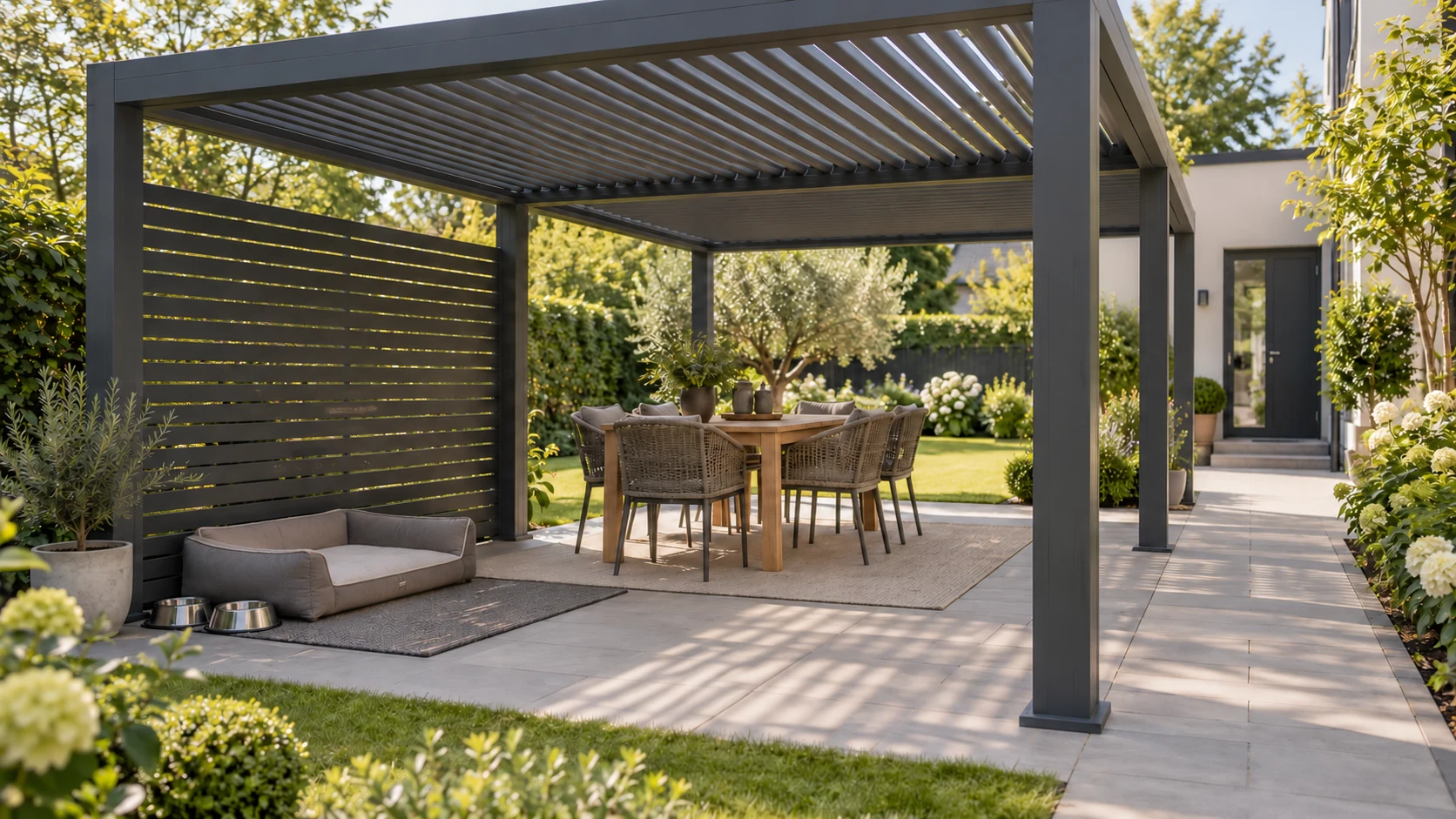
Observe how your pet uses the garden
A dog resting by the door, a cat climbing onto high surfaces and an animal pacing a fence contact the same pergola differently. Observe resting, chasing, waiting at doors and drinking locations before arranging furniture and enclosures. Body size alone does not establish whether an animal can pass a gap, and brief calm behavior is not a long-term guarantee. Owners know their animals but should translate observations into a clear brief so suppliers can explain accessory purposes. Distinguish the leisure area from boundaries that are actually expected to contain a pet.
Do not assume a shade screen contains pets
Scratch resistance, impact tolerance and containment require evidence for the specific screen. A sturdy appearance proves none of them. Ask about cleaning, damaged-part replacement and guide inspection, and whether pet contact is within intended use. Inspect gaps at uneven ground, steps and thresholds, not only the middle of the mesh. If reliable containment is required, select a solution intended for that purpose with the relevant supplier. Do not improvise boards, cords or mesh on a moving screen and change the conditions under which it is meant to operate.
Test hypothetical doorway and drinking routines
Imagine a dog waiting outside the kitchen while its water bowl sits beside a pergola screen. A person carrying plates then meets the dog, bowl and opening door in one location. Move the bowl and resting mat first and observe whether the entrance becomes clearer and the animal accepts the new places. This hypothetical example addresses routines, not a promise to change behavior. Before operating moving components, follow the instructions and ensure pets and objects are clear. Do not make the assumption that an animal will move away part of the operating plan.
Create a short cleaning and inspection routine
Include places where hair, mud and food collect in routine cleaning, using methods suitable for the actual surfaces and accessories. Record scratching, looseness or changed operation and contact the supplier instead of testing how much contact a component tolerates. Group mats, bowls and toys where they are easy to tidy while keeping the animal visible to adults. Revisit floor boundaries and entrances as seasons, furniture and habits change. Ongoing observation supports use more effectively than relying on a pet-friendly label at purchase.
With several pets, observe each separately rather than applying one animal's behavior to all. Visiting animals may require different supervision and routes during gatherings. Keep movable furniture from redefining the boundary so replacing a chair does not unintentionally change the conditions on which management depended.
- Observe actual waiting, drinking, chasing and resting locations.
- Verify screen purpose, contact limits and replacement procedures.
- Separate containment, household circulation and moving-component areas.
Can a pergola ZIP screen automatically serve as a pet enclosure?
No. Verify whether the specific screen is intended for pet containment and how scratching, impact and floor gaps are addressed. A shading purpose does not prove barrier capability. Choose a suitable boundary and separately plan supervision, entrances and moving-component management.
More questions, practical answers →