Large pergola projects
Outdoor furniture showroom pergola display specification
Separate showroom demonstrations, orderable options and styling concepts so display and quotation scope remain clear.
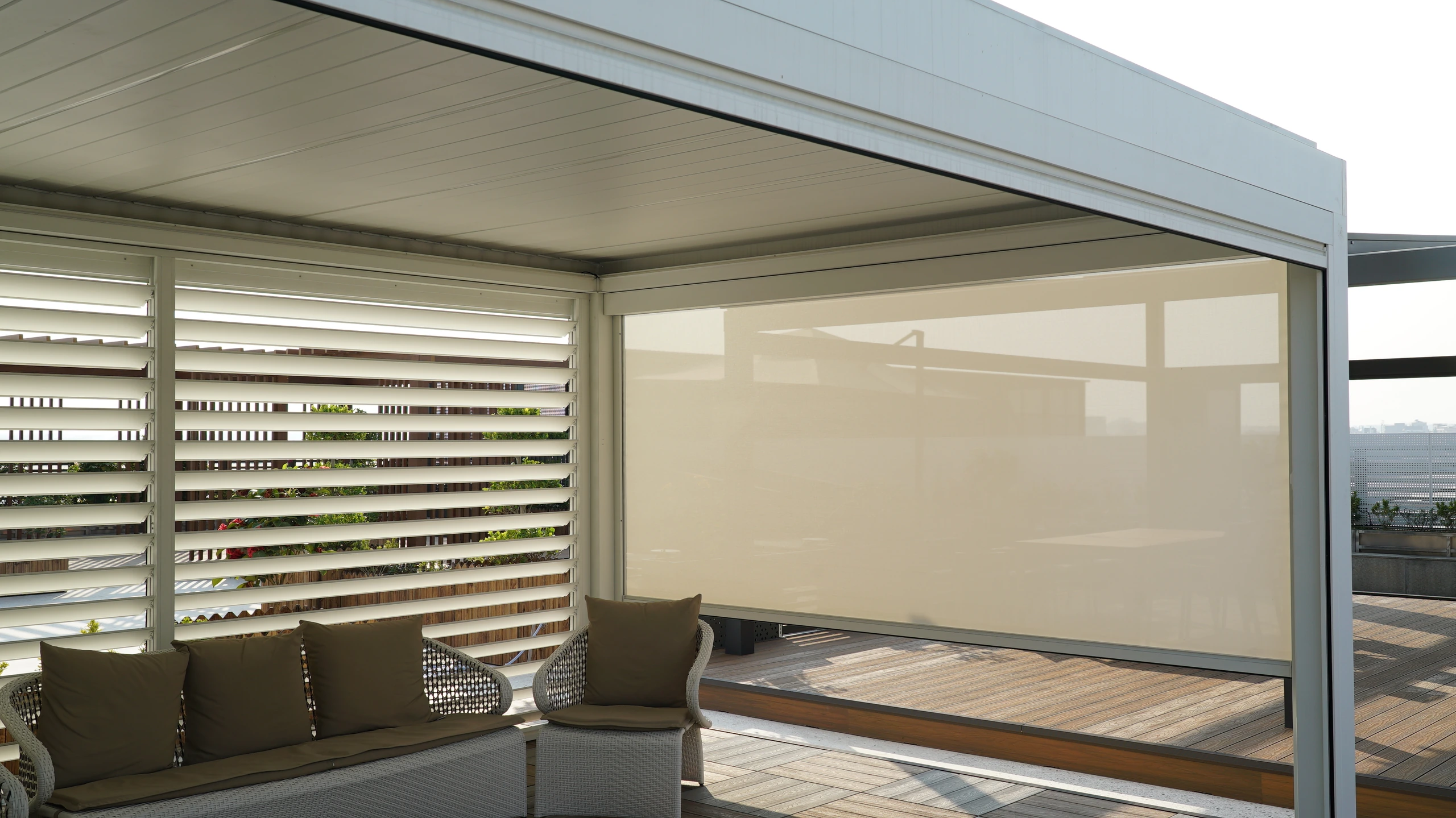
Give every display element a clear status
When a furniture retailer displays tables, sofas and lighting beneath a pergola, customers should know which elements belong to the structure, which are sold separately and which are styling only. A working demonstration does not mean every available configuration has that feature. For TTH200/220, use information matching the actual sample rather than transferring specifications from another product. UK BIM Framework guidance organizes information around its purpose; that principle can inform the approach, but it is not a retail-labeling rule or product certification. The display should make the relationship between demonstration and ordering understandable.
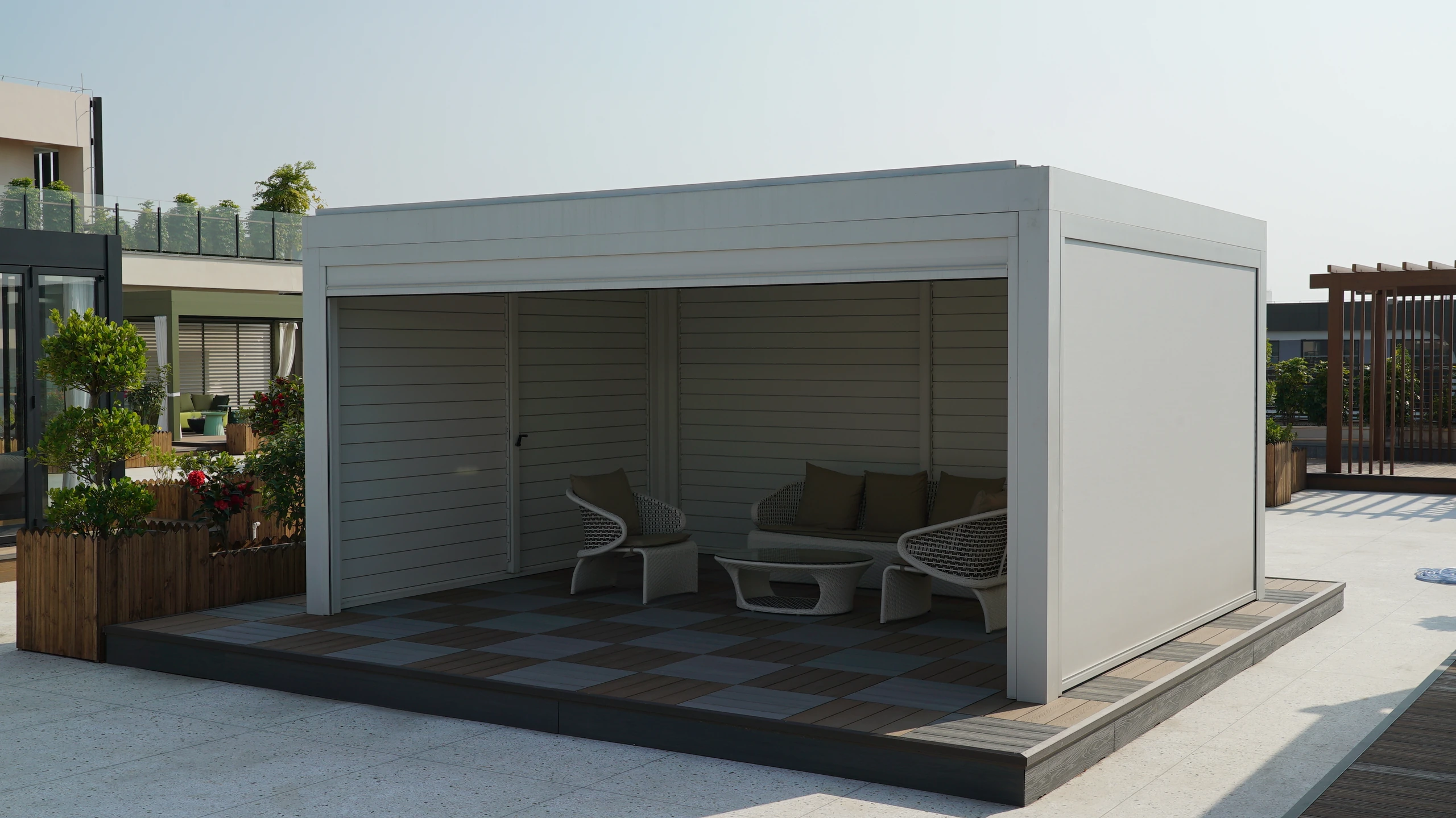
Use consistent names on labels and quotations
Create a concise configuration schedule linking the sample, selectable items, excluded furniture or equipment and site work still awaiting review. Record colors, controls and side treatments with consistent names so spoken descriptions and quotations agree. Identify concept images and third-party accessories clearly; a fully furnished scene should not imply that everything arrives with the pergola. Use performance evidence matching the product and configuration, marking unconfirmed items accordingly. The schedule can remain simple while allowing a display label to lead to a specific quotation scope and an accountable contact.
- Distinguish demonstrations, available options and styling.
- Keep configuration names consistent across labels and quotes.
- Identify pending site work and excluded items.
Test what happens when a customer orders from a photo
Imagine a retailer photographing a pergola with pendant lights and a sofa. A customer requests the same arrangement, but the lights belong to the display team and the sample sides differ from the base quotation. Map each visible element to the schedule and explain what is available and what needs confirmation. This example assumes no TTH standard accessory package or unverified supply commitment. It makes the visual scene explainable before ordering rather than leaving differences to emerge during installation. Recheck that correspondence whenever the showroom display changes.
Translate the showroom choice into project requirements
After choosing a display, the customer still needs to provide the site, intended use and desired configuration for review of dimensions, foundations, drainage, electricity and local requirements. Showroom installation conditions do not establish suitability elsewhere, and suspended additions require separate confirmation. Keep configuration versions, quotation scope and change records aligned across sales, design and installation. Do not extend appearance into unsupported lifetime, wind-load or maintenance promises. Distinguishing confirmed choices from project checks reduces misunderstanding while keeping furniture styling and structure procurement accurately defined.
Are all furniture and lights in a showroom pergola photo included in the quote?
Do not infer inclusion from a photograph. Match the structure, options, separately sold furniture and styling items to the quotation and version. Site work, supports and electricity may need review. Clearly distinguish included, optional and unconfirmed elements.
More questions, practical answers →