Buying guides
Planning a pergola showroom display
TTH Pergola aluminum pergola guide: build a display that explains the product family, options and real details clearly.
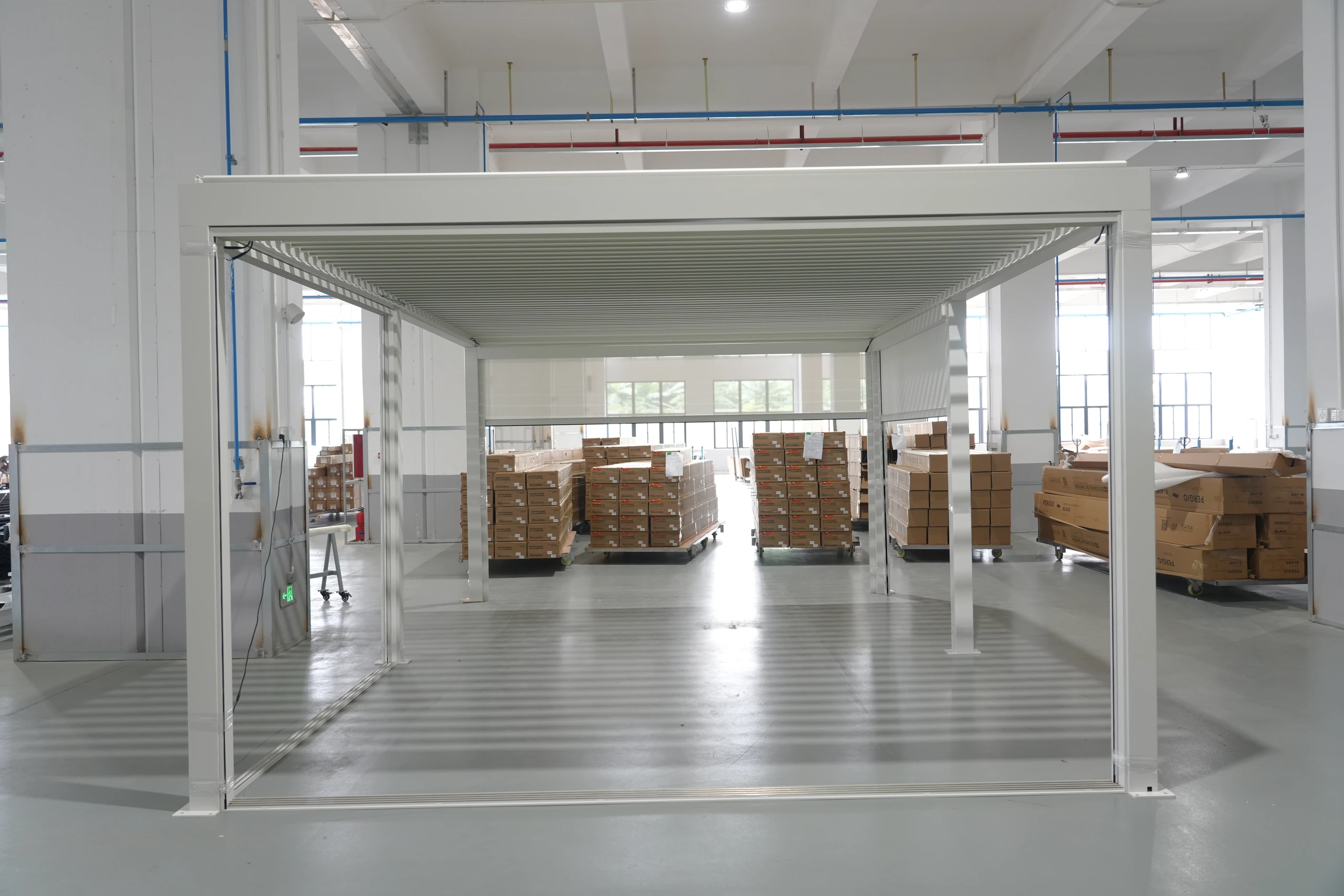
A showroom should answer the buyer's next question
A display pergola is more useful when visitors understand what they are looking at. An attractive complete scene creates interest, while accessible detail views explain how the product is organised. If every sample is placed together without a clear sequence, the visitor may leave with a strong visual impression but little understanding of the differences between configurations.
For a TTH Pergola showroom, think in stages: the full outdoor-living scene, the operating demonstration and the component comparison. Keep the model labels consistent with the parameter information and avoid implying that one display contains every available option. Real photographs on tthpergola.com can supplement a physical sample when a hidden connection is difficult to show. Give visitors a way to connect the displayed arrangement with the relevant product page or enquiry record. A compact display can still be informative if the route through it is clear. The aim is to make the next conversation more precise: what space does the customer have, which feature matters and what needs to be checked for the actual project?
Choose the questions the display must answer
A showroom pergola should help visitors understand the product rather than simply occupy floor space. Decide whether the main purpose is to demonstrate roof movement, compare profiles or explain side accessories. One clear arrangement may communicate more than a crowded collection of options. Label the exact model and distinguish the standard configuration from additions so visitors do not assume everything on display is included in every quotation.
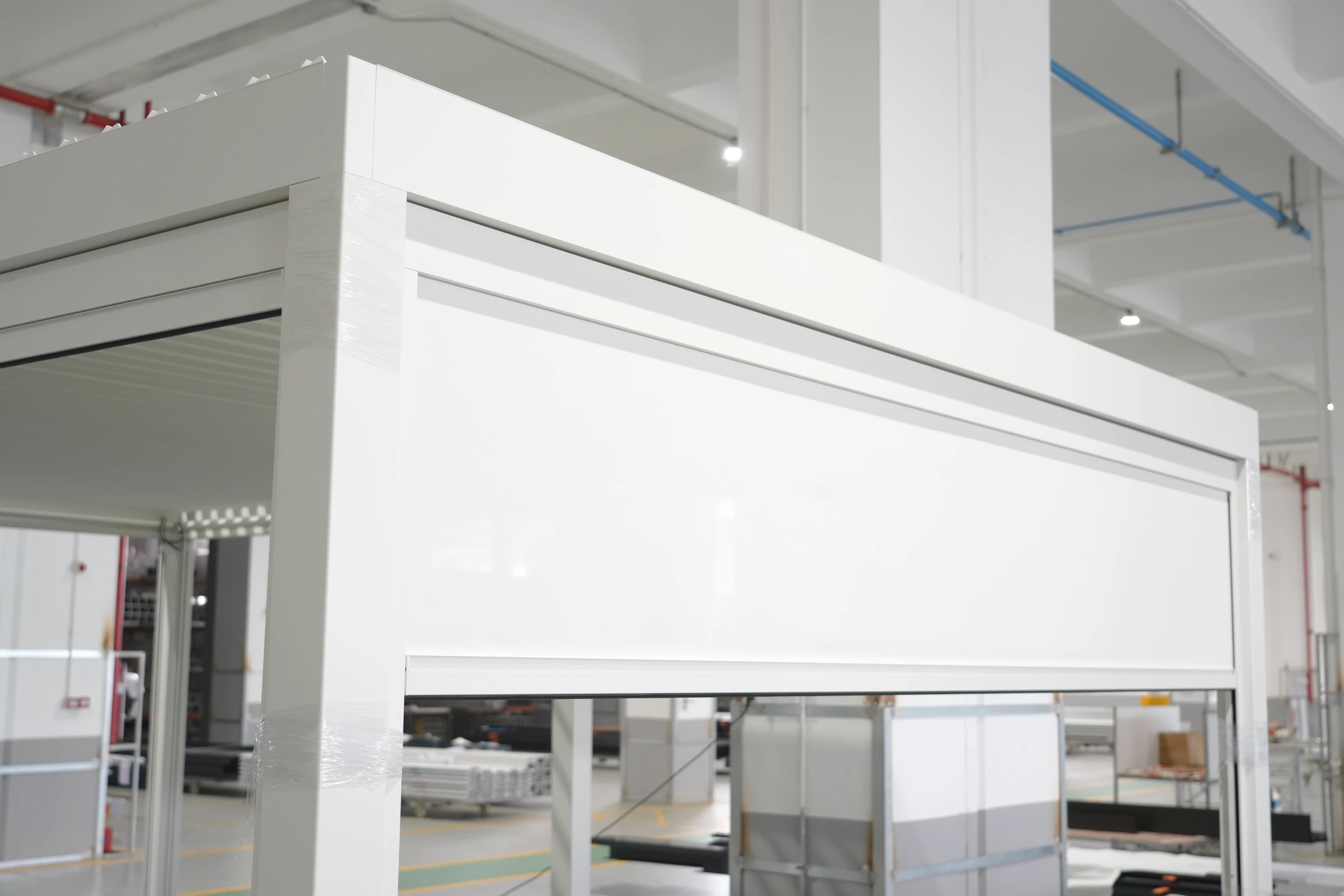
Make details visible and understandable
Use real close-up photographs, component samples and concise specification tables alongside the display. Keep each item associated with the correct family. A shared scene image can show the appearance of TTH 145/175 or TTH 200/220, while separate profile rows preserve their differences. Avoid enlarging a small image until it becomes misleadingly blurred. Visitors should be able to connect the visual example with the written model information without guessing.
Plan the operating demonstration
Arrange the display so trained staff can demonstrate the supplied controls without obstructing circulation. Keep moving parts and accessory travel areas clear according to the product guidance. Prepare a short explanation of what the demonstration does and does not establish; a showroom operation is not a substitute for a site-specific structural review. Give visitors a take-away specification or product link that matches the displayed model and clearly identifies the next information needed for a quotation. A short comparison card can explain the two models within a shared family while the main display stays visually simple, helping visitors understand differences without doubling the number of structures.
- Label models and optional accessories clearly.
- Pair the display with genuine detail evidence.
- Keep the demonstration and visitor route coordinated.
Should a display include as many accessories as possible?
A focused display is often easier to understand. Select features that explain the intended TTH offer, label optional items clearly and leave enough room to demonstrate operation and movement around the structure.