Hardtop pavilion planning
Opaque or translucent pavilion roof: define the light you want underneath
Define daylight needs through reading, dining, plants and screens before comparing actual roofing samples.
Begin with the activity beneath the roof
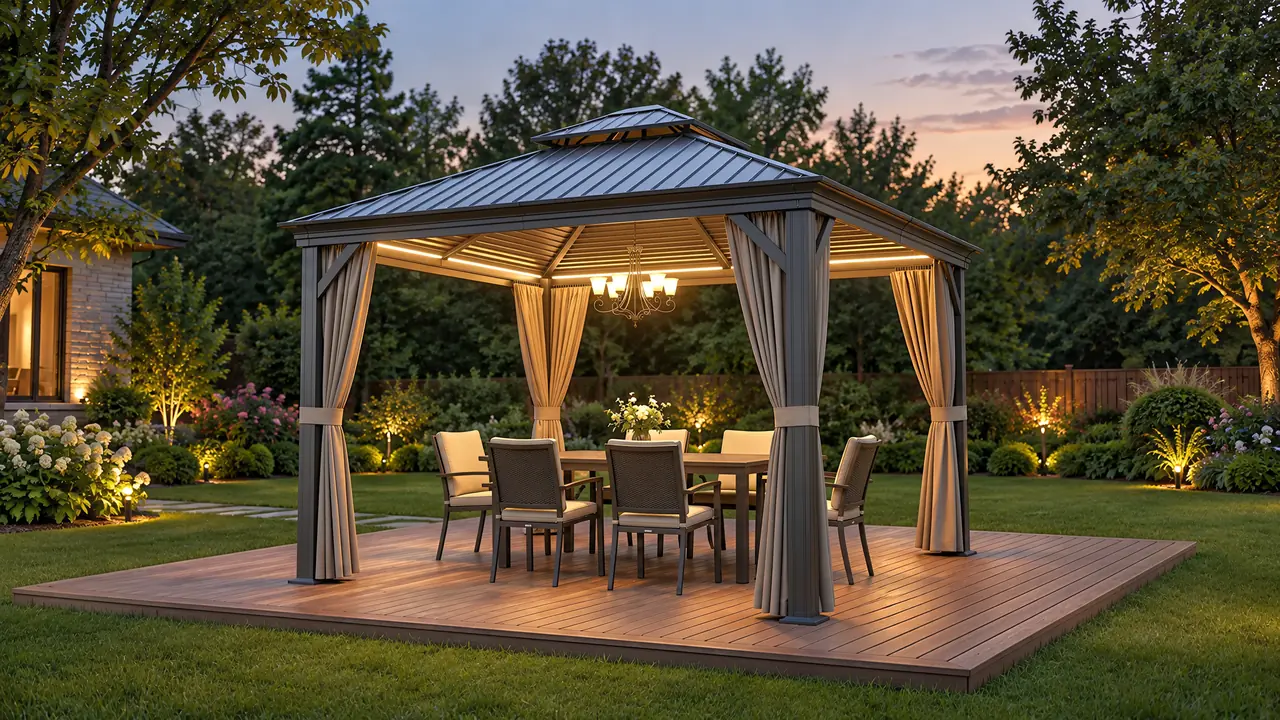
Choose between opaque and translucent roofing by defining the activities beneath it. Reading, dining, tending a planting table and watching a screen create different expectations. Some users want less direct sunlight; others need a clearly visible tabletop during the day. List the frequent activities, times and positions before discussing materials. Translucent panels are a comparison option whose availability must be confirmed with the actual supplier; they do not establish the TTH range. Light transmission also does not by itself establish comfort or freedom from glare, which need their own information and observation.
Observe samples at task and eye level
Do more than hold a sample against the sky. Observe the task surface, seated view and screen reflections from an orientation resembling the site, recording the conditions during the assessment. If the manufacturer supplies light-transmission or solar information, check the exact panel, color and stated conditions rather than transferring figures from another version. Opaque roofs can still receive side light, so include curtains and nearby buildings. Households using the pavilion mainly early or late should also consider lighting instead of expecting one roofing choice to address every hour.
Resolve a conflict between reading and evening viewing
Consider a household reading in the pavilion by day and using projection in the evening. First ask whether both activities need the same position. Try a different screen orientation, seating location or side-curtain arrangement before fixing the roofing requirement. If the screen is only used after dark, compromising daytime reading may be unnecessary. Frequent daytime viewing calls for a real equipment demonstration. This does not preselect the correct roof: it matches investment to actual hours of use. Let the principal users record observations individually rather than relying on one person standing beneath a sample.
Verify the complete assembly after choosing a material direction
After setting the daylight preference, review connections, trim, cleaning and replacement information for the complete roof. Transparent or translucent materials may have specific care restrictions; opaque panels still need service and finish information. If mixed shading is desired, ask whether the manufacturer supports an appropriate configuration instead of combining panels independently. Identify the observed sample, color and construction in the order. Keep the assessment time, position and limitations alongside it.
An overcast sample visit cannot establish the experience under strong sun. List important unobserved conditions for follow-up rather than summarizing everything as good daylight.
- List activities, times and task-surface positions.
- Match the sample, color and data to the same configuration.
- Include side light and curtain positions in the assessment.
Is translucent roofing always right for a shaded garden?
Identify the affected positions and hours, then assess actual samples. Surrounding buildings, curtains and tasks matter. Verify the color and construction, observe occupied surfaces and confirm which materials the supplier actually offers.
More questions, practical answers →