Design details
Pergola lighting: plan the atmosphere and the wiring together
TTH Pergola pergola lighting guide: coordinate lighting positions, controls and qualified electrical work before ordering.
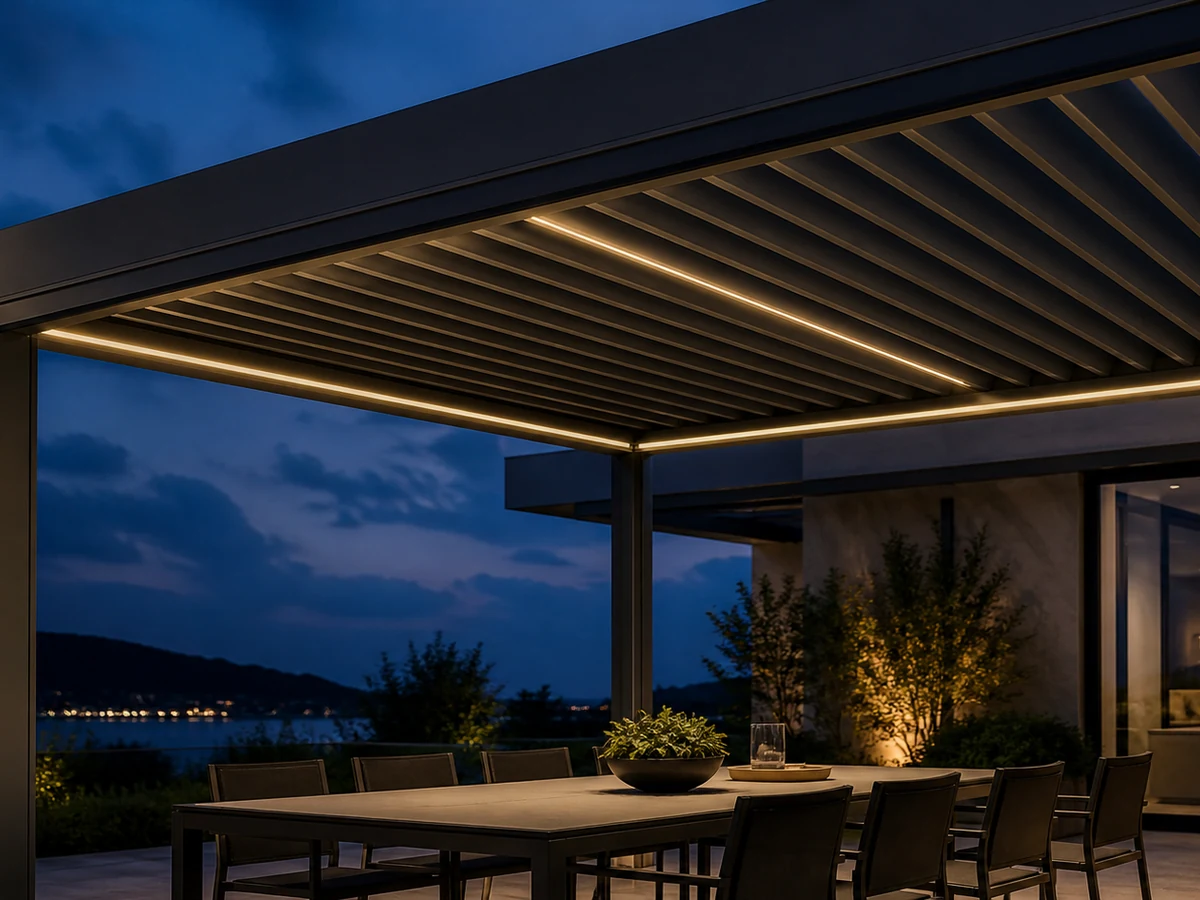
Lighting should support an activity before it creates an effect
A glowing roof edge can make an evening photograph attractive, but the useful question is what people need to see. Dining, reading and moving between the house and garden do not place the same demands on light. Begin with those activities and consider the direction from which light reaches faces, a tabletop and the floor. More brightness alone does not necessarily make the space more comfortable.
For TTH Pergola planning, discuss the lighting position alongside the frame and control arrangement. Decide where wiring is intended to run and how it can be reached for the maintenance allowed by the system. The beam-lighting photographs on tthpergola.com help show possible locations, but the final equipment and electrical installation should be confirmed for the chosen configuration. Consider how the space looks with only part of the lighting on, and whether reflections in glass or nearby windows will affect the view. Planning this early avoids treating lighting as a decorative strip added after every other decision. The aim is an outdoor setting that remains inviting when people are actually using it, not merely when the camera faces the frame.
Start with the evening activities
Lighting should support the way the pergola will be used after sunset. A dining table, reading seat and walking route have different needs. Mark those activities on the plan before selecting fixture positions. Avoid making the decision solely from a bright rendered image, where reflections and exposure may exaggerate the effect. Ask for information about the actual lighting option and how it will be integrated into the chosen frame.
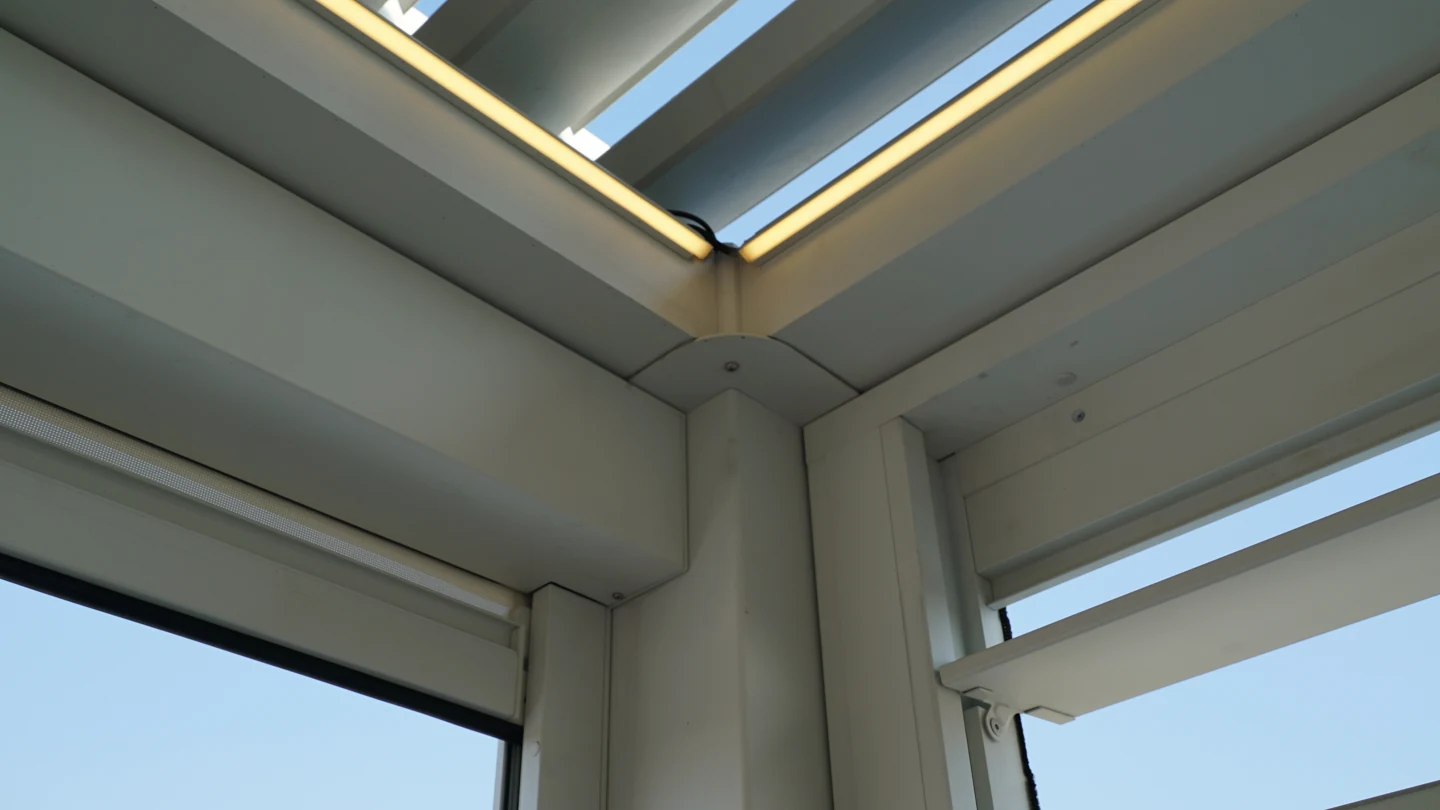
Coordinate controls and cable routes
Decide where lighting will be operated and whether it is intended to work separately from the roof controls. Ask which components are included and which electrical tasks remain the responsibility of the local installer. Cable routes should be coordinated with roof movement, drainage and side accessories. Do not add holes or run cables through the structure without approved guidance. The electrical design and installation should be completed by the responsible qualified parties.
Review comfort from seated positions
Consider how the light will appear from the table, from inside the house and from nearby properties. A fixture that looks discreet when viewed from the garden may be uncomfortable at seated eye level. Where dimming or different controls are available, confirm their compatibility rather than assuming they can be added later. Keep a record of the selected fixtures, controls and access arrangements so maintenance can be planned without unnecessary disruption to the finished pergola. For a dining layout, include the table position in the lighting drawing so fixture selection can be discussed in relation to the activity instead of an empty roof.
- Separate ambient light from task and access needs.
- Confirm included electrical components and local work.
- Check maintenance access before approving the layout.
Should lighting be selected only after installation?
Some choices may remain flexible, but routing, interfaces and access can be harder to resolve later. Record the intended lighting in the initial TTH brief and confirm which equipment and connections are included.