Trade & procurement
Make an approved pergola master sample part of the order record
Define what a pergola master sample approves, label its reference and update its relationship to the order when materials or finishes change.
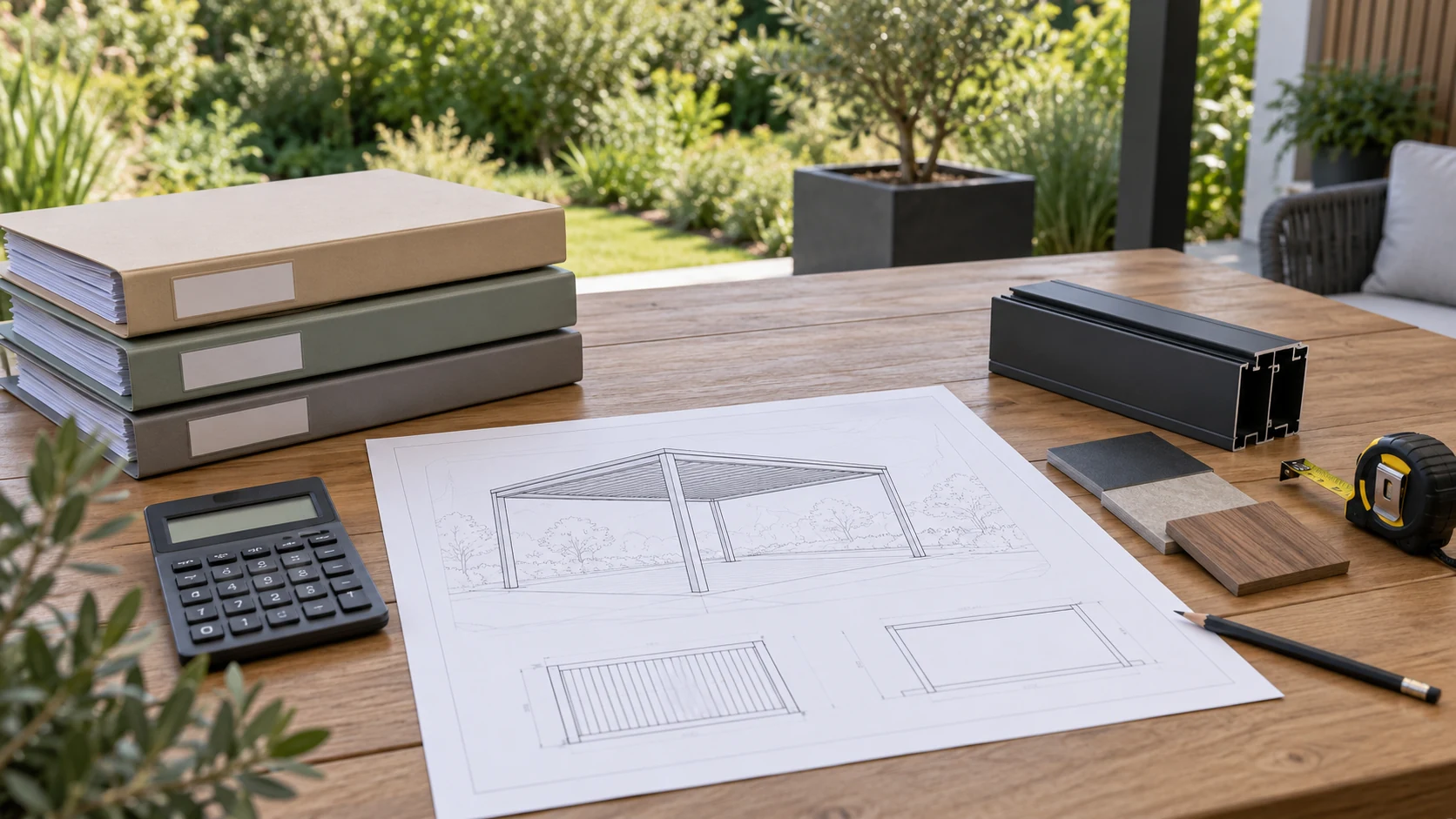
Define what the sample is approving
Receiving an attractive extrusion sample does not approve the entire pergola. A master sample can support comparison of colour, gloss, texture, visible joints or component fit, but it may not represent every final material and process. State which characteristics it approves and which still require drawings, specifications or other evidence.
A finish panel helps assess appearance; it does not establish span or structural capacity. A connection sample demonstrates an assembly relationship without confirming the project's anchorage. Give each reference a clear approval purpose so an inspector knows what to compare instead of relying on an impression that the product looks similar.
Keep an identifiable reference on both sides
Label the sample with its ID, date, project or order, finish description and approver. Buyer and supplier can retain corresponding references with a recorded relationship. A photograph in a chat is insufficient because screens, lighting and camera angle affect appearance. RAL's official digital colour library also directs users to physical samples for final colour decisions.
Record observation conditions, such as comparing pieces together under diffuse daylight instead of viewing one outside and another beneath warehouse lighting. A scratched, dirty or weathered sample should not remain an unquestioned standard. Storage and condition affect how reliably the reference can support later comparisons.
Identify which approvals a change affects
Suppose a dealer approves a smooth dark finish and later requests a textured finish under the same colour reference. Matching colour names do not establish matching gloss, feel or reflection. Reapprove the affected features and state which reference the new sample replaces instead of calling both final.
Another possibility is a sample produced through an earlier process while production uses a revised route. Ask the supplier to describe the difference and proposed verification, then decide whether the reference or inspection needs updating. The value of a master sample is that it makes changes visible, not that it ends every future discussion.
Connect the sample to the inspection process
Reference the sample ID in production and inspection documents and state the comparison scope. Agree any dimensional or appearance acceptance boundaries in advance instead of inventing them after seeing the goods. Resolve differences using the sample, written specification, observation conditions and actual findings together.
Retain the reference and approval record for additions or repairs. Remember that installed components can change during use, so future replacement colour needs assessment rather than an unconditional promise based only on the original sample.
- Label the ID, date, approver and approved characteristics.
- Keep physical references and consistent viewing conditions.
- Update samples and inspection documents after relevant changes.
Should gloss and texture be approved after choosing a RAL colour?
Yes. A colour reference does not fully describe gloss, texture or reflective appearance. Request a physical sample representative of the proposed process, compare it under agreed conditions and record colour, gloss, texture and sample ID together. Do not use a phone image as the sole final reference.
More questions, practical answers →