Hardtop pavilion planning
Checking a pavilion roof for glare from nearby windows and upper floors
Assess roof samples in the intended orientation and inspect views from windows, upper floors and paths.
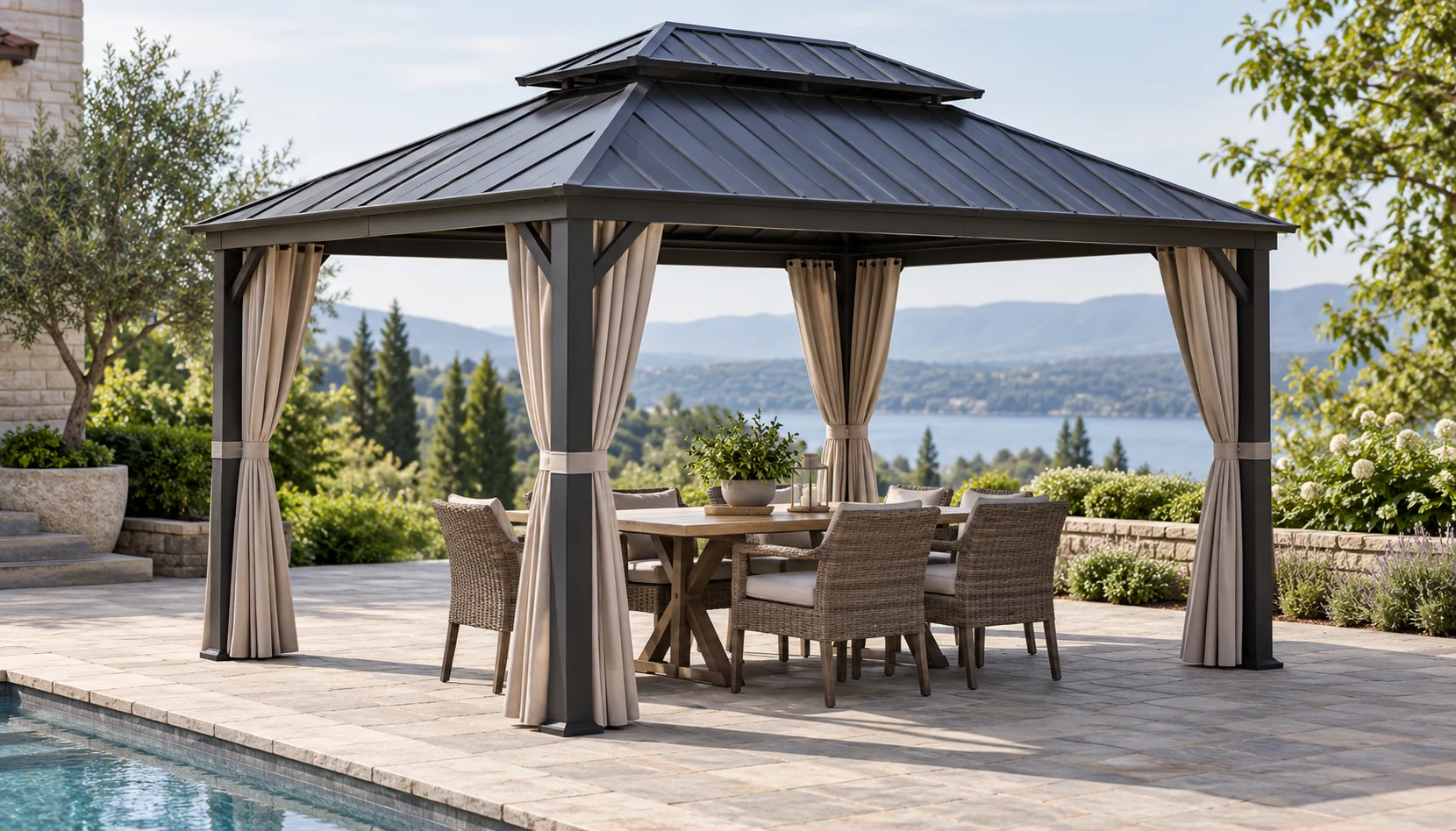
Start with the people who can see the roof
Assess roof reflections from positions that can see the roof, not only from underneath it. Upper rooms, neighboring terraces and elevated paths may receive a very different view from ground level. Mark those viewpoints and the pavilion orientation, then obtain a sample of the actual finish. Color, photograph brightness and a matte label do not establish the experience at every angle. Where windows are close or the project has defined requirements, obtain an appropriate professional assessment instead of treating one overcast photograph as a guarantee against later disturbance.
Keep the sample connected to the site orientation
Record the finish name, color, sample orientation and viewing position. Present the sample in a direction relevant to the proposed roof rather than placing it casually on a table. Observations at different times can identify conditions worth further evaluation. Phone exposure settings cannot be used to calculate reflectance, and screen color is not material data. Where the supplier offers relevant surface information, check which finish process and range it describes. Compare alternatives under similar conditions so differences in viewing or photography are not mistaken for differences between the products.
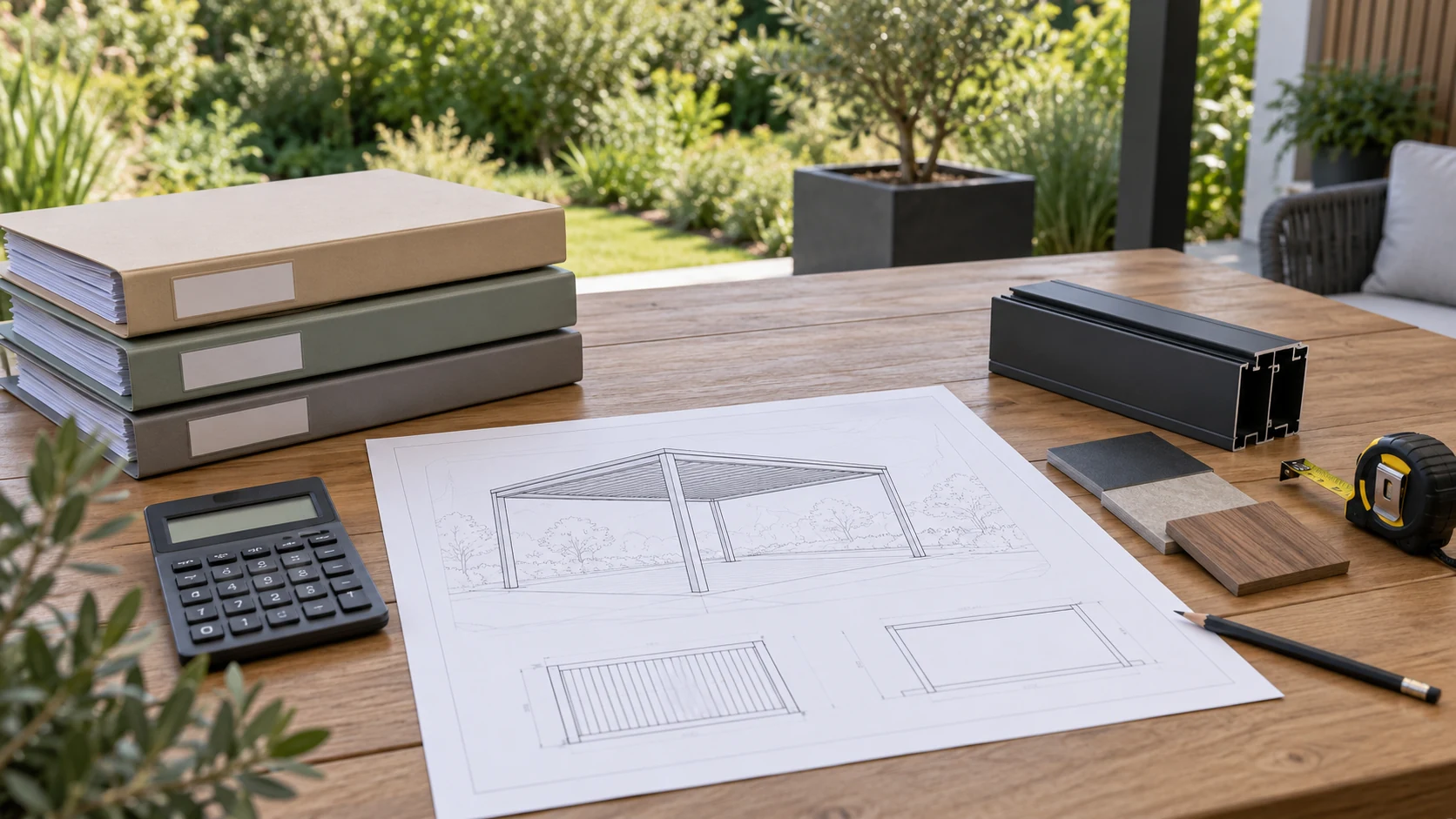
Test a garden overlooked by an upper-floor study
Imagine an upstairs study overlooking the garden. A finish that appears subdued from below may feel different from the desk. Record the sightline, occupied hours and sample position before discussing whether roof position, orientation or finish can change. Do not immediately attribute the issue to a material category. A neighboring viewpoint should only be observed with appropriate access permission. The scenario illustrates why the surface and viewing geometry need to be considered together. Multiple recorded viewpoints are more useful during purchasing than a later disagreement framed solely around color.
Include unobserved conditions in the decision
Record the times, viewpoints and samples assessed, along with conditions still unobserved. Obtain suitable data or specialist assessment where a quantitative decision is needed. Confirm how the chosen sample corresponds to the delivered finish and how proposed changes are handled. A sample aids selection; it cannot guarantee every angle and weather condition. Approve position, roof form and finish together so later changes trigger the relevant recheck.
If nighttime lighting will strike the roof, assess that separately. Daylight observations and lighting trials can complement one another without becoming an unsupported blanket approval of reflections.
- Mark upper windows, neighboring terraces and elevated viewpoints.
- Record the finish, orientation, time and assessment conditions.
- Obtain appropriate data or specialist assessment for quantitative requirements.
Does choosing a dark or matte roof guarantee no disturbance at nearby windows?
No. The actual finish, orientation and viewing geometry matter. Assess the matching sample from relevant positions and times, obtain specialist evidence where needed, and recheck when the approved configuration changes.
More questions, practical answers →