Retractable awning choices
Library terrace shade: compare paper, screens and quiet transitions
Check paper and screens from real reading positions and plan equipment movements and alternative indoor seating instead of choosing from tabletop coverage alone.
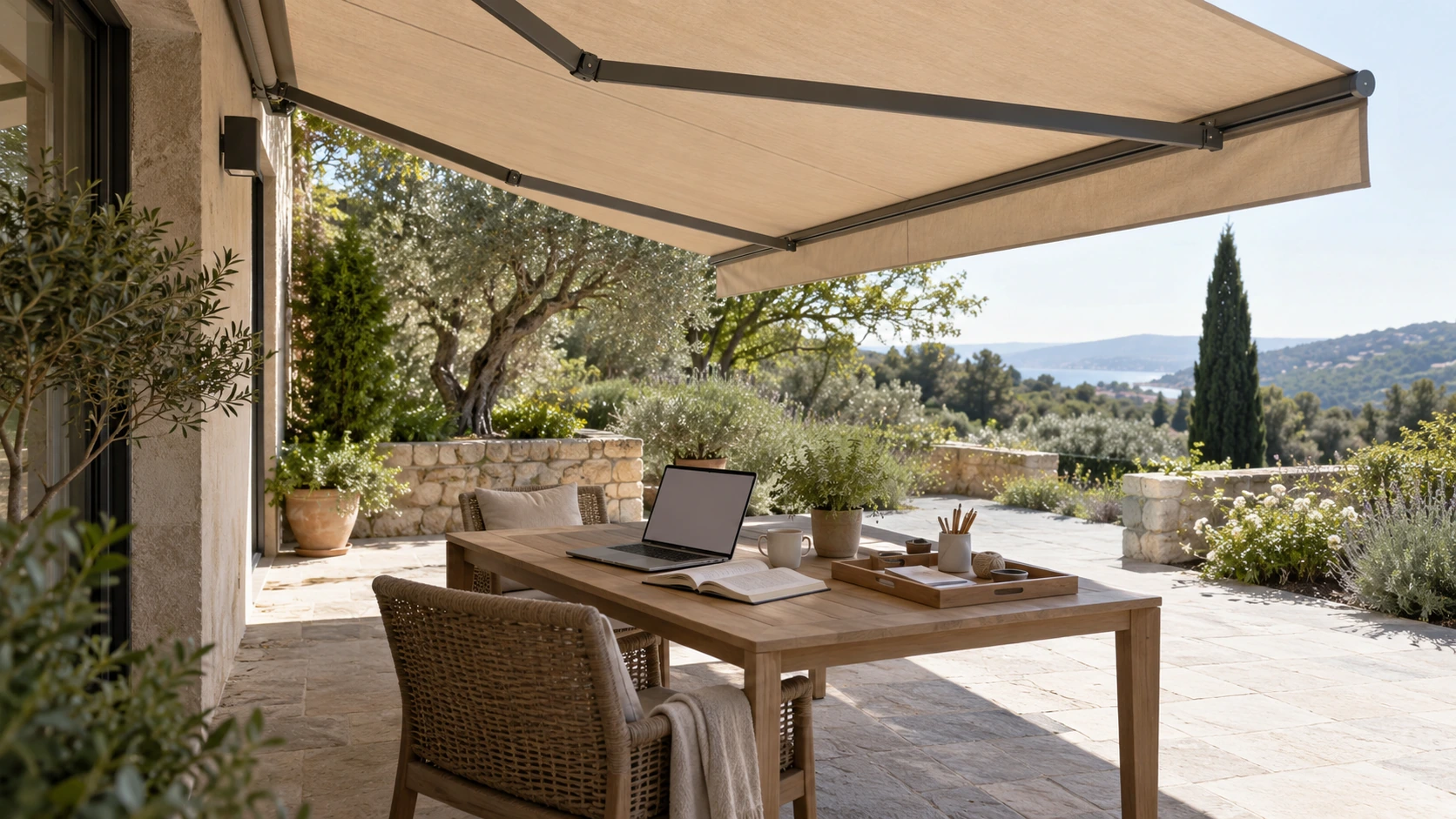
Reading areas serve more than one viewing task
A library terrace may support printed books, tablets, wheelchair users and shared discussion. Record use hours and furniture orientation, then observe direct light, screen reflections and material brightness from actual seated positions. A shaded tabletop does not establish the same experience for every device or person. This is not a professional lighting-compliance assessment or a claim that fabric color treats visual fatigue. The planning exercise reveals different tasks so shading, orientation and library service can be compared as a coordinated arrangement rather than one undifferentiated area of shade.
Compare orientation using actual reading materials
Use ordinary paper and screens at candidate seats, recording reflections and repeated posture adjustments. Keep conditions and device settings comparable rather than treating different-weather photographs as a controlled test. If a fixed long table forces some readers toward or away from strong light, compare seating changes before altering the awning. Appropriate staff or specialists must still check applicable circulation and access conditions. A better screen view should not be achieved by moving a chair into a principal route. Individual reading comfort and overall usability need to coexist in the proposed layout.
Consider occupied reading during equipment operation
Define who operates the awning and when adjustments occur. Quiet reading is not a reason to delay instructed non-use, and users should not be surprised by an unexplained change in the space. Coordinate observation, communication and permitted movement, pausing use of the relevant area where appropriate. Understand sound and operation through actual model information and demonstrations rather than a silent-operation promise. If automation is fitted, establish how it works with staff management; a timer cannot know every temporary object or cleaning activity occurring in the reading area.
Include periods when outdoor reading is unavailable
Weather, service or an equipment issue may close the terrace temporarily. Provide clear information and an available alternative instead of promising outdoor seats under every condition. Reader feedback can guide later orientation and management changes, but does not establish improved reading efficiency without evidence. Retain instructions, operator assignments and maintenance contacts and reassess after furniture changes. A useful reading-area proposal considers paper and screens while giving staff a clear process for adjustment, non-use and communication with the people occupying the space.
- Review real paper and screens at normal seats and hours.
- Coordinate orientation, circulation and access requirements.
- Define operating communication, temporary non-use and indoor alternatives.
Does a shaded library table suit every reading device?
Not necessarily. Paper, tablets and seated positions can produce different reflections and brightness. Review real materials during normal hours, considering orientation and access. Staff procedures and alternative seating are also needed. A shade photograph does not establish the complete reading experience or professional lighting suitability.
More questions, practical answers →