Retractable awning choices
Shade above or below a glass roof: compare heat, access and compatibility
Establish the existing glass roof’s structure and service boundaries before comparing above-roof and below-roof shading.
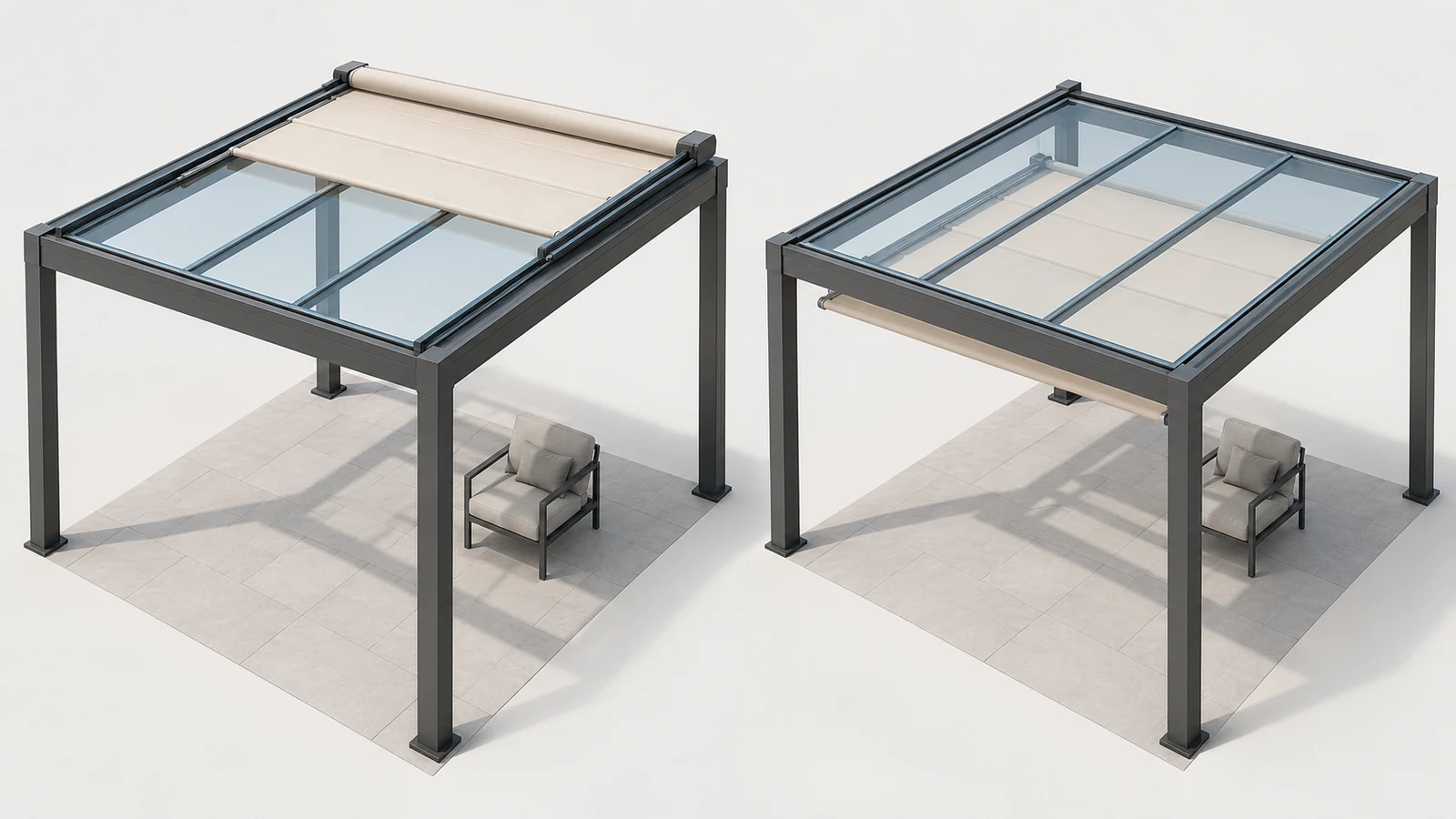
The glass roof and shading equipment are separate systems
Before adding shade to a glass roof, identify the existing roof and its available interfaces. Fabric systems are not universally compatible accessories. Above-roof and below-roof positions affect servicing, cleaning and appearance differently. State whether the main concern is direct glare, room brightness or perceived heat, including the relevant hours. This gives suppliers a useful basis for comparison. Another manufacturer’s example demonstrates a design approach, not compatibility with your existing roof or a particular TTH product. Establish the actual system relationship before selecting a fabric.
Separate comfort goals from installation conditions
Outside and inside positions interact differently with solar exposure, airflow and access, but results depend on glazing, ventilation, area and operation. Avoid treating either “outside is always better” or “inside is easier to clean” as a complete conclusion. Ask how equipment will be reached, how glass will be cleaned and what must be removed during repairs. If the existing roof has an active service arrangement, ask that provider about the proposed addition. Compare these conditions together so a comfort improvement is considered alongside any extra maintenance burden.
Compare real seats and the cleaning route
Imagine a reading table under glass where afternoon glare is the main complaint and winter sky views remain desirable. Compare deployed and stored views from that seat, then ask the service team to explain its glass-cleaning route. A below-roof unit blocking an existing access point may be convenient to operate but difficult to maintain. Above-roof equipment requiring specialized access also carries a service consideration. This is a proposal review, not an invitation to climb onto the roof. Use the same questions for both options instead of comparing fabric and controls alone.
Define responsibility for the added system
The final documents should separate supply, fixing, controls and maintenance responsibilities for the glass roof and added shade. Record accepted configurations and changes requiring review. Check lighting or automation separately rather than assuming a showroom combination is included in the base price. Keep cleaning and shutdown instructions and identify the correct service contact for each system. Leave unassessed temperature or energy effects open. A complete decision explains suitability for this particular glass terrace and its future care, rather than declaring one position universally more advanced.
- Specify the affected time, seat and concern.
- Ask both options the same cleaning and servicing questions.
- Have the existing roof provider review additional fixing and interfaces.
Is adding fabric enough when a glass-roofed terrace feels too hot?
Not necessarily. Separate direct sun, glare, ventilation and overall comfort, then compare compatible shading positions. Confirm whether the existing roof accepts the equipment and how both systems will be cleaned and maintained. Fabric position alone does not guarantee a temperature outcome or establish compatibility from another brand’s example.
More questions, practical answers →