Trade & procurement
How to Evaluate Aluminum Pergola Manufacturers: A Buyer's Audit for Dealers and Contractors
Compare aluminum pergola manufacturers with a practical buyer's checklist covering profiles, coatings, test reports, drainage, motors, packing and after-sales support.
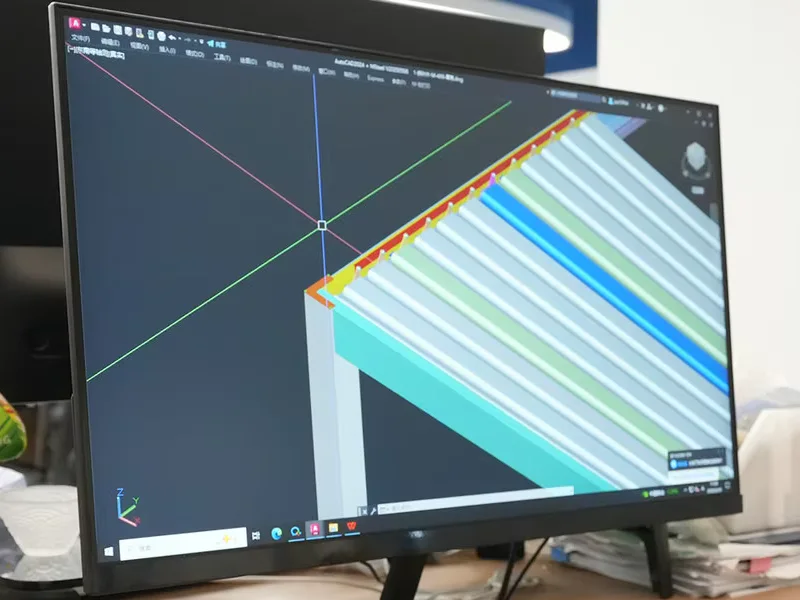
Most aluminum louvered pergolas look similar in a product photo: a powder-coated frame, rotating blades, a hidden gutter and an LED strip. The differences that affect installation and after-sales work are harder to see. They sit in the profile sections, coating specification, test-report scope, drainage route and the way components are identified and packed.
For dealers, contractors and designers, comparing manufacturers means looking beyond the brochure. The most useful question is simple: can the supplier connect its claims to the configuration you intend to buy?
Compare the same configuration
Before asking for prices, write down the system you need. A louvered pergola, a fixed-roof pavilion and a retractable awning raise different structural, drainage and electrical questions. Even a quotation for a “standard 4 × 3 m pergola” needs a defined scope.
Give each manufacturer the same brief:
- Product family, overall dimensions, number of bays and post positions
- Freestanding or wall-mounted installation, including the proposed supporting structure
- Manual or motorized roof, sensors, lighting and electrical scope
- Side systems such as zip screens, glass or fixed louvers
- Finish color, destination country and exposure to coastal weather, snow or wind
Ask for inclusions and exclusions in writing. If two offers use different assumptions, the price difference may have little to do with manufacturing quality. A quotation specification checklist can help you prepare a consistent brief.
Check the profiles and finish specification
Ask for the alloy and temper of the posts, beams and blades, together with section drawings showing wall thickness. Aluminum pergola frames commonly use 6000-series extrusions, but an alloy name alone does not establish the capacity of a finished structure.
Two beams with the same outer dimensions can have different wall thicknesses and internal geometry. Compare the specified section with the span and support arrangement. If profile drawings are unavailable, you cannot reliably verify which sections will be supplied or whether they suit your project.
For a first order, a cut sample of the main beam and post is useful. Compare accessible dimensions with the drawing and ask whether the stated weight per metre matches the supplied profile. These are receiving checks, not a substitute for structural assessment.
The finish needs the same attention. “Anthracite powder coat” describes a color, not its outdoor performance. Ask for the pretreatment, coating specification and applicable test evidence. References may include AAMA 2603, 2604 or 2605, or the relevant QUALICOAT class; ask which exact requirement the supplied coating system meets rather than assuming a logo covers the whole product.
For coastal projects, read any salt-spray result with its duration, specimen and acceptance criteria. Salt-spray hours alone do not predict years of outdoor service. Also ask how cut ends, drilled holes, fasteners and contact between dissimilar metals are protected. Our coastal finish guide covers the questions to resolve before choosing a finish.
Match test reports to the quoted pergola
A wind-load figure, snow-load figure or laboratory logo is only useful when you know what it refers to. Request the complete document and check:
- Issuer and holder: who prepared the report, and whose product does it cover?
- Specimen: which model, dimensions, post spacing and roof configuration were assessed?
- Method: was it a calculation, a complete-system test or a component test?
- Version and limits: which standard, issue date, revision and conditions apply?
A seal-material test does not establish the drainage or structural capacity of a complete roof. Likewise, a report for a 3 × 4 m specimen does not automatically cover a 6 × 4 m unit with a different support layout.
Destination rules matter too. Ask a qualified local engineer or the authority having jurisdiction to confirm the applicable design loads, code edition, approvals and site-specific anchorage requirements. The manufacturer should explain which documents cover the quoted configuration and which questions still need local review. See our guide to matching test reports and configurations for a closer look.
Trace the water from the blades to the drain
“Waterproof when closed” is not enough detail for a project drawing. Rainwater has to pass through a complete route: blade overlaps and seals, gutters, corner joints, post outlets and the final discharge at ground level.
Ask the manufacturer to show where the gutters are joined and sealed, which posts carry outlets, and whether those positions can change between bays. Then check where the water goes on your site. A planter, a raised paving edge or a door threshold can obstruct the final step.
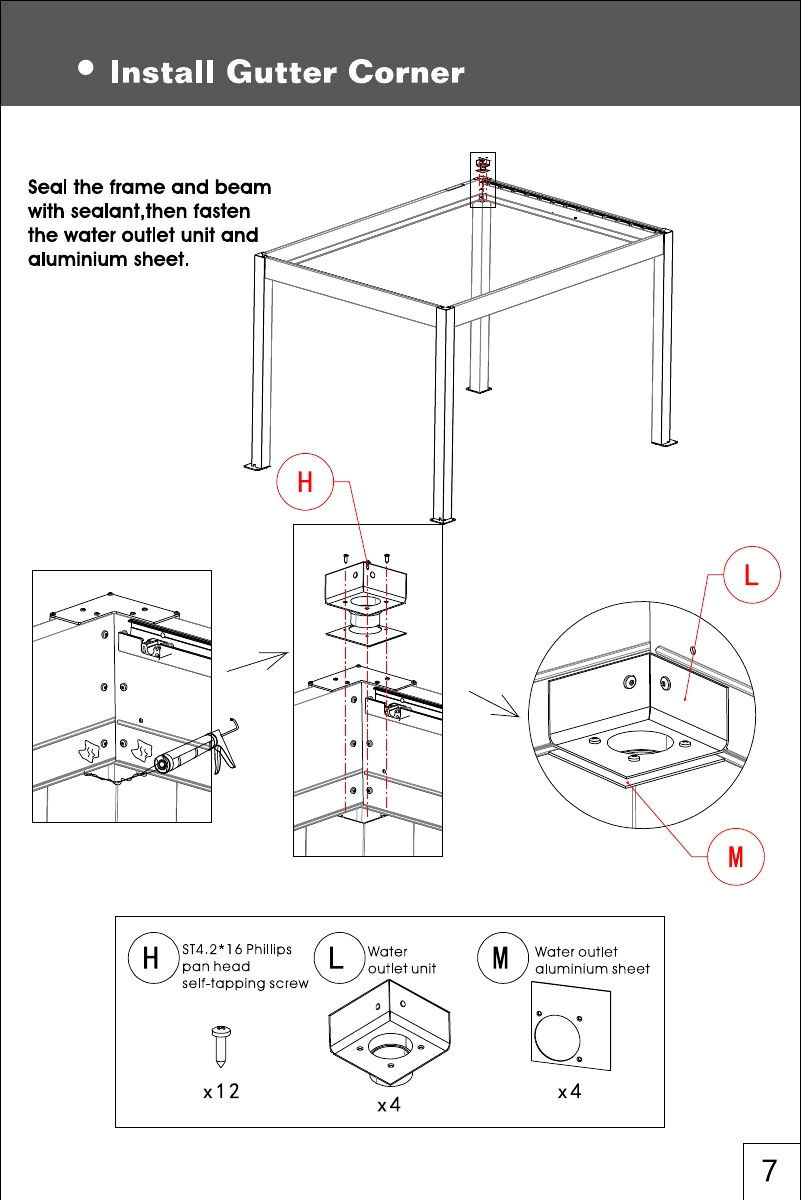
A clear installation manual is useful, but it does not by itself establish rainfall capacity for a larger roof. Review the drainage plan against the actual layout and destination weather conditions.
Review motors, controls and service access
Motorized roofs and screens add components that deserve a separate service and warranty review. Ask for the motor model, its suitability for the mechanism it drives, and the ingress protection ratings of the motor, drivers and lighting components.
Confirm what is included: remote controls, rain sensors, power supplies and any app or automation interface. Ask for electrical documentation appropriate to the destination market, rather than assuming a motor certificate covers the entire assembly.
Resolve power entry and cable routing before the posts are closed. Connections and replaceable components should have a defined access route after installation. A cable-routing drawing is much more useful to the installer than a photograph of the remote control.
Agree inspection and packing records before production
“Every unit is inspected” does not tell the buyer what will be checked. Agree a practical inspection scope with the order: drawing revision, component identification, accessible dimensions, finish against an approved sample and operation of the specified moving parts.
Ask for pre-packing photographs linked to the order and package references. If independent inspection is required, arrange it early and confirm what the inspector can access. The workshop and process overview can support an initial discussion; order-specific records are still needed for acceptance.
Packing should follow the installation plan. On a multi-bay terrace, two similar posts may need different drainage outlets. Their labels should remain traceable to the layout through packing, delivery and installation.
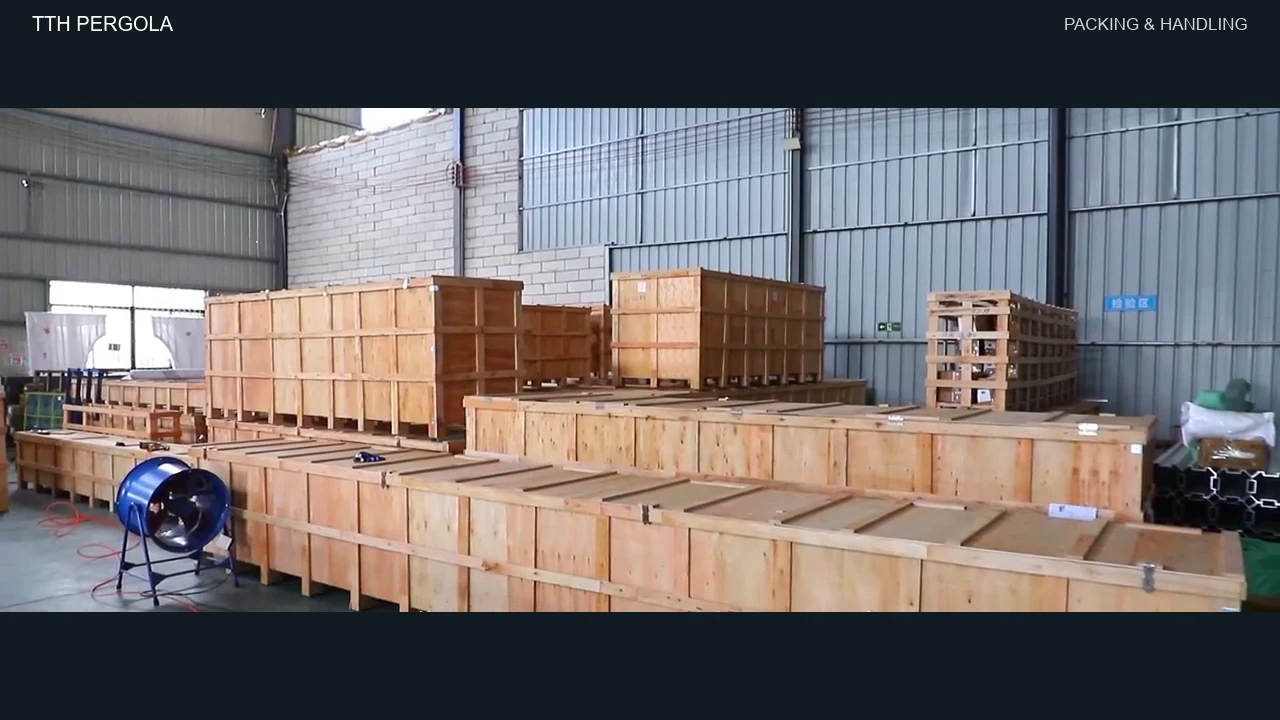
At receipt, match package references and visible condition against the packing list. Photograph discrepancies before unpacking further, and keep the relevant drawing revision with the receiving records.
Read the warranty and landed-cost scope
Request the written warranty before ordering. Structure, coating, motors, lighting, fabric and seals may have different terms. Check the start date, installation and maintenance conditions, exclusions, and whether the remedy includes parts, labor or freight.
For a dealer, access to replacement parts can matter as much as the headline term. Ask how to order individual blades, motors, seals and gutter components by reference, and obtain a realistic supply process in writing.
The commercial comparison should also include:
- Import costs: have a licensed customs broker confirm classification, origin, applicable duties and any trade-remedy exposure before pricing the job. A supplier quotation is not a customs ruling
- Delivery terms: state the Incoterms rule, named place and responsibility for clearance and unloading
- Timing: separate production lead time from transit and local delivery
- First-order risk: agree samples, payment milestones and any factory or remote inspection before committing to volume
For private-label purchasing, define exactly what OEM support includes: colors, branding, packaging and documentation are separate items to agree.
Bring the documents together before you choose
A strong comparison does not require a larger brochure. It requires a consistent set of records for the same configuration: profile drawings, finish specification, applicable technical evidence, drainage and wiring details, inspection scope, packing references and written after-sales terms.
Keep unresolved questions visible. A supplier that explains the limits of its documents is more useful than one that promises every configuration is suitable everywhere.
For TTH’s 145/175 and 200/220 louvered families, start with the project location, approximate dimensions, site photographs and proposed accessories. Use the engineering documentation overview and quality information to frame the discussion, then ask which records apply to the configuration being quoted.
Send TTH your project brief to discuss the product family, drawing requirements and documentation needed for your next dealer order or contractor project. Local structural and regulatory review should remain part of that plan.
Frequently asked questions
What alloy should an aluminum pergola use?
Ask for the alloy, temper and wall thickness of every main profile. 6063 in T5 or T6 temper is a common architectural extrusion choice, but the correct section and material must be assessed with the configuration, connections and project loads.
Is a wind-load rating on a brochure enough?
No. Ask which specimen was assessed, by what method and under which standard. Check whether the result applies to your dimensions, support arrangement and site; local engineering review may still be required.
Are louvered pergolas waterproof?
A closed louvered roof can shed rain effectively when its blades, seals, gutters and outlets work together. Performance depends on the complete system and its tested conditions. Heavy or wind-driven rain may exceed the capability of a particular configuration.
What should a dealer request before a first container order?
Request the approved configuration, profile and finish specifications, applicable technical documents, drainage and electrical details, inspection and packing arrangements, and written warranty and spare-parts terms. Use a sample order or an agreed inspection to resolve important gaps before committing to volume.
