Trade & procurement
Small shipment volume, long crates: planning pergola delivery
Plan pergola delivery around the longest crate, individual weights, handling points and turning space, rather than shipment volume alone.
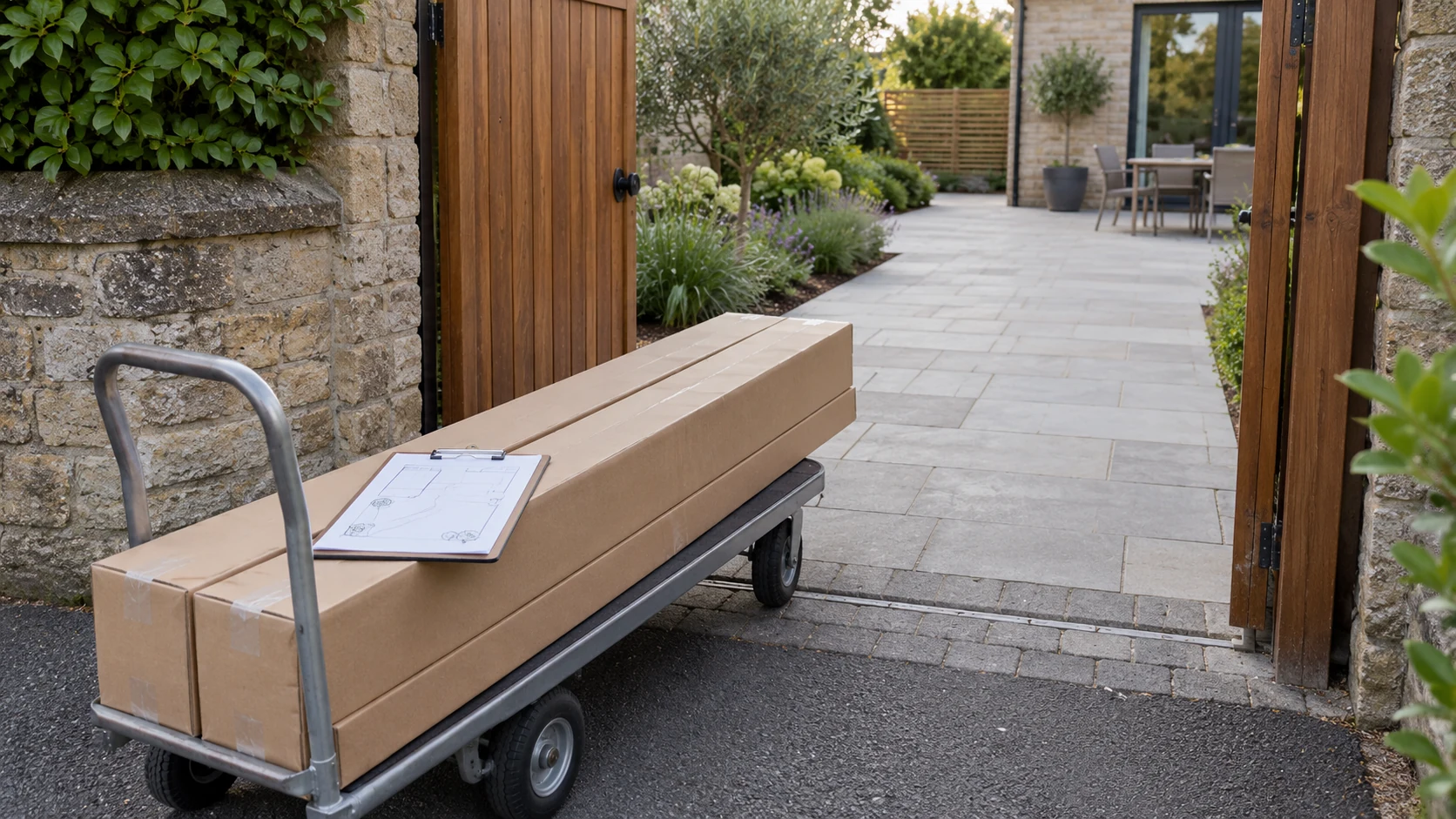
Equal volume does not mean equal handling
Shipment volume is useful for an initial freight discussion, but it does not describe every handling constraint. Equal volumes divided into short cartons and a few long crates can require different vehicles, supports and turning space. Long beam packages make this particularly clear: fitting lengthwise inside a vehicle does not prove they can pass through its door or leave its unloading platform.
Request dimensions, gross weight and quantity for each package. Do not calculate them from the finished pergola footprint. Include accessory cartons, pallets and protective frames in the actual external measurements. If packaging is still provisional, keep vehicle selection unresolved rather than booking transport against assumptions.
Check the route one segment at a time
Map the route from the loading area to the final storage location. Check the container opening, last-mile vehicle, road, entrance, corners and unloading space in sequence. A carrier's equipment guide helps explain container types, but the transport provider must confirm the actual equipment and restrictions. Adequate nominal container volume does not establish that a long crate can be loaded as planned.
At a residential site, examine parking position and working width. A truck may reach the address without being able to unload inside the garden. Agree on a feasible transfer point and onward handling method in advance, with the transport and installation teams coordinating equipment, personnel and any site permissions.
Balance protection with practical unloading
Imagine a dealer combining long beams and small control accessories in one crate to reduce volume. If retrieving one accessory requires removing most protective material, labels and receiving checks may become harder to manage. Separate numbered packages improve access but increase package count. Neither approach is universally better; compare receiving, lifting and assembly sequence for the actual project.
External markings should identify the crate, its weight and confirmed handling instructions. Fork positions, stacking conditions and restraints must come from the packaging or transport plan. Do not improvise support points because a crate looks strong. Avoiding an unplanned transfer gives the team more control than searching for people to move crates after arrival.
Complete a handover sheet before booking
Before booking, give the package list and site photographs to the carrier and receiver so both can confirm the vehicle, equipment and working location. Include measured entrance dimensions, corners and ground conditions; a single photograph of the gate rarely explains the entire route.
If components can enter only after unpacking, agree on a workable unpacking and protection plan first. Assign counting, photographs and custody of the parts. When the plan changes, update both packaging and vehicle information rather than sending a driver with outdated dimensions.
- Record each package's dimensions, gross weight, number and quantity.
- Check the longest item's route and actual unloading location.
- Confirm equipment, people, counting and protection before arrival.
Can a forwarder plan delivery accurately from the pergola area alone?
Finished area describes approximate product scale, not the shipment. A forwarder needs package dimensions, gross weights, count, destination and unloading conditions. The longest item may influence vehicle and handling choices more than total volume. Identify unresolved packaging information and the assumptions behind any preliminary quotation.
More questions, practical answers →