Trade & procurement
Pergola transit damage: document the delivery and preserve evidence
Document pergola delivery damage through packaging, crate IDs, part details and handover records while preserving evidence for review.
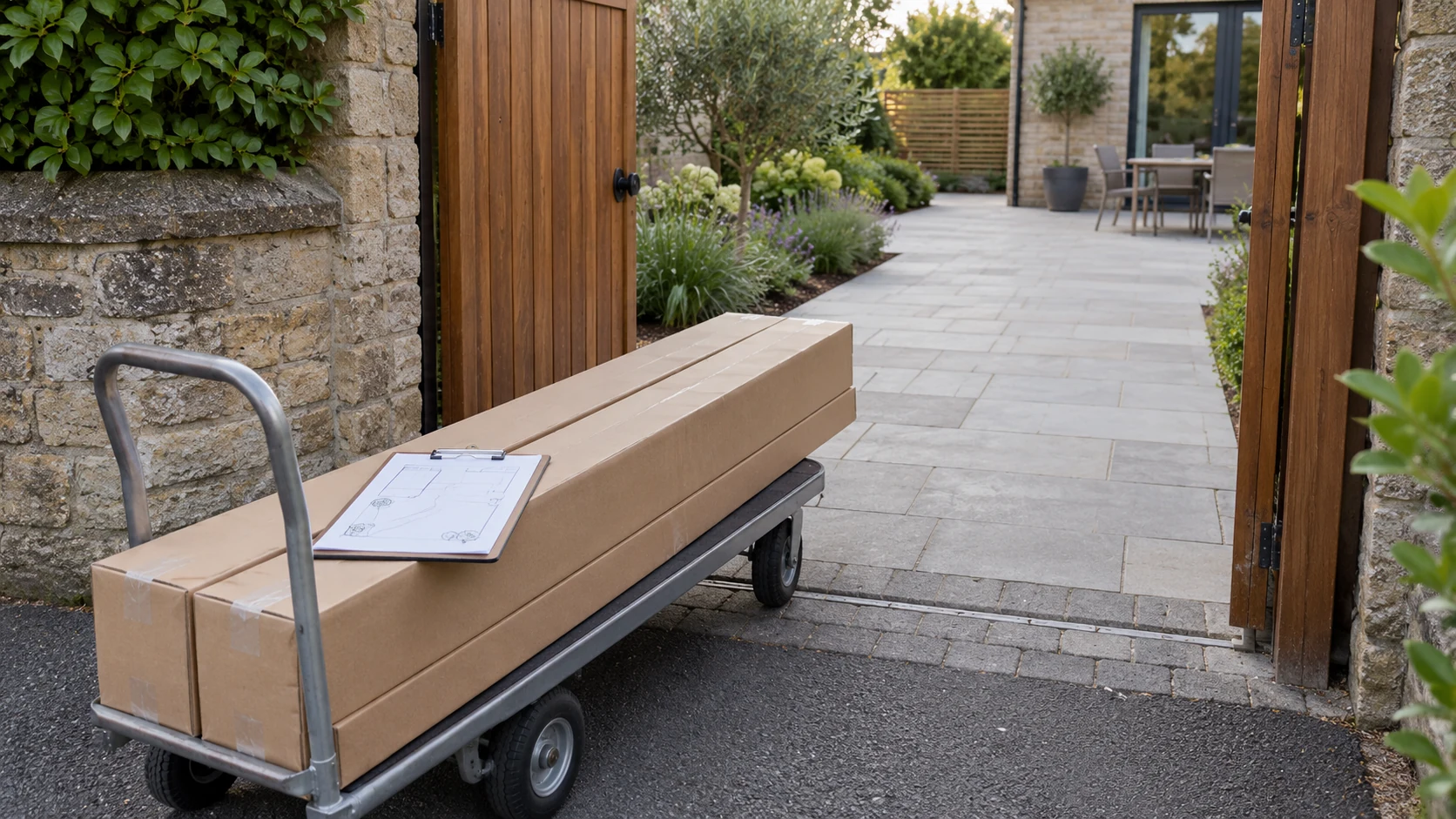
Describe what arrived before assigning responsibility
When damaged packaging arrives, first establish whether unloading can continue safely and contact the receiving lead. Describe visible facts: a crushed crate end, loose outer frame or damp surface. Do not immediately attribute the condition to the carrier or factory. Packaging marks may relate to component damage, but that relationship may require further inspection.
Keep the arrival time, shipment reference, handover information and package count. Photograph the whole package and label before taking detailed damage pictures. A close-up of a scratch alone may not identify the order, beam or stage of unpacking. Missing context creates additional rounds of questions later.
Connect the crate record to the affected component
Following site safety and carrier requirements, inspect packages by number and match affected components to the packing list. Show the position of protective material, extent of damage and part labels. If scale is useful, include a reference without touching the damaged surface. Do not climb unstable packaging or energize control components that may be damaged.
Preserve original records even when an appearance defect has no obvious functional effect. Qualified people can then decide what inspection is needed. Deformed structural parts, water in electrical housings or damaged glass should not be cleared for installation from photographs alone. Recording and separating affected items preserves information without automatically declaring them unusable.
Retain packaging and follow the actual claim process
Imagine a small puncture in the outer crate followed by abrasion on a beam inside. If the packaging is discarded immediately, investigators cannot compare the cushioning and contact points. FedEx's public claims guidance asks recipients to retain original packaging for possible inspection and provide shipment references and supporting documents. Other carriers may use different notification periods and procedures.
Report promptly to the contact named in the order and obtain the applicable carrier and insurance process. Keep invoices, packing lists, handover records and correspondence. Do not assume a payment amount or resolution date. Before repair, replacement or return, clarify authorization, cost responsibility and what happens to the original item.
Connect the remedy to the installation schedule
Connect damage handling to the project schedule. Identify which installation steps depend on the affected components, which unaffected materials can remain in storage and who updates the site plan. Do not change connections or substitute unconfirmed parts simply to maintain the original installation date.
Use one incident reference for further photographs and decisions. Before closing the issue, attach the agreed remedy, replacement details and final inspection outcome to the original record so future support can understand the sequence.
- Photograph the crate, label, protective layers and damage details.
- Retain handover records, invoices, packing lists and packaging.
- Confirm the reporting process before repair, replacement or return.
Should I document unpacking when the packaging looks undamaged?
Keep basic crate, label and unpacking photographs because concealed damage or missing contents may appear only after opening. The record need not be a lengthy film, but it should connect the order, package and affected part. Preserve materials and report anomalies through the applicable procedures rather than treating an intact exterior as proof of an undamaged shipment.
More questions, practical answers →