
Trade & procurement
Factory-direct pergola buying: from order to installation
Define drawings, shipment, receiving checks and installer responsibilities when buying a pergola factory-direct instead of assuming one supplier handles everything.
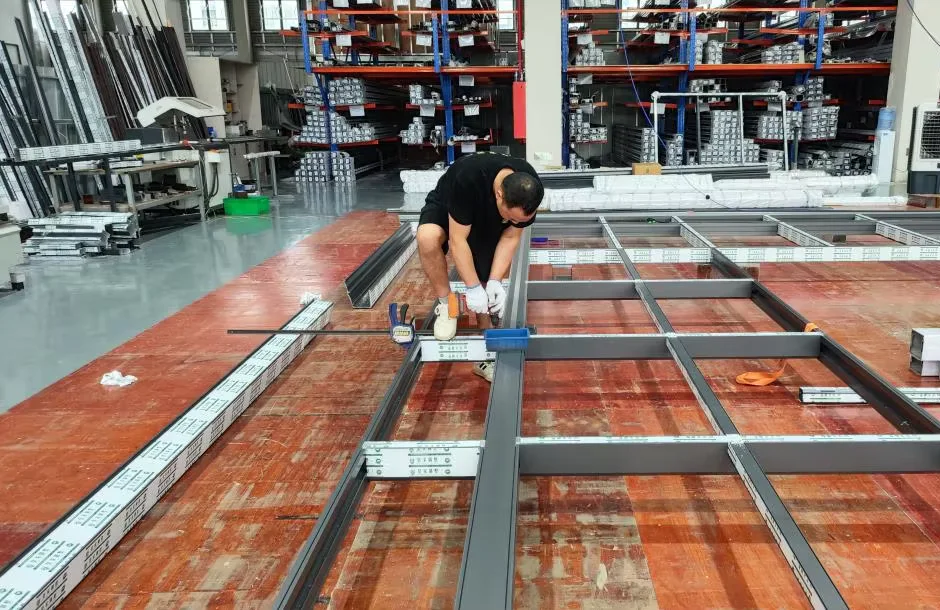
Buying a pergola factory-direct leaves a practical question: who will connect the factory order to the local installation?
The factory may supply the approved system and shipment documents. A dealer or contractor may handle the survey and receiving work, then coordinate assembly and customer support. Name the party responsible for each handover. The word “direct” does not settle that.
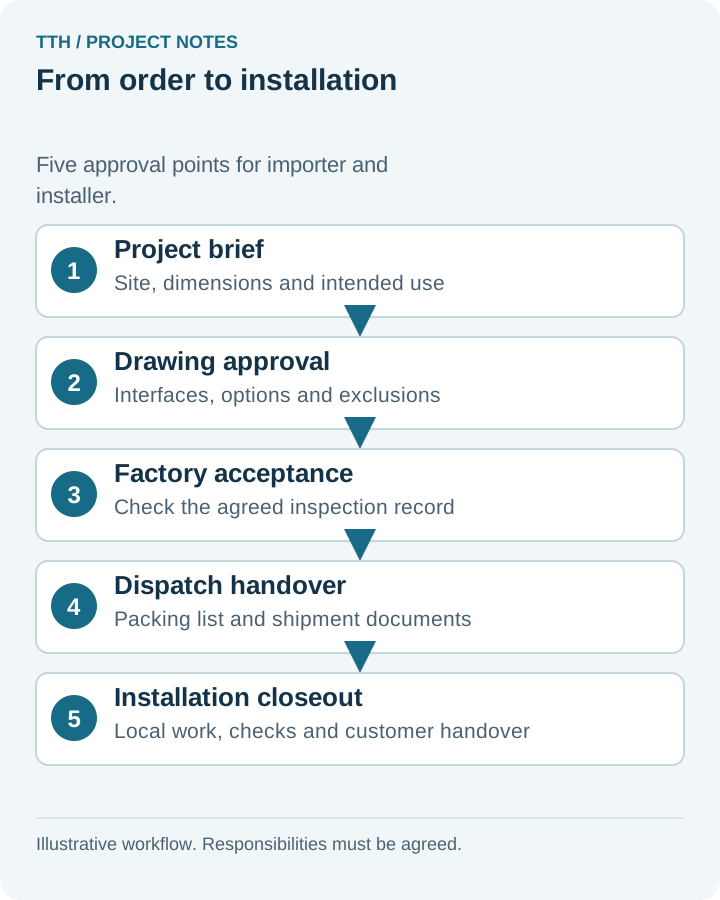
Find out what each offer includes
A supply quotation and an installed quotation cover different work. Ask the seller to identify its contracting entity and supplied products. Get the service scope and exclusions in writing, with a contact for unresolved installation questions.
Direct purchasing is not automatically cheaper. Freight and receiving arrangements vary with the order; local work and service also need a budget. Our Chinese supplier evidence scorecard helps distinguish verified information from claims.
Compare prices after putting the responsibilities side by side.
Turn the enquiry into an approved order
Give the supplier the project location and intended use. Add dimensions with units, site photographs and the preferred configuration. Explain whether the local installer is involved and identify any proposed connection to a building. Include the accessories.
An approximate patio measurement is useful for an enquiry. Before production, it needs to become an approved dimension.
Review the TTH 200 / 220 product family for an initial model discussion. Ask which configuration matches the brief and what remains to be checked locally. The order should use an identifiable drawing revision and equipment list. If a finish or accessory changes, update those records before approving the revised scope.
Put names beside the handovers
Complete this matrix using the parties in your actual agreement. Responsibilities vary, so agree the split instead of treating the table as a standard contract.
| Project stage | Record to agree | Person or company to name |
|---|---|---|
| Site survey | Final dimensions, levels and site constraints | Survey and drawing approver |
| Production release | Drawing revision, finish and equipment list | Buyer and supplier approvers |
| Shipment | Packing list, delivery point and document set | Logistics coordinator and receiver |
| Installation | Local works, assembly information and service interfaces | Appointed local installer |
| Handover | Checks, operating information and issue contact | Installer and project owner |
Make the delivery point precise
A country or city is not enough to plan the receiving work. Record the named delivery point and unloading responsibility. Check access before the shipment arrives.
Our FOB, DAP and DDP quotation guide explains why the named place matters. Import formalities and unloading still need their own discussion.
And get the confirmed package information to the receiving contractor early. Crates must be handled through the actual route to the site. A packing list helps check a shipment; product compliance evidence serves a different purpose. The import documents guide explains the distinction.
Let the installer review the package
Give the installer the proposed assembly information and identify foundations, electrical work, drainage connections and other local tasks that are outside supply. Resolve missing interfaces before the shipment leaves. Agree how damaged or missing items will be photographed, identified and reported, and who may authorize replacements or changes.
At handover, keep the approved drawing with the packing list and component references. Retain the operating information and service contact too. An order reference makes a later question easier to trace.
Use the TTH enquiry form to share your brief. Say whether you are the project owner, a dealer or the installer, so the response can address your part in the work.
Purchasing questions
Does factory-direct mean installation is included?
No. The supply and service scope must say what is included. Confirm who performs and accepts the local work before comparing the offer with an installed quotation.
Can a dealer still be useful when the product comes from a factory?
A dealer may provide local surveys, coordination or after-sales services. Evaluate those defined services and the actual agreement instead of treating the dealer’s presence as either an automatic benefit or an unnecessary cost.
What should be approved before production starts?
Use the supplier’s actual approval process, with final dimensions, drawing revision, finish, equipment and exclusions recorded. Outstanding site or regulatory questions should remain visible rather than disappear behind a general approval email.
