Hardtop pavilion planning
A community book-exchange pavilion: specify the cabinet separately
Specify the book-exchange area and protective cabinet as separate facilities.
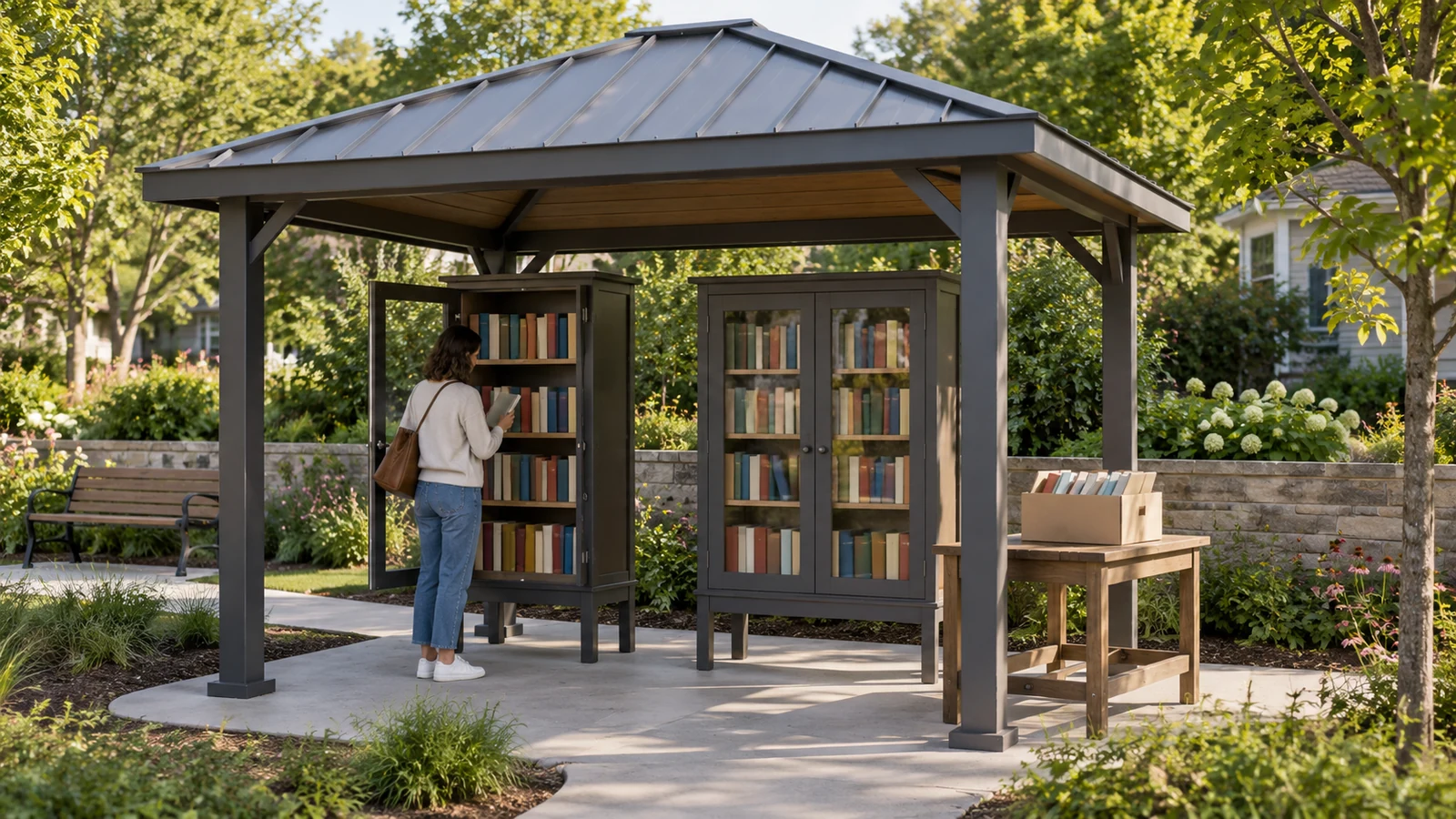
Separate browsing space from book storage
A community pavilion can support browsing and conversation, but long-term book storage is a separate requirement. A roof alone does not establish a suitable environment for paper; exposure, cabinet construction and management matter. Decide whether books are removed daily or remain unattended and who accepts and sorts them. Specify cabinet and pavilion supply separately. A shelf in a photograph is not automatically included, and placing an ordinary cabinet under cover does not demonstrate moisture protection. Define the intended service before comparing products.
Check the cabinet while it is open
Map open doors, book retrieval and short stays by several users, not just the cabinet footprint. Explain what can be taken, what needs staff review and how returns work so unsorted donations do not occupy every reading table. Cabinet protection, locking and care follow its own specification and the operating plan. Coordinate separate suppliers on location and use conditions. Provide a process for items unsuitable for shelving rather than assuming every donation must remain at the pavilion simply because it has arrived.
Test a day with many donations
Imagine several boxes arrive on a weekend while cabinet space is limited and volunteers are helping browsers. Define an intake table, sorting containers and cleared shelving positions so new items do not obstruct the normal service. The aim is a response to excess intake, not converting the pavilion into an improvised warehouse. Any indoor overflow needs an actual receiving place and person. This test coordinates space and volunteer capacity without pretending that roof area translates directly into a reliable number of books.
Assign books and pavilion care separately
Record cabinet condition, unsorted items, removal arrangements and contacts separately from pavilion care. Document location, timing and visible condition if books or the cabinet show a problem; ask the appropriate party to assess it rather than assigning the roof a cause or enclosing sides casually. Recheck changes to location or storage method.
Simple status labels help replacement volunteers distinguish sorted books from pending donations. A tidy pile does not by itself show that intake review has been completed.
- Specify browsing and cabinet requirements separately.
- Check open-door and retrieval conditions.
- Assign intake, sorting and overflow destinations.
Do book cabinets beneath a hardtop still need a protection assessment?
Yes. Assess exposure, cabinet requirements and unattended management. Decide daily removal, intake and sorting responsibilities, and confirm each supply and maintenance boundary. Display photographs do not establish long-term preservation performance.
More questions, practical answers →