Hardtop pavilion planning
Pressure washing a hardtop gazebo roof: check material and joints first
Identify the surface and joint requirements before deciding whether pressure-washing equipment is permitted.
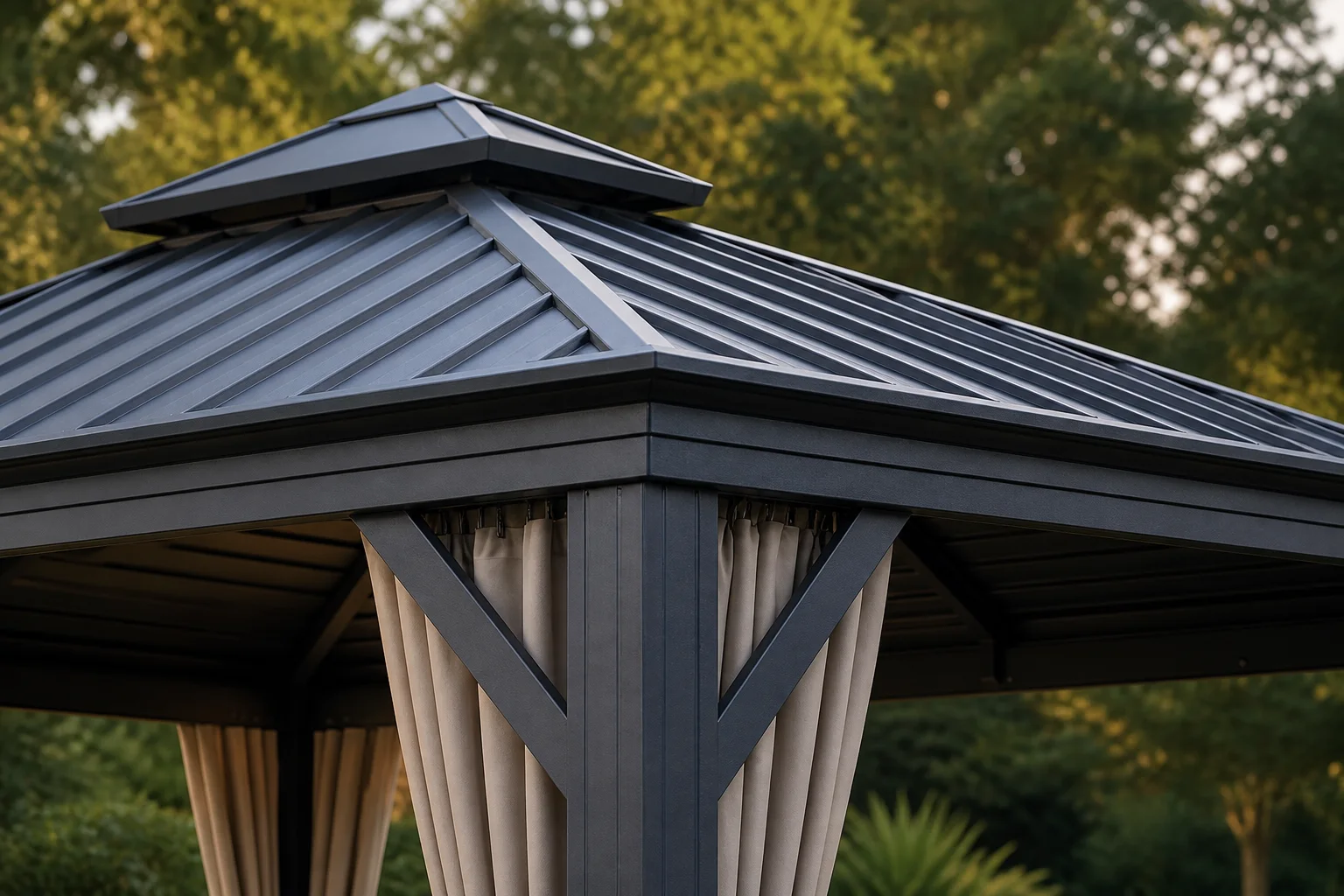
Choose equipment after checking surface guidance
Whether pressure washing is suitable depends on the actual panels, finish and roof care instructions. A hard surface does not establish that any pressure or nozzle is acceptable, and experience with paving or vehicles is not a gazebo specification. Ask the supplier about permitted methods, excluded areas and professional-service needs. Published panel guidance demonstrates material-specific restrictions but does not define another roof. Clarifying this before purchase also establishes whether equipment already owned is relevant to the proposed maintenance routine.
Separate panel surfaces from detailed components
List exposed panels, joints, trim, mesh and accessories separately, then identify the permitted approach for each. Describe the deposit rather than starting with the strongest available equipment. Any cleaner trial should follow supplier guidance, not an improvised chemical mixture. Access also matters: owning a long nozzle does not authorize standing on an unapproved roof. Review equipment, surfaces and working position together to obtain a more useful answer than a general yes or no about washing.
Compare two different cleaning concerns
Imagine loose dust on one panel and an unidentified residue near trim. They need not receive the same treatment, and escalating pressure until the surface looks clean is not a sound decision process. Photograph location and history, then follow the applicable response. Record an unexpected surface change and stop unconfirmed treatment. The example emphasizes identifying the target before choosing the method. A venue can use the same scope definition when hiring cleaning staff, reducing reliance on a generic aggressive-washing approach.
Make the cleaning record useful for the next visit
Record the method, surface and unresolved matters so the next person knows what was done. Recheck care guidance after any material or finish change. Separate owner tasks from professional work, including hard-to-reach areas. A suitable method preserves the assembly and can be performed at the site, rather than merely producing a brighter photograph.
If equipment or pressure approval is absent, do not invent a general value or borrow one from another model. Seek a response linked to the actual surface and product.
- Identify panels, finishes and detailed components first.
- Describe deposits and review equipment, products and access.
- Record the method and recheck after material changes.
Can I copy a neighbor pressure-washing a metal gazebo?
Check your own assembly first. Similar appearance does not establish matching panels, finishes or joints. Describe the deposit and equipment to the supplier, obtain an applicable method and use appropriate access rather than copying another setup.
More questions, practical answers →