Home planning
Adding a pergola beside existing trees: include roots, canopy and seasonal debris
Treat existing trees as living site constraints, coordinating construction access, supports, cleaning and seasonal views rather than avoiding only the trunk.
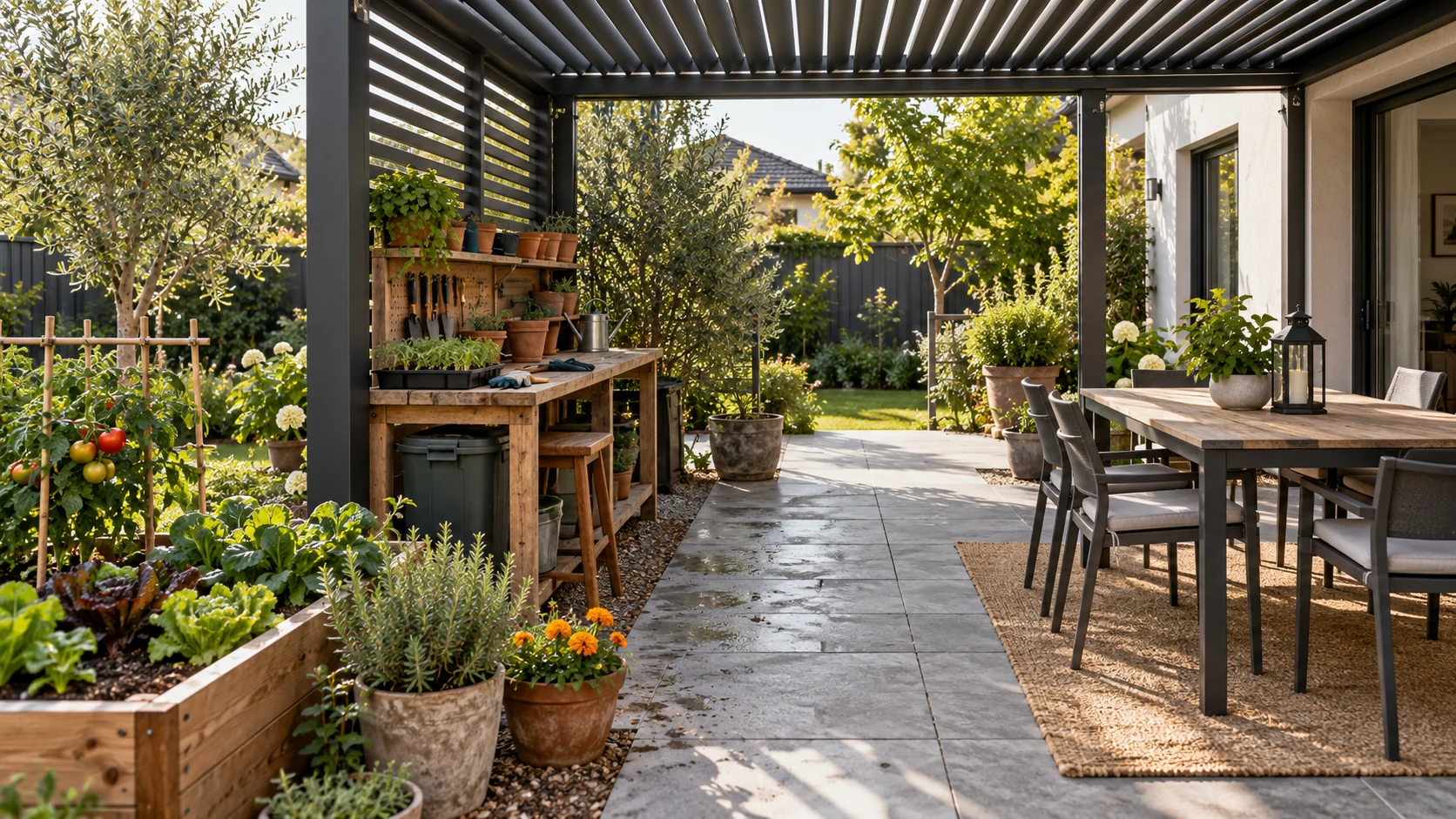
Do not represent the tree as its trunk alone
Existing trees add valuable garden character, but avoiding the trunk does not establish protection. University of California guidance notes that roots may extend beyond the canopy and that compaction or changes to ground and drainage can affect trees. That general information cannot define the protection area for your tree. Have an appropriate tree professional assess species, condition and site, then coordinate with design and construction teams. Show root-related restrictions, canopy and work routes together so support positions or delivery access do not conflict with protection after the frame has been ordered.
Plan routes used during construction
A finished pergola may stand away from a tree while material storage, vehicles and temporary work still approach it during construction. Ask the crew to describe unloading, carrying, storage and pedestrian routes, then have those arrangements reviewed. Do not assume the space under a tree is convenient storage or cut roots and branches casually for access. Any tree work needs appropriate assessment and confirmation of applicable conditions. All teams should understand protection arrangements before work begins, rather than relying on an unexplained tree symbol in a drawing corner.
Review use and cleaning through seasonal change
Imagine a deciduous tree shading part of the sky in summer, revealing a neighboring upper window after leaf fall and dropping debris onto the terrace in autumn. The pergola needs to account for summer seating, winter sightlines and cleaning routes, not just one attractive day's image. This hypothetical tree does not represent every species and does not justify inappropriate pruning to fit the roof. Record actual seasonal changes and ask about permitted product cleaning methods. If a position makes cleaning difficult, revisit the layout instead of assigning frequent high-level access as an assumed household chore.
Keep tree care and pergola maintenance compatible
At confirmation, retain access for tree inspection, appropriate care and pergola cleaning, and identify the right contact for each. Canopies, furniture and planting change, so periodically observe their relationship rather than treating the initial plan as permanent. Do not attach branches to the pergola or use the frame to support a tree without explicit relevant professional design. Keep tree advice and site photographs in the records so later workers understand sensitive areas. This helps the added function coexist with the established garden through practical arrangements.
For a tree near a boundary or on neighboring land, clarify relevant use and care responsibilities rather than treating your pergola plan as authority to alter it. Keep this condition open while the necessary discussion occurs, reducing late changes that cannot be implemented.
- Have root areas, canopy and proposed work assessed appropriately.
- Confirm unloading, storage and carrying routes in advance.
- Record seasonal debris, sightline changes and access for both maintenance tasks.
Does keeping pergola posts away from the trunk avoid affecting an established tree?
No. Roots, compaction, ground or drainage changes and construction access all matter, and protection cannot be estimated by canopy alone. Have an appropriate tree professional coordinate with the crew before fixing positions and access. Do not cut roots or use the area beneath the tree for storage informally.
More questions, practical answers →